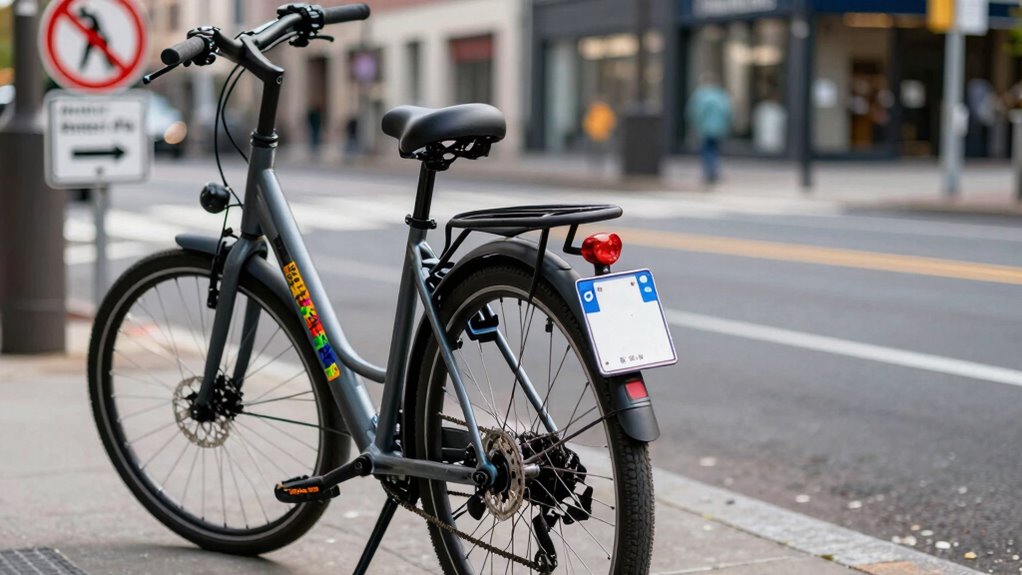

To check if your e-bike is legal where you live, start by researching local traffic laws and regulations related to e-bikes. Confirm how they’re classified by motor power, top speed, and whether pedals are required. Find out if e-bikes are allowed on bike lanes, roads, or sidewalks. Make sure your e-bike has the proper safety equipment and stays in compliance with any registration, licensing, or battery standards. Staying informed helps you ride legally and safely—you’ll discover more tips if you keep exploring.

Get bike and ride gear delivered free with Prime
- Fast, free delivery on millions of items
- Prime Video, Amazon Music and more included
- Member-only deals all year
Key Takeaways
- Review local traffic laws and e-bike classifications based on motor power, top speed, and pedal assistance.
- Check if e-bikes are permitted in designated areas like bike lanes or roads, and restrictions on sidewalks.
- Confirm registration, licensing, and battery regulations specific to your region.
- Inspect your e-bike for required safety features, such as lights, reflectors, and brakes, to ensure compliance.
- Stay informed on recent legal updates or changes through official government or transportation authority sources.

If you’re considering riding an e-bike, the first step is to find out if it’s legal where you live. E-bike laws can vary considerably depending on your city or country, so it’s essential to do your homework before hitting the streets. Start by checking local traffic laws and regulations related to e-bike use. Many regions classify e-bikes based on their motor power, top speed, and whether they have pedals, so understanding these distinctions helps determine what’s permitted. For example, some areas restrict e-bikes to pedal-assist models with limited motor wattage and speeds, while others may have more relaxed rules. Knowing these specifics guarantees you stay compliant and avoid fines or legal issues.
Beyond general regulations, it’s important to focus on e-bike safety. E-bike safety isn’t just about wearing a helmet; it also involves understanding where and how you can ride legally. Many places restrict e-bike use on sidewalks or pedestrian zones, so you should verify whether bike lanes or roads are designated for e-bike travel. Familiarize yourself with local signage, and always prioritize safety by riding predictably and within the limits of your skill. If you plan to ride in traffic, ensure your bike is equipped with proper lighting, reflectors, and braking systems—features often mandated by law. Staying informed about e-bike safety helps you avoid accidents and legal trouble alike. Additionally, checking local regulations ensures you’re aware of any restrictions on e-bike use in specific areas or times. It’s also wise to stay updated on any changing laws that could affect your riding habits. Furthermore, understanding local registration requirements can prevent potential legal complications if registration is mandated for certain e-bikes. Being aware of battery regulations and how they apply to your specific e-bike model can also prevent issues related to transportation or charging, especially when traveling across different jurisdictions. Being familiar with local licensing requirements can further help you ensure full compliance with regional rules. Properly maintaining your e-bike’s battery not only guarantees safety but also prolongs the lifespan of the component, reducing the risk of malfunctions or fire hazards. Make sure your battery is compliant with local standards and always follow recommended charging procedures.
Popular right now

LG 77-Inch OLED evo C6 4K Smart TV

Bose QuietComfort Earbuds (2nd Gen) – True Wireless Bluetooth Earbuds with Active Noise Cancellation

Shark AI Ultra Robot Vacuum with Matrix Clean Navigation, Self-Empty Base, HEPA Filtration, Pet Hair Friendly, Wi‑Fi, Dark Grey
As an affiliate, we earn on qualifying purchases.
Frequently Asked Questions
Can I Ride an E-Bike on a Sidewalk Legally?
You generally shouldn’t ride your e-bike on sidewalks, as most e-bike regulations prohibit sidewalk riding due to safety concerns for pedestrians. Check your local laws, though, because rules vary by area. Some places might allow it if you ride slowly or if the area specifically permits sidewalk use for e-bikes. Always stay informed about your local e bike regulations, and prioritize safety for yourself and others.
Are There Age Restrictions for E-Bike Riders in My Area?
Yes, there are often age restrictions for e-bike riders in your area. You need to check local laws for specific age limits, which are usually set to guarantee rider qualifications and safety. Typically, riders must be a certain age to operate e-bikes legally. Make sure you confirm these restrictions, as they vary by location, so you stay compliant and ride responsibly, respecting all local regulations.
Do E-Bikes Require Registration or Licensing?
E bikes generally don’t require registration or licensing, but this depends on local laws and E bike classifications. Some areas treat certain classes as motor vehicles, meaning you might need licensing requirements, especially for higher-powered models. Check your local transportation authority’s rules to determine if your E bike falls under a specific classification that mandates registration or licensing. Staying informed guarantees you ride legally and safely.
Are There Specific Insurance Requirements for E-Bike Riders?
You might be surprised to learn that E bike insurance isn’t always mandatory, but it’s wise to contemplate it for legal liability protection. Many regions require riders to have specific insurance coverage to cover accidents and damages. Without it, you could face hefty fines or personal financial loss. Check your local laws, as some places demand insurance, especially if your e-bike has high speeds or powerful motors, ensuring you’re protected and compliant.
How Do Local Laws Differ for Pedal-Assist Versus Throttle E-Bikes?
Local laws often differ for pedal-assist and throttle e-bikes based on motor power and speed limits. Pedal-assist bikes usually have restrictions on motor power, often up to 750W, and maximum speeds, like 20 mph, to qualify as bicycles. Throttle e-bikes may face stricter regulations, sometimes requiring licenses or registration if they exceed these limits. Always check your area’s specific rules before riding to stay compliant.
Conclusion
In the end, staying informed about your e-bike’s legality is like keeping a steady compass—guiding you safely through the roads. Laws can shift like the tide, so it’s essential to regularly check local regulations. By doing so, you avoid surprises that can throw a wrench in your ride. Remember, knowing the rules isn’t just about avoiding fines; it’s about riding confidently, like a ship steering calm waters, no matter where your journey takes you.