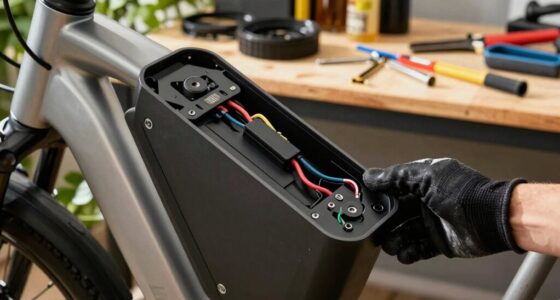
Employers usually ban damaged chargers, faulty extension cords, and unauthorized devices that pose fire hazards. They restrict high-wattage appliances like space heaters and large kitchen gadgets to prevent overloads. Personal devices such as mini-fridges and clutter-causing electronics are often prohibited to keep pathways clear and reduce fire risks. They also enforce the use of certified cables and regular inspections, all to maintain safety. If you want to learn more about safety tips, keep exploring these guidelines.
Key Takeaways
- Damaged or unauthorized chargers and cables to prevent electrical hazards.
- High-wattage appliances like space heaters and large kitchen devices.
- Personal devices that create clutter or block pathways.
- Extension cords and power strips that may be faulty or overloaded.
- Chargers and devices near combustible materials to reduce fire risks.

Many employers restrict certain items and activities in indoor charging areas to guarantee safety and maintain a productive work environment. These restrictions aren’t meant to inconvenience you but are in place to prevent accidents and protect both employees and company assets. When it comes to workplace safety, one of the primary concerns is preventing electrical hazards. That’s why you’ll often see equipment restrictions, such as banning the use of damaged chargers, extension cords, or unauthorized devices that could pose fire risks. Employers want to avoid scenarios where faulty wiring or overloaded outlets cause sparks or short circuits, which could lead to costly damage or injuries.
In indoor charging zones, you’re usually expected to adhere to rules about what you can and cannot connect to the power outlets. For example, high-wattage appliances like space heaters, large kitchen appliances, or power tools are often prohibited. These devices can draw excessive current, overload circuits, and create sparks or heat buildup, jeopardizing workplace safety. Similarly, personal appliances like mini-fridges or bulky electronic gadgets may be restricted to reduce the risk of electrical fires and prevent clutter that could block pathways or exits. Implementing electrical safety measures such as regular inspections and proper grounding are often emphasized to reduce hazards. It’s also common for employers to establish clear guidelines on device placement to minimize the risk of accidental damage or fire.
Another common restriction involves the types of chargers and cables used. Employers typically prefer standardized, certified chargers and cables that meet safety standards. Using unapproved or counterfeit chargers not only increases the risk of malfunction but also heightens safety concerns, as poorly manufactured cords can fray or overheat. You’re generally discouraged from using damaged or frayed cables, as they can cause electrical shocks or fires. Some companies also limit the number of devices you can plug in simultaneously, to prevent overloading outlets and ensure everyone has access to safe power sources. Additionally, fire prevention practices such as avoiding charging devices near combustible materials are often enforced as part of comprehensive safety protocols. Regularly inspecting cords and chargers for signs of wear is also recommended to uphold these safety standards.

iPhone Charger 3pack 10FT Apple MFi Certified Long Lightning Cable Fast Charging High Speed Data Sync USB Cable Compatible iPhone 14/13/12/11 Pro Max/XS MAX/XR/XS/X/8/7/Plus/6S (Grey White)
MFi Certified: Apple MFi certified lightning cable is guaranteed not to pop up warning messages, ensuring your lightning…
As an affiliate, we earn on qualifying purchases.
As an affiliate, we earn on qualifying purchases.
Frequently Asked Questions
Are Personal Devices Allowed During Work Hours in Charging Areas?
Personal devices are often restricted during work hours in charging areas, but it depends on your employer’s policies. Some workplaces allow limited use, while others enforce strict restrictions due to safety or productivity concerns. Check your company’s employee permission policies to understand what’s permitted. If allowed, use personal devices responsibly, ensuring they don’t interfere with your tasks or violate any rules. Always follow your employer’s guidelines to stay compliant.
Can Employees Use Portable Chargers in Indoor Charging Zones?
Sure, you can use portable chargers in indoor charging zones—just don’t forget, battery safety is king, and device storage rules still apply. Your portable charger might seem harmless, but employers often worry about sparks and fires, so use them responsibly. Keep your devices and chargers neatly stored, avoid overusing outlets, and make certain your power-ups don’t turn into workplace hazards. Safety first, even in the quest for a full battery!
Do Bans Apply to Charging Tablets or Only Smartphones?
Bans typically apply to charging tablets just like smartphones, as many employers restrict device usage during work hours. However, some workplaces offer device exemptions for tablets, especially if they’re used for work purposes or assistive technology. It’s crucial to review your company’s specific policies on tablet restrictions, as they vary. Always follow your employer’s rules to avoid misunderstandings or disciplinary actions related to indoor charging areas.
Are Charging Cables Provided or Must Employees Bring Their Own?
Most employers expect you to bring your own charging cables to indoor charging areas, as they often don’t provide them. They focus on maintaining charging station security and enforcing employee device restrictions to prevent theft or damage. To avoid issues, carry your own cables and make certain your devices stay secure while charging. Always check your company’s policies to confirm if any specific equipment is supplied or required.
Is There a Penalty for Violating Indoor Charging Area Policies?
Yes, there’s typically a penalty for violating indoor charging area policies. Your employer emphasizes workplace safety and enforces policies to prevent hazards like electrical fires or damage. If you ignore these rules, you might face warnings, restrictions on charging access, or even disciplinary action. It’s important to follow the policies to guarantee everyone’s safety and maintain a productive work environment. Always review and adhere to your company’s specific indoor charging guidelines.

Anker Power Strip with 2100J Surge Protector, Outlet Extender, 5ft Extension Cord with Multiple Outlets, 12 AC, 2 USB A,1 USB C Port for 20W, Home Office, Dorm Room Essentials, TUV Listed
All the Power You Need: Features 12 AC outlets, 1 USB-C port, and 2 USB-A ports to give…
As an affiliate, we earn on qualifying purchases.
As an affiliate, we earn on qualifying purchases.
Conclusion
In summary, most employers ban items like flammable liquids, unauthorized devices, and smoking in indoor charging areas to guarantee safety. Did you know that according to the National Fire Protection Association, electrical malfunctions cause over 45,000 fires annually? That’s a compelling reason to follow these rules carefully. Staying aware of what’s prohibited helps prevent accidents and keeps everyone safe. So, next time you plug in, remember these restrictions—they’re designed for your protection.

Midea WHS-65LB1 Mini Fridge, 1.6 Cu.ft Energy Star Certified Mini Refrigerator, Adjustable Thermostat, Reversible Door, Low Noise for Dorm, Office, Bedroom, Black
Compact & Space-Saving-Midea WHS-65LB1 mini fridge with 18.6*17.7*19.4 inches(W*D*H) measurement and 1.6 cu.ft refrigerator capacity is a perfect…
As an affiliate, we earn on qualifying purchases.
As an affiliate, we earn on qualifying purchases.

DREO Space Heater, Portable Electric Heaters for Indoor Use with Thermostat and Remote, 2024 Upgraded, Digital Display, 12H Timer, 5 Mode, 1500W PTC Ceramic Fast Safety Heat for Office Bedroom Home
Powerful heat that fits everywhere: DREO space heaters for indoor combines Hyperamics 1500W advanced PTC system with a…
As an affiliate, we earn on qualifying purchases.
As an affiliate, we earn on qualifying purchases.