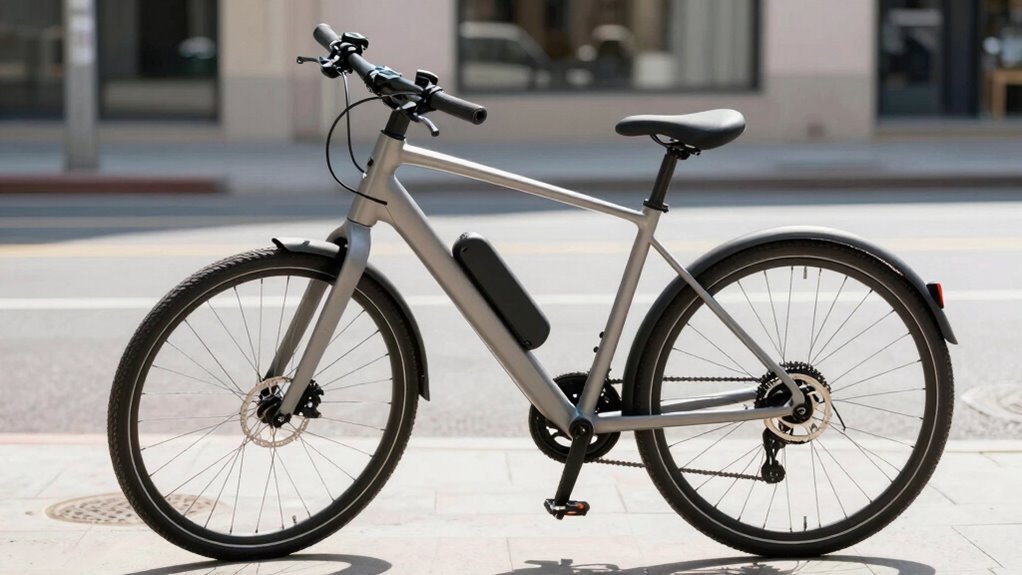

To keep your device a legal e-bike, it needs to stay within specific limits for power, speed, and battery safety. Typically, this means a maximum of about 750 watts and a top speed of 20 or 28 mph. You also need to follow local rules about licensing and registration, which vary by area. Exceeding these limits can turn your e-bike into a moped or motorcycle, so understanding these rules helps you stay compliant and ride confidently. Keep exploring to learn more.
Key Takeaways
- An e-bike must have a maximum motor power typically around 750 watts to qualify as legal.
- Speed limits, usually 20 or 28 mph, must not be exceeded for e-bike classification.
- Batteries should meet safety standards and may need to be removable, depending on local laws.
- No license, registration, or insurance is required if the e-bike complies with legal specifications.
- Exceeding performance or safety limits can reclassify the device as a moped or motorcycle.

Understanding what distinguishes a legal e-bike from a moped is vital if you’re considering an electric ride. The key differences often come down to regulations, which vary depending on where you live. To stay compliant and enjoy your ride without legal issues, you need to understand the specifics, especially regarding battery regulations and licensing requirements.
Knowing the differences between e-bikes and mopeds helps ensure legal and safe riding in your area.
A legal e-bike typically falls under specific classifications based on its design and performance. For example, many regions set limits on maximum power output—often around 750 watts—and top speeds, commonly capped at 20 or 28 miles per hour. If your device exceeds these limits, it may be classified as a moped or motorcycle, which brings different rules and obligations. Battery regulations play a big role here, too. Many jurisdictions restrict the type, size, or capacity of batteries that can be used in e-bikes to guarantee safety and compliance. For instance, some areas may require batteries to be removable or have specific safety certifications. These regulations are designed to prevent issues like overheating or fire hazards, so knowing what’s permissible in your area is essential. Additionally, battery regulations often include specifications for charging safety and disposal, further emphasizing the importance of understanding local rules. Being aware of local regulations can help you avoid inadvertently riding an illegal vehicle. Moreover, staying informed about battery safety standards can help ensure your device remains compliant over time. It’s also helpful to familiarize yourself with regional variations in e-bike laws, as they can differ significantly across states and municipalities.
Licensing requirements are another vital factor. A legal e-bike often doesn’t require a license, registration, or insurance if it adheres to local standards. However, if your device surpasses certain thresholds—such as higher speeds or more powerful motors—you might be required to register it and obtain a license, much like a moped or motorcycle. This ensures that riders are trained and insured, which is often mandated by law for more powerful or faster vehicles. It’s important to verify what’s needed in your jurisdiction before riding. Some regions treat high-performance e-bikes as mopeds, requiring you to carry a driver’s license and register the vehicle. Others may accept them as bicycles if they meet specific criteria. Additionally, understanding classification standards can help you determine how your device is regulated and ensure compliance.
In essence, the main factors that differentiate a legal e-bike from a moped are the device’s performance specifications, the battery regulations, and the licensing requirements. Staying within the prescribed limits allows you to ride freely and legally, avoiding fines or penalties. Always check local laws and regulations before purchasing or riding your e-bike to guarantee it complies with all legal standards. By understanding these distinctions, you can enjoy your electric ride confidently and responsibly, knowing you’re adhering to the rules set in your area.
As an affiliate, we earn on qualifying purchases.
Frequently Asked Questions
Can I Ride a Legal E-Bike on Bike Paths?
Yes, you can ride a legal e-bike on bike paths, but you need to follow bike lane regulations. Make certain your e-bike has proper safety features like lights, reflectors, and a horn. Always check local laws, as some areas restrict certain e-bikes on specific bike paths. Staying within these regulations helps ensure your safety and keeps you compliant while enjoying your ride.
Are Helmet Laws Different for E-Bikes Versus Mopeds?
Imagine the wind rushing past as you ride, helmet safety remains essential for both e-bike and moped riders. Helmet laws are generally similar, but moped riders often face stricter requirements, including insurance. You should always check local regulations, as some places mandate helmets for all e-bike riders, while others may not. Prioritizing helmet safety and understanding insurance requirements keeps your ride safe and legal.
Do E-Bikes Require a License to Operate Legally?
You typically don’t need a license to operate an e-bike, but rules vary by location. Check local laws for battery regulations, as some areas limit battery power or speed. To prevent theft, always lock your e-bike securely and consider GPS tracking. Staying informed about regional regulations helps you ride legally and safely, ensuring you meet requirements and avoid fines or confiscation.
How Do Weight Limits Affect E-Bike Classification?
Weight limits, including motor weight and cargo capacity, directly influence e-bike classification by ensuring the bike remains within legal specifications. When your motor weight and cargo capacity stay within set limits, your e-bike qualifies as a legal e-bike, not a moped or motorcycle. Staying under these thresholds keeps your e-bike lightweight, manageable, and compliant, preventing it from being classified as a more regulated vehicle requiring licensing or registration.
Are There Age Restrictions for Riding Legal E-Bikes?
Yes, there are age restrictions for riding legal e-bikes. You typically need to be at least 14 or 16 years old, depending on your state’s regulations. Licensing requirements usually don’t apply if your e-bike meets specific speed and power limits, but some areas may require a valid driver’s license or a special permit. Always verify local laws to make certain you’re riding legally and safely.
As an affiliate, we earn on qualifying purchases.
Conclusion
Understanding the differences between a legal e-bike and a moped helps you stay compliant on the road. Did you know that over 50% of e-bike accidents involve non-compliant models? By ensuring your device meets speed, power, and equipment standards, you can enjoy the ride safely and legally. So, double-check your e-bike’s specs before hitting the streets—staying informed keeps you safe and on the right side of the law.
electric bike safety certification
As an affiliate, we earn on qualifying purchases.
As an affiliate, we earn on qualifying purchases.
As an affiliate, we earn on qualifying purchases.