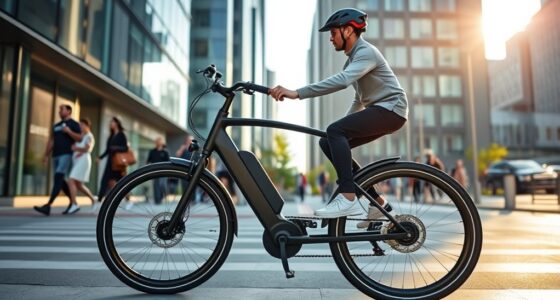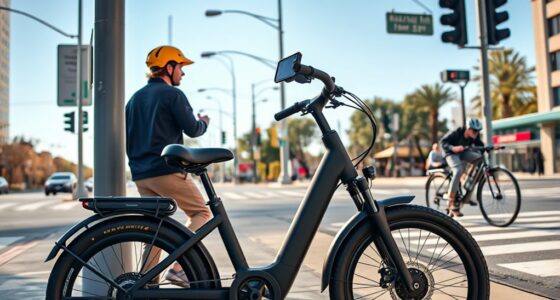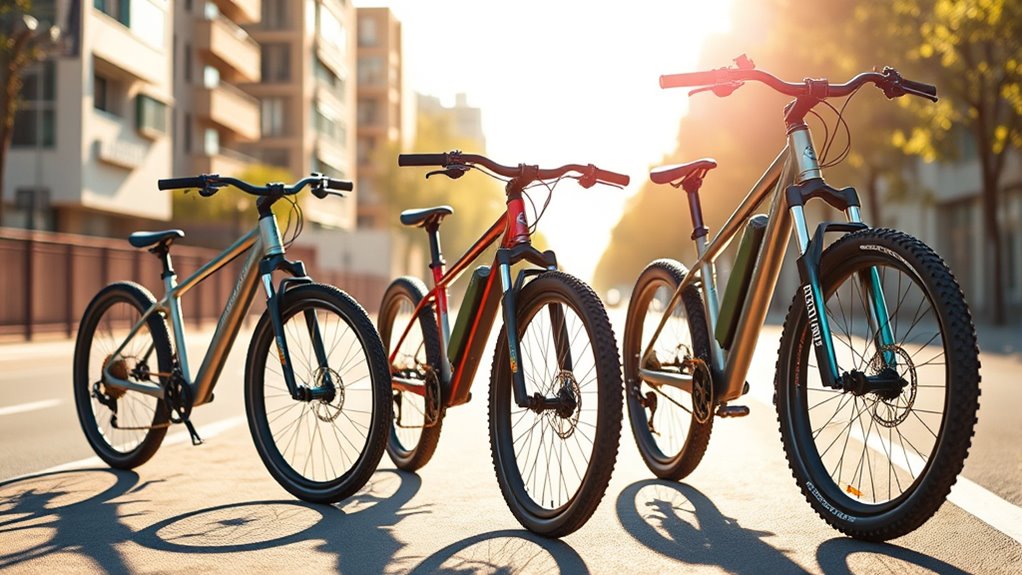

E-bike classes help determine how and where you can ride them legally and safely. Class 1 bikes have pedal assist only and stop supporting at 20 mph, making them great for leisurely rides. Class 2 bikes add a throttle, letting you trigger motor Support without pedaling. Class 3 bikes reach up to 28 mph and often have more power, suited for faster commutes. Understanding these differences guarantees you stay compliant and get the most out of your e-bike experience. Keep exploring to learn more.
Key Takeaways
- Class 1 e-bikes are pedal-assist only, stop supporting at 20 mph, with motor wattage up to 750W.
- Class 2 e-bikes feature a throttle for motor power without pedaling, alongside pedal assist modes.
- Class 3 e-bikes can reach 28 mph with motor support, limited to 750W, designed for higher-speed riding.
- Regulations vary; Class 1 and 2 are usually allowed on bike paths, while Class 3 often require street-only use and safety gear.
- Choosing the right class depends on riding style, terrain, local laws, and desired features like speed and range.
What Defines a Class 1 E-Bike?
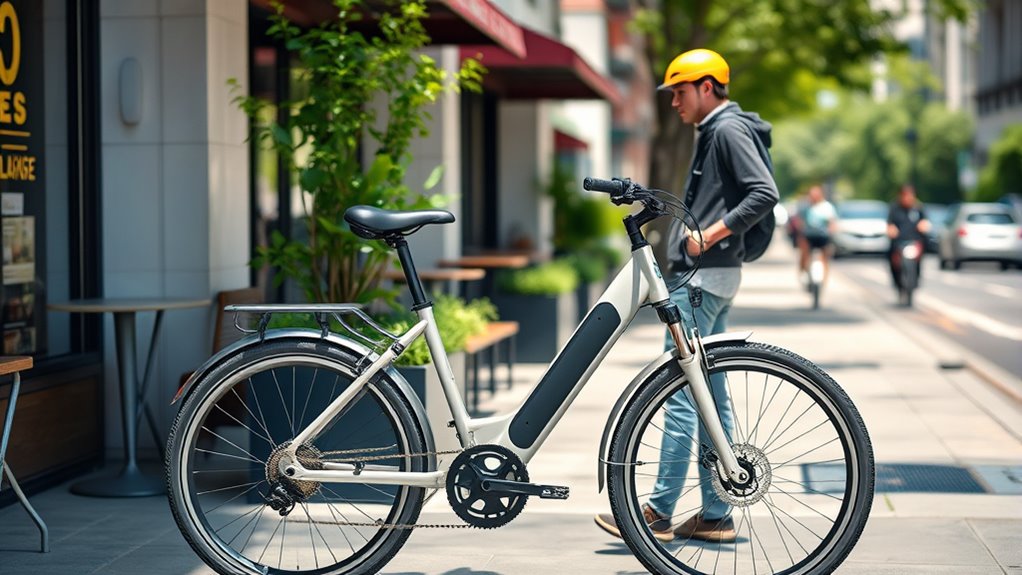
A Class 1 e-bike is defined by its pedal-assist system, which only activates when you’re pedaling. This means the motor provides support as you pedal, but stops once you reach 20 mph. The key to its performance lies in motor wattage, typically capped at 750 watts, offering enough power without overwhelming. Battery capacity also plays a role, influencing how far you can go before needing a recharge. A larger capacity, like 500Wh or more, lets you ride longer distances comfortably. The motor wattage and battery capacity work together to deliver smooth, reliable assistance, making your ride easier and more enjoyable. Overall, these features ensure a safe, efficient, and accessible riding experience for casual cyclists and commuters alike. Additionally, understanding regulatory compliance is important to ensure your e-bike meets local laws and safety standards.
Understanding Class 2 E-Bikes and Their Features
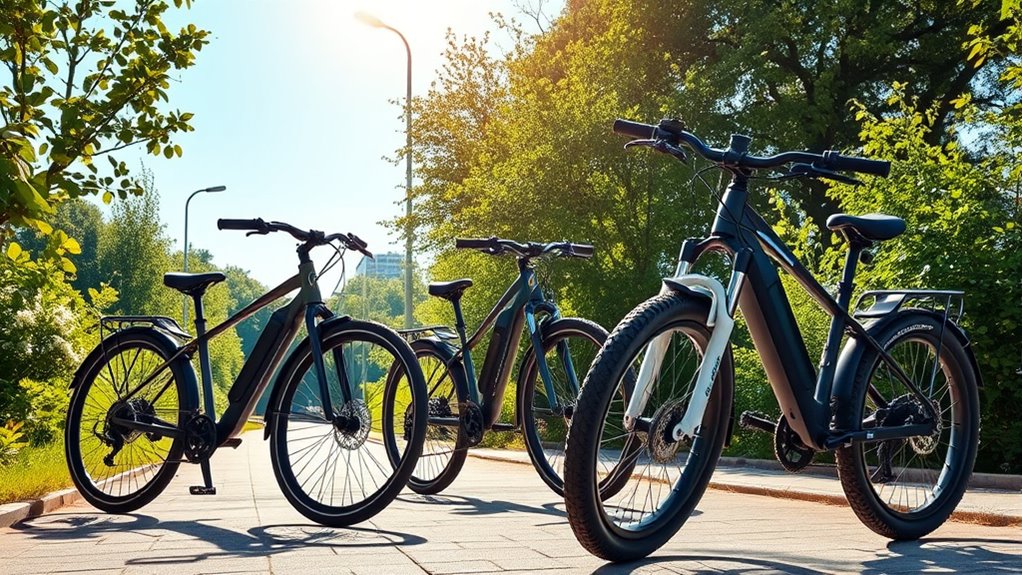
Since Class 2 e-bikes are designed to provide powerful assistance without requiring you to pedal constantly, they feature a throttle system that allows you to accelerate without pedaling. This makes them ideal for quick stops or when you need a boost on hills. Their battery technology is key, offering reliable power and longer range for your rides. Many Class 2 bikes also include pedal assist modes, which activate motor support when you start pedaling, making your ride smoother and more efficient. Unlike Class 1 bikes, which rely solely on pedal assist, Class 2 models give you the flexibility to choose between pedal help and throttle control. This combination of features makes them versatile, user-friendly, and suitable for various riding conditions. Additionally, high contrast ratios in motor and battery design contribute to their overall performance and durability.
The Speed and Power Limits of Class 3 E-Bikes
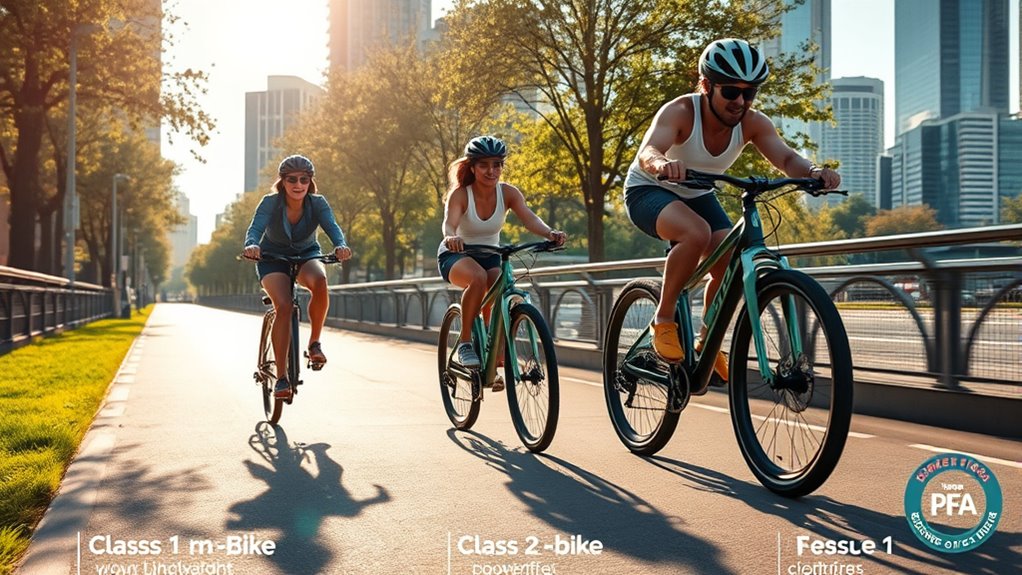
Class 3 e-bikes are designed to deliver higher speeds and more power, making them suitable for serious riders and certain riding environments. They typically have a motor power limit of 750 watts, providing more torque and acceleration than lower classes. Speed restrictions are set at a maximum of 28 mph (45 km/h) when using motor assistance. Unlike Class 1 and 2 bikes, which are limited to 20 mph, Class 3 e-bikes are built for faster travel, but they still adhere to legal limits to ensure safety. Motor power and speed limits are regulated to prevent excessive speeds and maintain rider control. Knowing these limits helps you stay within legal boundaries and ride responsibly while enjoying the benefits of a more powerful e-bike. Understanding e-bike classifications helps riders select the right bike for their needs and comply with local laws.
Riding Regulations and Where You Can Use Different Classes
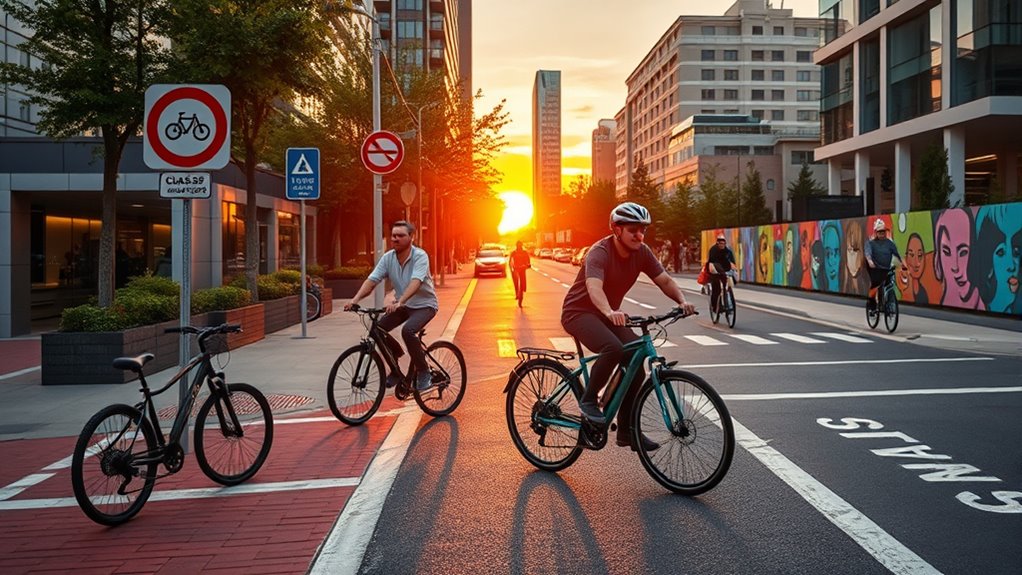
Understanding where you can legally ride different e-bike classes depends on local regulations and the type of terrain or infrastructure available. Generally, Class 1 and 2 e-bikes are permitted on bike paths and streets, but rules vary by region. Class 3 bikes are often restricted to streets and may require a helmet, licensing, or age restrictions. Always check local helmet laws and licensing requirements before riding. Additionally, family background can influence perceptions and regulations related to e-bike use in certain communities.
Choosing the Right E-Bike Class for Your Needs
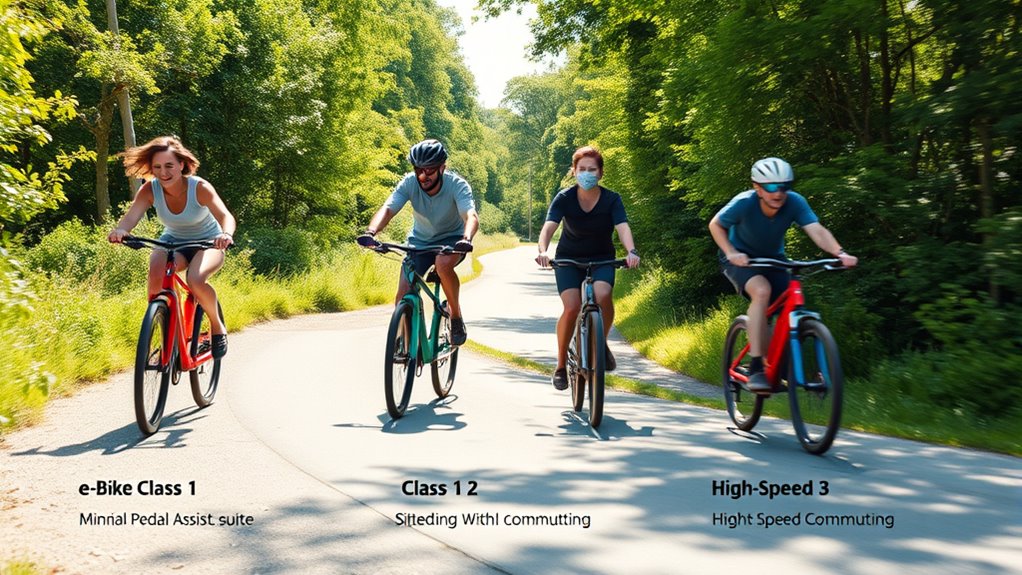
Choosing the right e-bike class depends on your riding habits, local regulations, and the terrain you’ll encounter. Consider how far you typically ride; a model with a longer battery life will keep you going without frequent recharges. Think about motor types—hub motors are generally quieter and simpler, suitable for flat terrain, while mid-drive motors offer better power for hilly areas. If you prefer leisurely rides on bike paths, a Class 1 might suit you best. For quicker commutes or off-road adventures, a Class 2 or 3 could be more appropriate. Your choice also depends on local laws, which may restrict certain classes. By matching your riding style with the right motor type and battery capacity, you’ll enjoy a more efficient and satisfying e-bike experience. Incorporating mindfulness techniques into your riding routine can help enhance focus and enjoyment on your journeys.
Frequently Asked Questions
Can I Upgrade My E-Bike to a Different Class Legally?
You wonder if you can upgrade your e-bike to a different class legally. It’s important to know e-bike legalities and class upgrade regulations in your area. Generally, upgrading might involve changing components or software, but you should check local laws first. Many regions restrict modifications that alter speed or power. To stay compliant, consult your local regulations and possibly get your bike inspected or registered before making any upgrades.
Are There Any Age Restrictions for Riding Each E-Bike Class?
Imagine stepping onto an e-bike trail where age restrictions are like guardian gates, guiding who can ride each class. For Class 1 and 2 bikes, you need to be at least 14 or 16, depending on your state, with licensing requirements varying too. For Class 3 bikes, the gate often opens only to riders 18 and older, with additional licensing or registration. Always check local laws before you start your ride.
How Do Battery Life and Range Vary Across Classes?
Battery life and range vary depending on the e-bike class you ride. With higher battery capacity, Class 3 bikes tend to offer longer range estimation, making them suitable for longer rides. Class 1 and 2 bikes usually have smaller batteries, so your range might be shorter. Keep in mind, factors like terrain, rider weight, and assist level also influence how far you can go on a single charge.
What Safety Gear Is Recommended for Each E-Bike Class?
For each e-bike class, you should wear protective clothing like helmets and gloves to stay safe. Visibility gear, such as reflective vests or lights, is essential to make sure you’re seen, especially at night or in low-light conditions. While all classes benefit from these safety items, Class 3 e-bikes, which go faster, demand extra caution with high-visibility gear. Always prioritize safety gear suited to your riding environment and speed.
Are There Specific Maintenance Considerations for Different E-Bike Classes?
While all e-bikes require regular upkeep, each class has unique maintenance needs. For instance, Class 3 bikes with higher speeds demand more frequent battery maintenance to guarantee peak performance. Tire considerations also differ; higher-speed models need sturdier tires to handle increased stress. You should routinely check and maintain batteries and tires, regardless of class, but pay extra attention to Class 2 and 3 bikes to keep them safe and reliable.
Conclusion
Now that you know the differences between e-bike classes, you can choose the perfect ride for your adventures. Think of it like selecting a trusty steed from a bygone era—each class offers unique strengths, just like knights selecting their armor. Whether you’re cruising through city streets or tackling rugged trails, understanding these classes guarantees you stay within the law and enjoy your journey. Ride smart, and remember, even in the digital age, a good rider’s choices make all the difference.