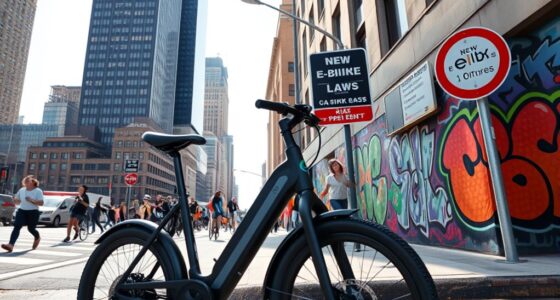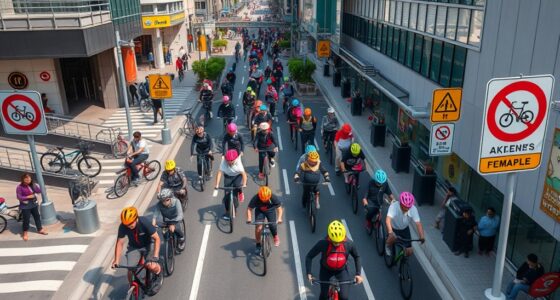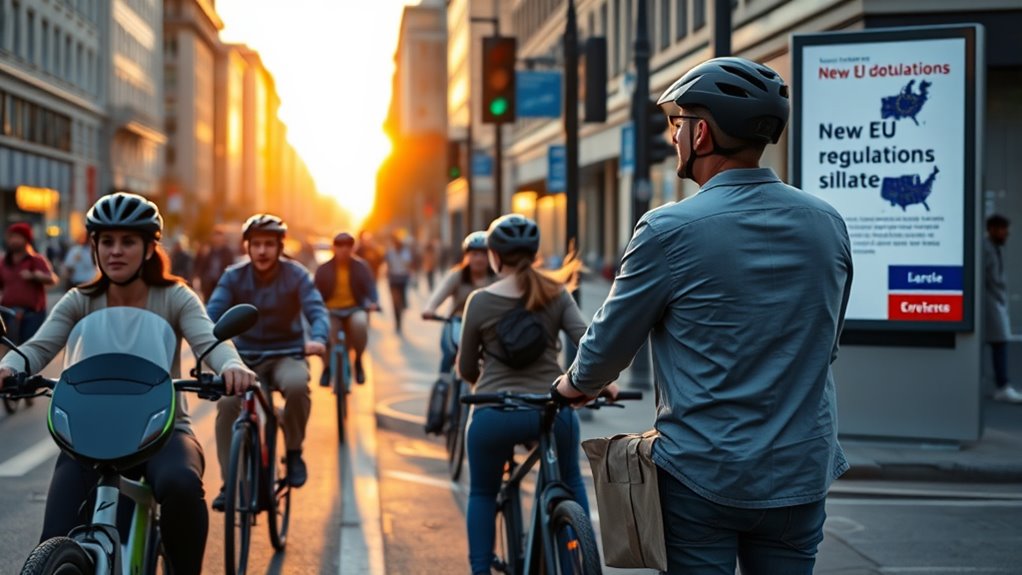

The proposed EU e-bike regulations could affect you by requiring upgrades for your bike to meet new safety standards, possibly increasing costs. You might face changes in licensing or classification, impacting how and where you can ride. Stricter rules aim to improve rider safety and bike quality, but they may also mean ongoing maintenance or inspections. To understand exactly how these updates could influence your riding experience, keep exploring what’s ahead.
Key Takeaways
- Riders may need to obtain new certifications or undergo inspections to comply with updated safety standards.
- Upgrading or replacing older e-bikes might be required to meet stricter durability and safety criteria.
- Licensing requirements could change, potentially involving additional training or documentation for riders.
- Enhanced safety features could increase e-bike prices, affecting affordability for some consumers.
- Increased focus on technical knowledge may necessitate rider education on safety features and compliance.
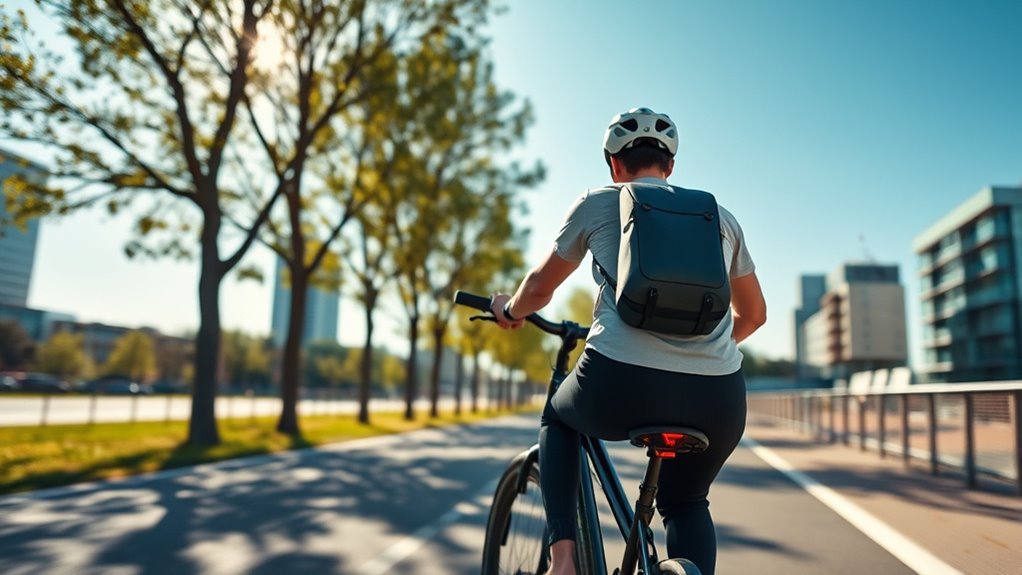
Are the upcoming EU e-bike regulations set to reshape your riding experience? If you’re a regular rider or considering jumping into the e-bike scene, these proposed rules could considerably impact how you enjoy your bike. The European Union is working on new regulations aimed at standardizing safety and ensuring rider protection, but they also bring changes that could alter licensing requirements and safety standards you’re used to. It’s essential to understand what’s coming so you can prepare accordingly.
One of the main focuses of the proposed regulations is tightening safety standards across all e-bikes. The EU wants to ensure that every e-bike on the road meets strict criteria for durability, braking performance, and electrical safety. This might mean that older bikes won’t automatically qualify unless they’re upgraded or replaced to meet new standards. If you’re purchasing a new e-bike, expect manufacturers to adhere to these safety standards, which could lead to better overall quality and reliability. However, it might also lead to increased costs for consumers, as bikes need to pass specific tests before hitting the market. For current riders, this could mean that your existing e-bike might need upgrades or inspections to stay compliant, especially if you plan to use it in countries with stricter enforcement. Additionally, the emphasis on STEM toy principles such as problem-solving and technical specifications highlights the importance of understanding the technical features of your e-bike to ensure compliance.

Hafny Handlebar Bike Mirror – HD Glass, Wide Angle, Adjustable 360° Rear View – Shatterproof, Anti-Glare, Premium, MTB, E-Bike, and Commuter Cycling Safety, HF-MR095 (Silver Right)
Clear Rear View for Safer Rides – High-definition glass with a wide-angle convex lens gives you a sharp,…
As an affiliate, we earn on qualifying purchases.
As an affiliate, we earn on qualifying purchases.
Frequently Asked Questions
Will Existing E-Bike Models Be Grandfathered Under New Regulations?
You wonder if your current e-bike models will be grandfathered under new rules. The proposal includes a grandfather clause, meaning existing models might be exempt from some regulations. However, it’s uncertain if all models will benefit from this exemption or if specific criteria apply. Keep an eye on official updates, as model exemptions could help you continue using your e-bike without modifications, but stay informed about potential changes that might affect your riding experience.
How Will Regulation Changes Impact E-Bike Prices for Consumers?
You might notice a price increase due to new regulations, which could impact affordability concerns for many riders. As stricter standards are implemented, manufacturers may face higher costs, and these could be passed on to you. While some models might stay affordable, others could become more expensive. Staying informed about regulation changes helps you make smarter choices and prepares you for potential shifts in e-bike prices that could affect your budget.
Are There Any Proposed Safety Standards Specific to E-Bike Components?
They say safety first, and that’s exactly what proposed EU regulations aim for. New component standards and safety requirements could set clear benchmarks for e-bike parts, ensuring your ride is safer and more reliable. These standards might include stricter testing for brakes, lights, and motors, so you know your e-bike meets high safety levels. While some may worry about costs, these rules ultimately protect you, making cycling safer for everyone.
Will Registration or Licensing Be Required for E-Bike Riders?
Right now, you might wonder if you’ll need licensing requirements or registration procedures for your e-bike. The proposed regulations could introduce a licensing system similar to motor vehicles, meaning you’d have to register your e-bike and possibly get a license to ride it legally. This could involve providing proof of registration and following specific procedures, which might add extra steps before you can enjoy your e-bike on public roads.
How Will These Regulations Influence E-Bike Manufacturing and Innovation?
You’ll see that these regulations may limit some technology restrictions, but they also create innovation incentives for manufacturers. As they adapt to new standards, expect more advanced features and safety improvements in e-bikes. While some restrictions could slow certain innovations, the push for compliance encourages companies to develop smarter, more efficient models. Overall, the regulations could steer e-bike manufacturing toward safer, more innovative designs that benefit you as a rider.

White Lightning 6-in-1 Bike Tool – Maintenance Tool for Mountain, Road and Electric Bicycles
White Lightning 6-in-1 mechanic quality bike tool with 3 reversible bits gives you 6 core tools to perform…
As an affiliate, we earn on qualifying purchases.
As an affiliate, we earn on qualifying purchases.
Conclusion
If these proposed EU e-bike regulations pass, you could see significant changes in your riding experience. For example, over 30% of e-bike riders in Europe might face new limits on speed or power, affecting how you commute or enjoy leisure rides. Staying informed and prepared will help you adapt to these changes smoothly. Remember, these regulations aim to enhance safety and sustainability, so understanding them now puts you ahead of the curve.

Ktaxon Electric Bike Conversion Kit, 48V 1000W Ebike Conversion Kit, 26" Front/Rear Wheel E-Bike Conversion Kits with PAS, LCD Display, Aluminum Alloy Frame and Gearless Hub Motor (Front Wheel)
【UNMATCHED MOTOR KIT】With 48V 1000W brushless and gearless hub motor, this ebike conversion kit creates efficient and noiseless…
As an affiliate, we earn on qualifying purchases.
As an affiliate, we earn on qualifying purchases.

Ovrimelle E-Bike Tester, Electric Car Scooter Brushless Controller Tester, 24V-72V, 5-in-1 Motor/Coil/Phase Sequence/Phase Angle/Hall T-Ester, 9V Battery Included, -20°C to 50°C(Color:as Shown)
5-in-1 Diagnostic Capabilities: Tests motor coil quality, controller performance, phase sequence (ABC/abc colors), phase angle (60°/120°), and hall…
As an affiliate, we earn on qualifying purchases.
As an affiliate, we earn on qualifying purchases.