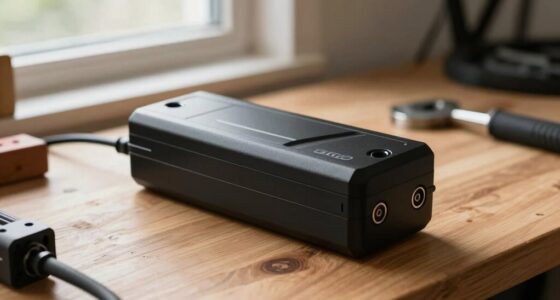
To set up a fire-safe charging corner at home, pick a location away from high-traffic areas and flammable items, ensuring good ventilation. Use fire-resistant surfaces like tempered glass or metal, and organize cords with clips or sleeves to prevent damage. Avoid soft furnishings and overloading outlets with surge protectors. Regularly inspect cables and devices for wear. Keep the area tidy and add smoke detectors for extra safety—discover more tips to protect your space effectively.

Get bike and ride gear delivered free — and shop member deals
- Fast, free delivery on millions of items
- Access to Prime Big Deal Days deals on October 6–7
- Prime Video, Amazon Music and more included
Key Takeaways
- Choose a well-ventilated, low-traffic area away from flammable materials for your charging station.
- Use fire-resistant surfaces and containers to contain heat and sparks safely.
- Organize cables with clips or sleeves, and regularly inspect for damage or wear.
- Plug chargers into surge protectors with circuit breakers, avoiding overloading outlets.
- Install smoke detectors nearby and keep the area free of clutter and dust for safety.

Creating a dedicated, fire-safe charging corner at home is essential for protecting your belongings and loved ones. This space isn’t just about convenience; it’s about minimizing risks associated with electrical devices and preventing potential fires. To start, choose a location away from high-traffic areas, where cords won’t be constantly tugged or tripped over. Once you’ve picked the spot, focus on using fire resistant materials for any surfaces or storage units. Materials like tempered glass, metal, or fire-resistant boards help contain any sparks or heat that might develop from faulty chargers or damaged cables.
Create a fire-safe charging corner with fire-resistant materials, away from high-traffic areas, for added safety and protection.
Cable management plays a pivotal role in maintaining safety. Cluttered cords can easily become damaged or cause overheating, so invest in cable organizers, clips, or sleeves that keep everything neat and secure. Proper cable management reduces the risk of frayed wires and accidental disconnections, which could lead to sparks or electrical shorts. Make sure all cords are rated for the device’s power needs, and avoid daisy-chaining multiple chargers or extension cords, as this increases fire hazards. Additionally, regularly inspect your cables for signs of wear, such as cracks, frays, or exposed wiring, and replace damaged ones immediately. Ensuring your home’s electrical system is up to code and compatible with your devices is also crucial for overall safety. Regular electrical system inspections can help identify potential issues before they become hazards. Maintaining electrical safety includes keeping the area free of dust and debris that could contribute to fire risk.
Position your chargers and devices on a stable, fire-resistant surface. Avoid placing them on soft furnishings like beds or couches, which can easily catch fire if a device overheats. Instead, use a solid, heat-resistant tray or stand that’s specifically designed to handle electrical devices. Keep your charging area free of flammable items like paper, cloth, or cleaning supplies—these can ignite if a device overheats or sparks occur. Incorporate a smoke detector nearby and ensure your home’s electrical system is up to code to add an extra layer of safety. Regularly monitor electrical safety to prevent hazards before they escalate. Remember that fire safety practices are vital in reducing the risk of home fires associated with electrical devices. Additionally, never overload sockets, which can cause overheating and increase fire risk.
Finally, consider the overall setup’s accessibility and organization. A well-organized corner makes it easy to unplug devices when not in use, reducing unnecessary electrical load and heat buildup. Use surge protectors with built-in circuit breakers to prevent overloads, and never leave devices charging unattended for extended periods. With careful planning—using fire resistant materials, implementing effective cable management, and maintaining a clutter-free environment—you create a safe haven for your devices and loved ones. It’s a simple yet essential step towards preventing fires and ensuring your home remains a secure space for everyone.
fire-resistant cable management sleeves
As an affiliate, we earn on qualifying purchases.
As an affiliate, we earn on qualifying purchases.
Frequently Asked Questions
What Are the Best Fire-Resistant Materials for Charging Stations?
You should choose fire-resistant coatings and heat-resistant plastics for your charging stations. Fire-resistant coatings protect surfaces from ignition, reducing fire risk, while heat-resistant plastics handle high temperatures without melting or catching fire. Using these materials guarantees your setup remains safe, even during prolonged charging. Incorporate fire-resistant coatings on surfaces and opt for heat-resistant plastics for components to create a safer, more resilient charging corner at home.
How Often Should I Check My Charging Devices for Safety?
You should check your charging devices weekly to guarantee safety. Did you know that 20% of battery failures happen due to poor maintenance? Regular battery maintenance and cable inspection help prevent overheating or fires. Keep an eye out for frayed cords, loose connections, or unusual heat. By staying vigilant, you reduce risks and prolong your device’s life, making your charging corner safer and more reliable.
Can DIY Fire Safety Measures Be as Effective as Professional Ones?
DIY safety measures can be effective if you follow proper guidelines, but they rarely match professional standards. Professionals have specialized training, tools, and experience to identify potential hazards and implement thorough fire safety solutions. While DIY safety is a good start, investing in professional assessments and installations ensures your home complies with safety standards, reducing fire risks more reliably. Always prioritize expert advice for critical safety measures.
What Signs Indicate My Charging Station Might Be a Fire Hazard?
Look for fire hazard indicators like overheating devices, frayed cords, or burning smells. Warning signs include sparks, flickering lights, or devices that feel hot to the touch. If you notice any of these, unplug your charger immediately and inspect your setup. Regularly check cables and connections, keep chargers on stable surfaces, and avoid overloading outlets to prevent potential fire hazards. Stay vigilant to protect your home from electrical fires.
Are There Specific Fire Safety Certifications for Charging Equipment?
Yes, there are specific fire safety certifications for charging equipment. You should look for certification standards like UL, ETL, or CSA, which verify the safety and durability of charging cables and devices. Ensuring your charging cable durability meets these standards reduces fire risks. Always choose certified products, as they’ve been tested for safety and compliance, helping you create a safer charging environment at home.
surge protector with circuit breaker
As an affiliate, we earn on qualifying purchases.
As an affiliate, we earn on qualifying purchases.
Conclusion
Setting up a fire-safe charging corner is like creating a cozy, secure nest for your devices. By choosing the right spot, keeping cords organized, and using fire-resistant materials, you protect your home from potential hazards. Regularly checking your chargers and avoiding overloading outlets keeps everything running smoothly. Think of it as giving your devices a safe, comfy home—because a little care now can prevent a big problem later. Stay vigilant and keep your space safe!
As an affiliate, we earn on qualifying purchases.
As an affiliate, we earn on qualifying purchases.
Fall Picks
fall essentials
As an affiliate, we earn on qualifying purchases.