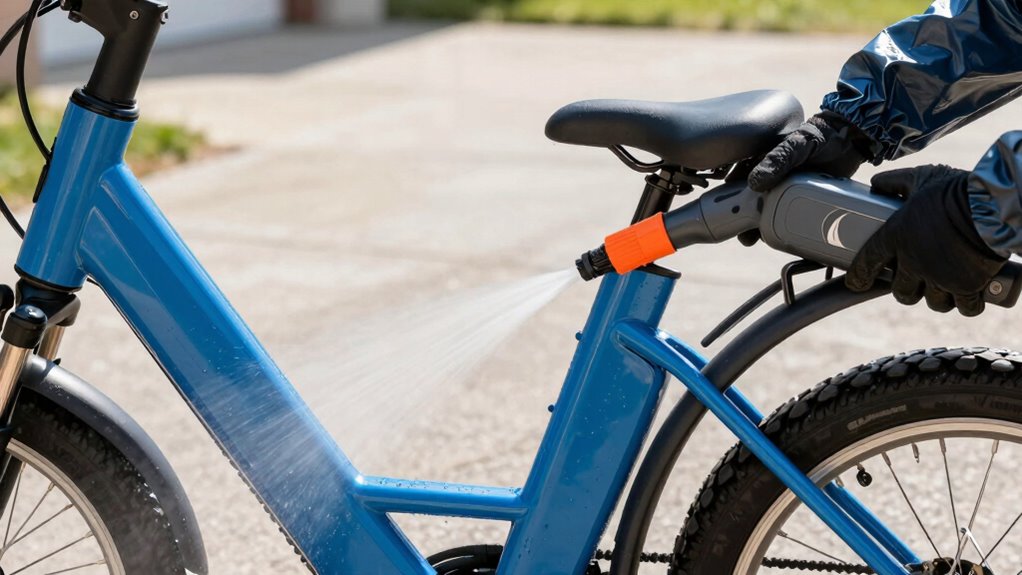

Using a garden hose is the safest way to clean your e-bike since it offers gentle water flow and reduces risk to sensitive electronics. A pressure washer cleans faster but can cause damage if not used carefully—stay on low pressure, keep the nozzle at a safe distance, and avoid electrical components. To learn the best techniques for safe cleaning, explore how to balance power and caution for your e-bike.
Key Takeaways
- Use a garden hose for gentle, safe cleaning of sensitive e-bike components and electrical parts.
- Pressure washers can clean faster but require careful pressure and distance adjustments to avoid damage.
- Select mild, biodegradable cleaners and avoid high-pressure water directly on electronics or batteries.
- Start with low pressure and moderate water temperature, increasing gradually to prevent harm.
- Always follow manufacturer instructions and maintain proper technique for safe, effective e-bike cleaning.
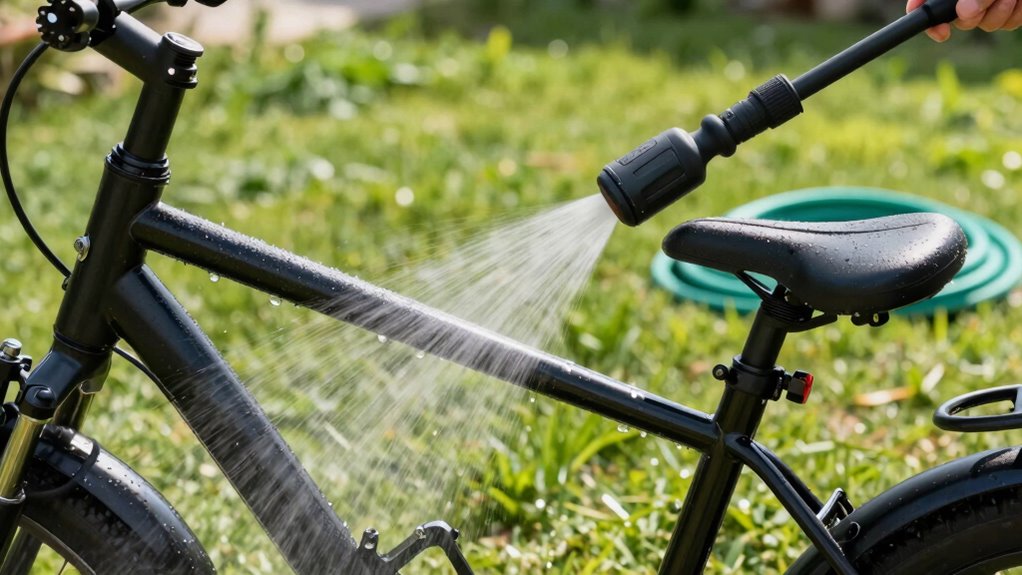
When it comes to cleaning outdoor surfaces, choosing between a pressure washer and a garden hose can make a big difference in how quickly and effectively you get the job done. If you’re aiming to clean your e-bike safely and efficiently, understanding the nuances of each tool is essential. One key factor is detergent choice. Using the right cleaning solution can help break down dirt, grime, and grease without damaging delicate parts. For an e-bike, opt for a mild, biodegradable bike-specific cleaner rather than heavy-duty automotive or industrial detergents. These gentle solutions effectively remove dirt without risking corrosion or damage to sensitive components. Additionally, selecting the appropriate water temperature plays a critical role. While hot water can dissolve stubborn grime more effectively, it’s not always suitable for cleaning delicate electronics or paint finishes. A pressure washer with adjustable temperature settings can be advantageous, allowing you to use warm water to loosen stubborn dirt while avoiding the risks associated with high temperatures. When using a garden hose, cold water is usually sufficient, especially if you’re cautious about water getting into electrical components. If you do decide to use a pressure washer, make sure to keep the water temperature moderate and avoid directing high-pressure streams at sensitive areas like the electrical system, battery compartment, or display. Always start with the lowest pressure setting and gradually increase if needed, maintaining a safe distance from the bike to prevent damage. The choice of detergent further influences the cleaning process—using too harsh a chemical or applying it directly without proper dilution can harm your e-bike’s finish and internal components. Always follow the manufacturer’s instructions for the cleaner and rinse thoroughly to prevent residue buildup. When using a garden hose, a simple soap solution and a soft brush or sponge can be effective for general cleaning without risking damage. For pressure washers, consider using specialized attachments that allow for controlled, even application of cleaner and rinse water. Proper technique and settings are essential, especially with pressure washers, to keep your e-bike in top condition while removing dirt, mud, and grime safely. Being aware of pool terminology and water chemistry principles can also help you better understand how to select safe cleaning practices for your bike’s surfaces.
Frequently Asked Questions
Can I Use a Pressure Washer on All Types of E-Bike Finishes?
You shouldn’t use a pressure washer on all types of e-bike finishes. Check the finish compatibility first; delicate paint or decals can be damaged by high pressure. Follow pressure restrictions strictly—use a low-pressure setting to avoid stripping or chipping. Gentle cleaning with a hose and soft brush usually works best for sensitive finishes. Always test a small area first and avoid direct jets on electronic components.
What Water Temperature Is Safest for Cleaning E-Bikes?
You should use water that’s warm but not hot, as temperature safety is key. Keep the water settings on your pressure washer or hose at a gentle, lukewarm level—around 30 to 40°C (86 to 104°F)—to avoid damaging sensitive components. Hot water can strip protective coatings or seep into electrical parts, so always opt for cooler water to protect your e-bike’s finish and electronics while cleaning effectively.
How Often Should I Clean My E-Bike With a Pressure Washer?
You should clean your e-bike with a pressure washer about once a month, aligning with your maintenance schedule. Regular cleaning helps prevent dirt buildup, which can affect performance, but avoid overdoing it to prevent damage. Keep an eye on how dirty it gets and adjust your cleaning frequency accordingly. Always use gentle pressure and avoid sensitive areas like the motor and battery to keep your e-bike in top condition.
Are There Specific Nozzles Recommended for E-Bike Cleaning?
You might think all nozzles are the same, but for e-bike cleaning, specific nozzle types matter. Use a wide-angle or 25-degree nozzle to prevent damage while effectively removing dirt. These nozzles provide gentle, controlled water pressure, aligning with safe cleaning techniques. Avoid narrow or high-pressure nozzles that could harm delicate components. Picking the right nozzle ensures you clean efficiently without risking damage to your e-bike’s sensitive parts.
What Are the Signs of Damage From Improper Pressure Washer Use?
If you use a pressure washer improperly, you might notice signs of damage like pressure damage or paint chipping on your e-bike. You could also see water getting into sensitive areas, causing electrical issues. Keep the pressure low, avoid direct spray on components, and stay at a safe distance. If you see any paint chipping or cracks, stop immediately to prevent further damage.
Conclusion
When it comes to cleaning your e-bike, choosing the right method is like finding the gentle touch in a busy day. A hose offers a soft, steady rinse that’s kind to your bike’s delicate parts, while a pressure washer can be a bit too enthusiastic, risking a gentle whisper of water. By playing it safe and opting for the hose, you keep your e-bike happy and healthy, ready to ride smoothly into your next adventure.