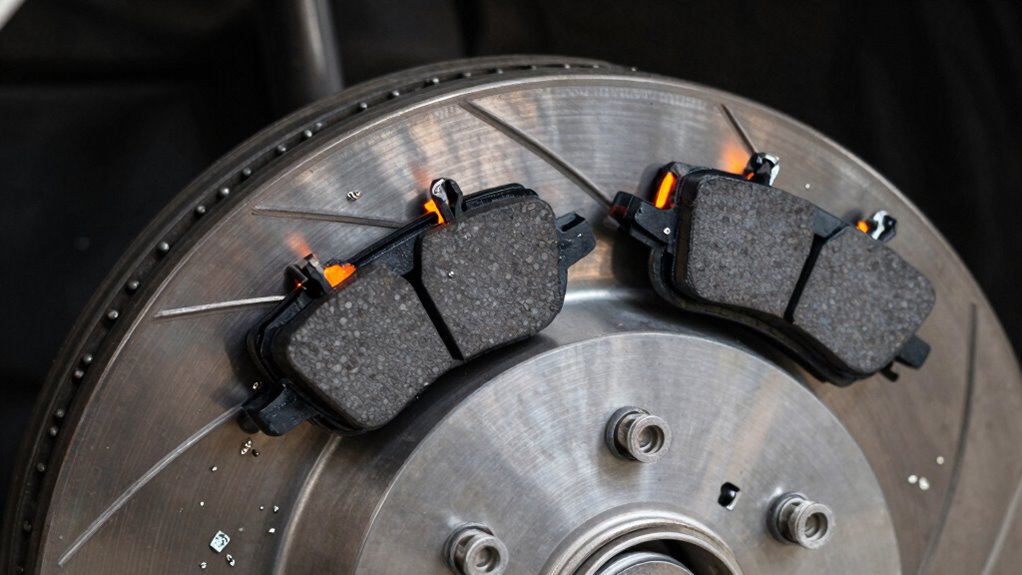

Brake bedding is essential because it guarantees your braking system works safely and efficiently, especially during intense driving or emergencies. Proper bedding helps create a smooth transfer layer of material on your pads and rotors, which improves braking power, reduces squeals, and prevents uneven wear. Skipping this step can lead to decreased stopping ability and rotor damage over time. Keep going to discover how proper bedding can protect your brakes and boost performance longer-term.

Get bike and ride gear delivered free with Prime
- Fast, free delivery on millions of items
- Prime Video, Amazon Music and more included
- Member-only deals all year
Key Takeaways
- Proper bedding ensures optimal transfer of brake pad material to the rotor for reliable friction and stopping power.
- It prevents uneven pad wear, rotor damage, and squealing caused by improper contact surfaces.
- Bedding helps dissipate heat effectively, reducing brake fade during heavy or repeated braking.
- Skipping bedding can lead to irregular rotor surfaces, decreasing braking efficiency and safety over time.
- Tailoring bedding procedures to brake material extends component lifespan and maintains consistent performance.
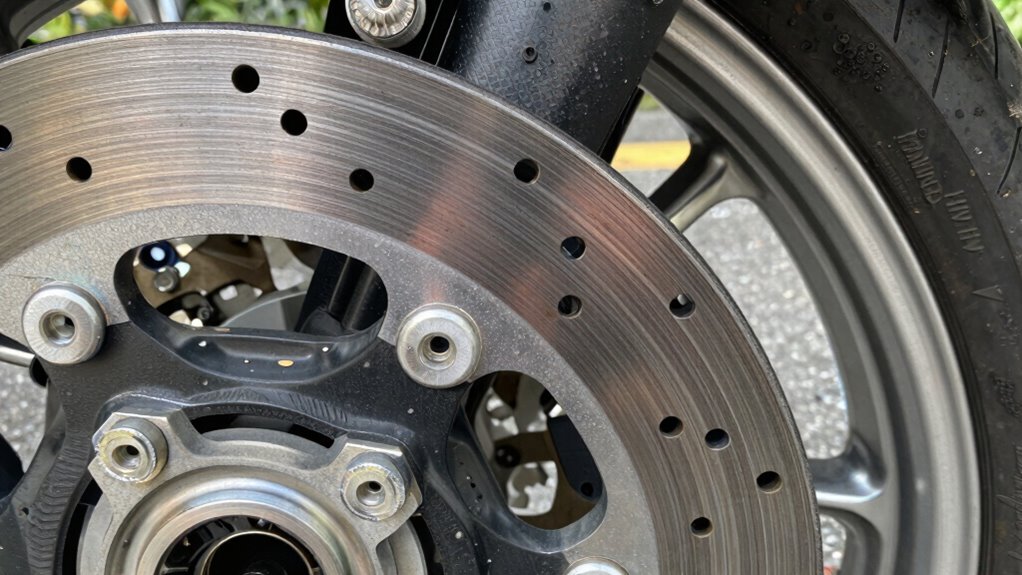
Have you ever wondered why proper brake bedding is essential after installing new brake pads? It’s a step many riders overlook, but it plays a crucial role in ensuring your brakes perform reliably and safely. When you replace your brake pads, understanding the importance of bedding helps you get the most out of your braking system. The process involves gradually heating up the brake pads and rotors to create a smooth transfer layer of material, which is essential for optimal performance.
Different brake pad materials, like semi-metallic, ceramic, or organic compounds, require specific bedding procedures. Each type interacts with the rotor differently, so neglecting the proper bedding can lead to uneven wear or reduced effectiveness. Proper bedding allows the brake pad material to evenly adhere to the rotor surface, forming a consistent friction layer. This not only maximizes braking power but also helps prevent issues like squealing or uneven pad wear down the line.
One of the most critical benefits of proper bedding is brake fade prevention. Brake fade occurs when the brakes overheat during heavy use, causing the braking force to diminish dramatically. When you skip the bedding process, you risk creating irregularities on the rotor surface, which can trap heat and reduce friction efficiency. Over time, this can lead to increased brake fade, making your stopping power unreliable in demanding situations. Bedding helps mitigate this by ensuring better heat dissipation and more consistent friction characteristics across the entire braking surface. Proper bedding also supports the formation of a transfer layer, which is crucial for consistent friction and heat management. Additionally, understanding the different types of brake pad materials and their specific bedding needs can significantly improve your braking efficiency and longevity.
In essence, taking the time to properly bed your brakes after installing new pads isn’t just a formality; it’s a vital step to extend the lifespan of your brake components and to guarantee safety. It aligns the brake pad materials with the rotor surface, preventing issues related to heat buildup and ensuring brake fade prevention. Proper bedding also ensures optimal friction characteristics, which is essential for reliable stopping power. Understanding the heat management needs of your brake system is equally important for maintaining consistent braking performance. Regularly inspecting your brake components and understanding their material properties can further enhance your safety and ensure a smoother ride. By doing this simple yet critical task, you’re setting yourself up for more reliable, efficient, and safer braking every time you hit the road.
As an affiliate, we earn on qualifying purchases.
Frequently Asked Questions
How Long Does the Brake Bedding Process Typically Take?
The brake bedding process usually takes about 15 to 30 minutes, depending on your brake pad materials and rotor finish. You’ll want to perform gradual stops, avoiding hard braking initially, to help transfer a layer of pad material onto the rotor surface. This guarantees ideal contact and braking performance. Be patient during this process, as proper bedding enhances brake longevity and effectiveness, providing safer, more reliable stopping power.
Can Improper Bedding Damage Brake Components Permanently?
Yes, improper bedding can cause permanent damage to your brake components. If you don’t properly bed the brake surface and pads, uneven wear can occur, leading to reduced pad longevity and compromised braking performance. This damage might include glazing or warping of the brake surface, which won’t be corrected over time. Proper bedding guarantees ideal contact, extends pad life, and maintains consistent, reliable braking.
Is Brake Bedding Necessary for All Types of Braking Systems?
You need to bed your brakes if you’re using organic brake pad materials with your rotors. Imagine a rider who skipped bedding and faced squealing and reduced stopping power; it’s a clear sign that proper bedding is vital. Bedding guarantees ideal rotor compatibility and even pad transfer, preventing uneven wear. Not all braking systems require it, but for most organic and semi-metallic setups, it’s an essential step for safety and performance.
What Signs Indicate That Brake Bedding Was Done Incorrectly?
If your brake bedding was done incorrectly, you’ll notice signs like brake fade during stopping, where your brakes feel less responsive, and rotor glazing, which makes the braking surface shiny and smooth. You might also experience increased stopping distances, unusual noises, or vibrations. These issues indicate the bedding process didn’t properly prepare your brake system, reducing performance and potentially causing long-term damage if not addressed promptly.
How Often Should Brake Bedding Be Redone?
You should redo brake bedding whenever you install new brake pads or change rotors, especially if you notice reduced braking performance. Confirm brake pad compatibility and check the rotor surface finish, as mismatched pads or rough surfaces can require re-bedding. Regular re-bedding helps maintain ideal contact, prevents uneven wear, and guarantees your braking system performs safely and efficiently. Always follow manufacturer instructions for best results.
As an affiliate, we earn on qualifying purchases.
Conclusion
If you skip brake bedding, you’re risking your safety like ignoring a ticking time bomb. Properly bedding your brakes isn’t just a small step; it’s your armor against sudden stops and catastrophic failures. Think of it as the secret sauce that transforms decent brakes into unstoppable force. Don’t underestimate this vital process—your life could depend on it. Take the time, do it right, and keep yourself safe from brake failures that could turn everyday rides into disasters.
As an affiliate, we earn on qualifying purchases.
As an affiliate, we earn on qualifying purchases.
Fall Picks
fall essentials
As an affiliate, we earn on qualifying purchases.