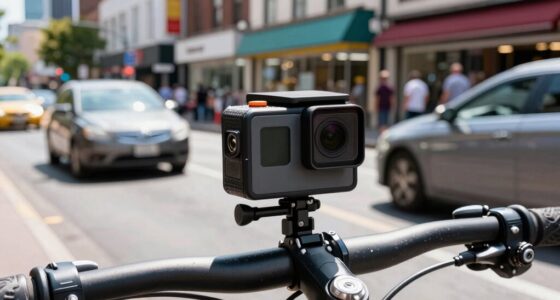

To avoid glare while night riding, aim your headlight slightly downward, just below your line of sight to oncoming traffic. This keeps your path well lit without blinding other drivers, improving safety for everyone. Make sure your headlight is properly aligned and clean for the best effect. Using adjustable beams can help you fine-tune the aim based on conditions. Keep an eye on your lights for peak visibility—if you continue, you’ll discover even more tips for safe and glare-free night riding.
Listen free for 30 days with Audible
Thousands of audiobooks and originals — cancel anytime.
As an affiliate, we earn on qualifying purchases.
Key Takeaways
- Aim your headlight slightly downward, just below the oncoming driver’s line of sight, to prevent glare.
- Use adjustable headlights to fine-tune the beam angle based on riding conditions.
- Keep headlights clean and properly aligned for consistent, safe illumination.
- Avoid aiming headlights directly at oncoming vehicles; focus the beam to illuminate the road ahead.
- Switch between low and high beams appropriately, and always adjust to minimize glare for other drivers.
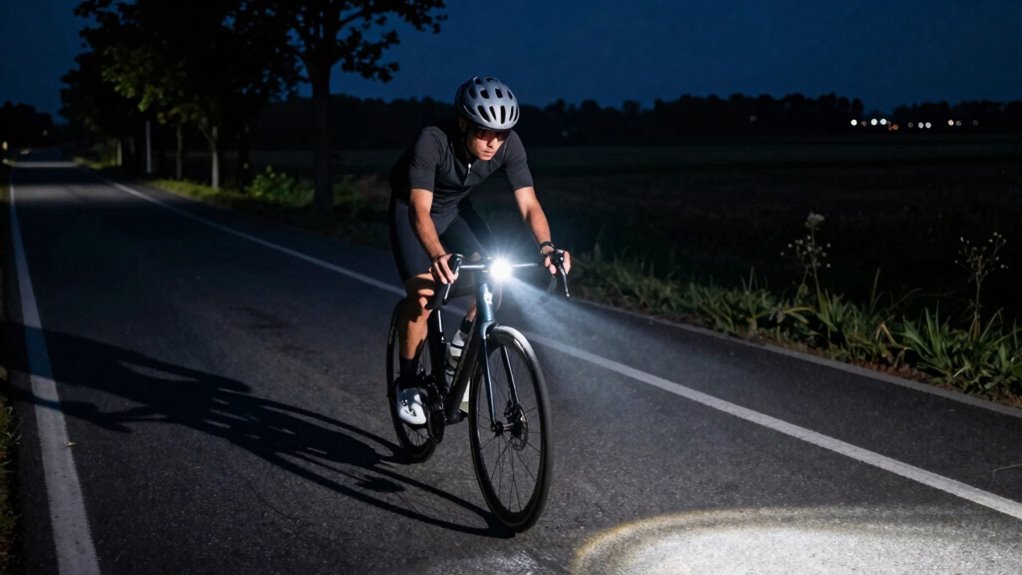
Riding at night can be challenging, especially when glare from oncoming headlights hampers your vision. To stay safe, you need to understand the significance of proper headlight use and how to optimize your bike safety. Modern headlight technology offers a variety of features designed to reduce glare and improve visibility, but you also have a role in aiming your headlight correctly. Properly adjusted headlights not only help you see the road clearly but also prevent blinding other drivers, creating a safer environment for everyone.
Proper headlight adjustment enhances visibility and prevents blinding others for safer night riding.
When it comes to bike safety, your goal is to illuminate the road ahead without dazzling others. Many riders overlook how essential it is to aim their headlights properly. A headlight that’s pointed too high causes glare for oncoming drivers, which can lead to dangerous situations. On the other hand, if it’s aimed too low, you miss important details on the road. To strike the right balance, you should position your headlight so that the beam is directed slightly downward, just below the line of sight of oncoming traffic. This ensures that your path is illuminated without producing excessive glare for others.
Advancements in headlight technology can make this easier. Some headlights now feature adjustable beams, allowing you to easily modify the angle based on your riding conditions. LED lights, in particular, provide brighter, more focused illumination that’s less likely to cause glare if aimed properly. Many modern headlights also come with low and high beam settings, so you can switch between them depending on traffic and visibility needs. Using the appropriate setting at night is a key part of maintaining bike safety and avoiding glare issues.
Additionally, good riding habits help maximize the effectiveness of your headlight technology. Keep your eyes on the road and be mindful of approaching vehicles. When you see headlights in the distance, adjust your position slightly if possible, or reduce your speed to maintain safe distance. Regularly check that your headlight is clean and properly aligned—dirt and misalignment can diminish its effectiveness and increase glare. Remember, your headlight isn’t just for you; it’s a communication tool that signals your presence and intentions to other road users. Being aware of your headlight aiming and maintaining proper alignment can significantly enhance your safety at night.
As an affiliate, we earn on qualifying purchases.
Frequently Asked Questions
How Often Should I Check and Adjust My Headlight Alignment?
You should check and adjust your headlight alignment at least once every few months or if you notice a decrease in visibility. Regular headlight maintenance is essential for safe riding. Use proper alignment tools to guarantee your headlight is aimed correctly, preventing glare for others and improving your view. Also, inspect your headlights after rough rides or hitting bumps to keep them properly aligned and functioning effectively.
What Types of Headlights Are Best for Night Riding?
Think of headlights as the guiding stars of your ride. LED headlights are best for night riding because they offer superior brightness, longevity, and energy efficiency. Look for models with advanced headlight technology that provide clear, focused beam pattern optimization, reducing glare for oncoming drivers. These headlights illuminate the road ahead without blinding others, helping you see better and stay safe during nighttime adventures.
Can Adjusting My Headlight Improve Battery Life?
Adjusting your headlight can improve battery efficiency by reducing unnecessary power drain. Proper headlight maintenance, like cleaning the lens and ensuring correct alignment, helps optimize light output without overtaxing your bike’s battery. When your headlight is aimed correctly, it uses energy more efficiently, extending battery life. So, regularly checking and adjusting your headlight not only enhances visibility but also conserves your battery, making your night rides more reliable.
Are There Legal Restrictions on Headlight Brightness?
You should know that most regions have headlight laws and brightness regulations, usually limiting brightness to around 300 lumens for bikes and 1,500 lumens for vehicles. These restrictions aim to prevent glare and ensure safety. In fact, exceeding these limits can result in fines or penalties. Always check local headlight laws before riding at night, and keep your brightness within legal limits to stay safe and compliant.
How Do Weather Conditions Affect Headlight Performance?
Weather conditions like foggy conditions and rainy weather can markedly reduce your headlight’s effectiveness. Fog scatters light, making it harder to see and be seen, while rain can reflect headlight beams, causing glare and decreasing visibility. To improve safety, use your low beams in fog and rain, keep headlights clean, and consider auxiliary lights if permitted. Adjusting your riding style helps maintain visibility and keeps you safer on the road.
LED bike headlight with beam focus
As an affiliate, we earn on qualifying purchases.
As an affiliate, we earn on qualifying purchases.
Conclusion
By aiming your headlight correctly, you prevent glare, illuminate the road clearly, and ride confidently through the night. You see hazards early, respond faster, and stay safer. You enjoy the darkness without discomfort, the journey without distraction, and the ride without worry. When your headlight is properly aimed, you create a safer, brighter, more comfortable night ride. So, take the time to adjust your light, and let your ride shine without glare.
bike headlight low high beam switch
As an affiliate, we earn on qualifying purchases.
As an affiliate, we earn on qualifying purchases.
bike headlight cleaning and alignment tools
As an affiliate, we earn on qualifying purchases.
As an affiliate, we earn on qualifying purchases.
Flea & tick season Picks
flea and tick prevention
As an affiliate, we earn on qualifying purchases.