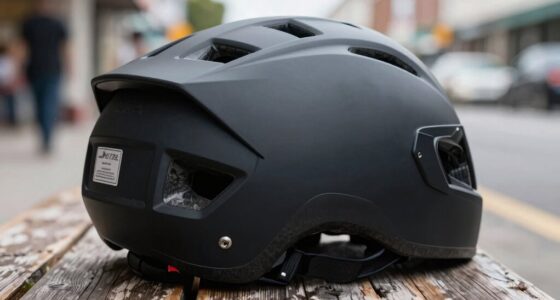
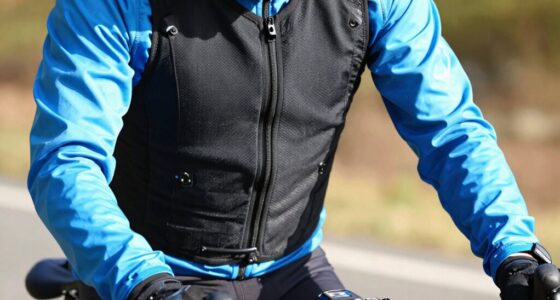
When choosing body armor for e-bike riding, look for lightweight, flexible pads made from advanced materials like gel inserts, foam padding, and breathable composites. These provide solid impact absorption without feeling bulky or restrictive, so you can stay agile and comfortable on your ride. Modern designs contour to your body, with vented shells and moisture-wicking fabrics for added comfort. If you keep exploring, you’ll discover how to balance protection and freedom of movement for a safer, more enjoyable ride.
Key Takeaways
- Opt for lightweight, flexible materials like foam and gel that absorb impact without adding bulk.
- Choose slim, ergonomic pads designed to contour to your body for a snug, unobtrusive fit.
- Look for gear with vented shells and moisture-wicking fabrics to enhance airflow and comfort.
- Select protective gear with adjustable straps for a secure, customized fit that stays in place.
- Prioritize modern, impact-absorbing pads that offer safety without restricting mobility or agility.

Riding an e-bike offers an exciting and eco-friendly way to commute, but it also comes with risks of falls and collisions. That’s why prioritizing riding safety is essential. One of the most effective ways to protect yourself is by investing in body armor designed specifically for e-bike riders. Modern protective gear technology has advanced considerably, enabling you to find pads that offer excellent impact absorption without feeling bulky or restrictive. This means you can stay agile and comfortable while still being well-protected, which is vital if you want to enjoy your ride without constant worry.
Invest in lightweight, flexible body armor for safe, comfortable e-bike riding without sacrificing mobility.
When choosing body armor, look for options that incorporate lightweight, flexible materials such as gel inserts, foam padding, or breathable composites. These materials provide the necessary shock absorption to minimize injury without adding unnecessary weight or bulk. The latest protective gear technology has made it possible to design pads that contour to your body, offering a snug fit that stays in place during your ride. This reduces chafing and discomfort, so you won’t even notice you’re wearing protection—except when it counts.
Comfort is key when it comes to riding safety. Bulky armor can throw off your balance, interfere with your maneuverability, and discourage consistent use. Thankfully, many brands now develop slim, form-fitting pads that don’t compromise mobility. You can find knee and elbow pads that are barely noticeable under your riding gear, making it easier to maintain focus and control. Some advanced designs even incorporate vented shells and moisture-wicking fabrics, keeping you cool and dry on longer rides. Additionally, ergonomic design plays a crucial role in ensuring the gear fits well and enhances your riding experience.
Another aspect to consider is how easily the gear can be adjusted or removed. You want pads that stay securely in place but are simple to take off when you’re done riding. Quick-release straps and adaptable sizing features make a big difference. Additionally, modern protective gear often includes integrated impact zones covered with durable, abrasion-resistant materials that withstand the rigors of regular riding while offering superior protection.
In the end, your choice of body armor should strike a balance between protection and comfort. Cutting-edge protective gear technology has made it possible to enjoy riding safety without feeling like you’re wearing cumbersome armor. When you select well-designed, lightweight pads, you’ll boost your confidence and ride with peace of mind, knowing you’re prepared for any unexpected falls or collisions. Staying safe on your e-bike isn’t just about skills; it’s about using the right gear that moves with you and keeps you protected without sacrificing comfort or freedom of movement.
Frequently Asked Questions
Are There Lightweight Body Armor Options Specifically for Women?
Yes, there are lightweight armor options specifically designed for women’s protective gear. You can find lightweight armor options that fit comfortably and don’t feel bulky, making your ride more enjoyable. Look for pads made with flexible, breathable materials that contour to your body. Many brands offer women’s-specific protective gear, so you can stay safe without sacrificing comfort or mobility. Choose gear tailored to your needs for a confident, secure ride.
How Do I Properly Size Body Armor for Optimal Protection?
Getting the right fit for body armor is like finding a glove that molds perfectly to your hand. Follow fit guidelines closely, ensuring the pads sit snugly without restricting movement. Use sizing tips like measuring your chest, waist, and hips accurately, and try different sizes if possible. Remember, properly fitted armor offers maximum protection and comfort, so don’t settle for anything too loose or tight—your safety depends on it.
Can I Wear Body Armor Over or Under Clothing Comfortably?
You can wear body armor comfortably over or under clothing by using layering techniques. Opt for lightweight, breathable fabrics that wick away sweat and allow airflow. When wearing armor under clothing, choose fitted, moisture-wicking materials to prevent bulkiness. Over clothing, select slim, flexible pads that won’t restrict movement. Adjust your layers to maintain comfort, ensuring the armor stays secure without feeling bulky or restricting your ride.
What Maintenance Is Required to Keep Body Armor Effective?
To keep your body armor effective, you need to follow proper cleaning procedures and storage tips. Clean it regularly with mild soap and water, avoiding harsh chemicals that could damage the material. After cleaning, let it air dry completely before storing. Store your armor in a cool, dry place away from direct sunlight, ensuring it stays in good shape and provides reliable protection when you need it most.
How Long Does Body Armor Typically Last Before Needing Replacement?
Think of your body armor like a trusty bike chain—its durability lifespan depends on care. Typically, it lasts 5 to 10 years, but material degradation from sweat, sun, and impacts can shorten this. After about five years, even if it looks fine, the protective qualities may diminish. Regular inspections and proper storage help guarantee your gear stays effective, so replace it when signs of wear appear or after a decade.
Conclusion
Think of your body armor as a shield—light as a feather, strong as a fortress. It guards your journey, letting you move freely and confidently through every ride. Choose pads that fit like a second skin, so you’re not weighed down by bulky armor. Remember, safety is your steady companion, a silent guardian on your path. With the right protection, you’re free to explore, to push limits, and to embrace each adventure with peace of mind.