Smart helmets with built-in lights boost your visibility and safety on busy roads by providing bright, consistent signals for braking and turning. They respond to gestures or voice commands, helping you communicate your intentions clearly. Designed to be lightweight, durable, and eco-friendly, they enhance comfort without bulk. These features create a safer riding experience for you and others while supporting sustainable transportation. If you’re curious about how these innovations can protect you, there’s much more to discover.

Get bike and ride gear delivered free with Prime
- Fast, free delivery on millions of items
- Prime Video, Amazon Music and more included
- Member-only deals all year
Key Takeaways
- Built-in lights enhance rider visibility, reducing accidents in busy or low-light conditions.
- Smart lighting systems communicate rider intentions clearly, improving overall road safety.
- Programmable and adaptive lights customize safety signals based on environment and rider preferences.
- Eco-friendly design promotes sustainable riding practices and reduces environmental impact.
- Lightweight, durable, and rechargeable features ensure practical, long-term safety for daily use.
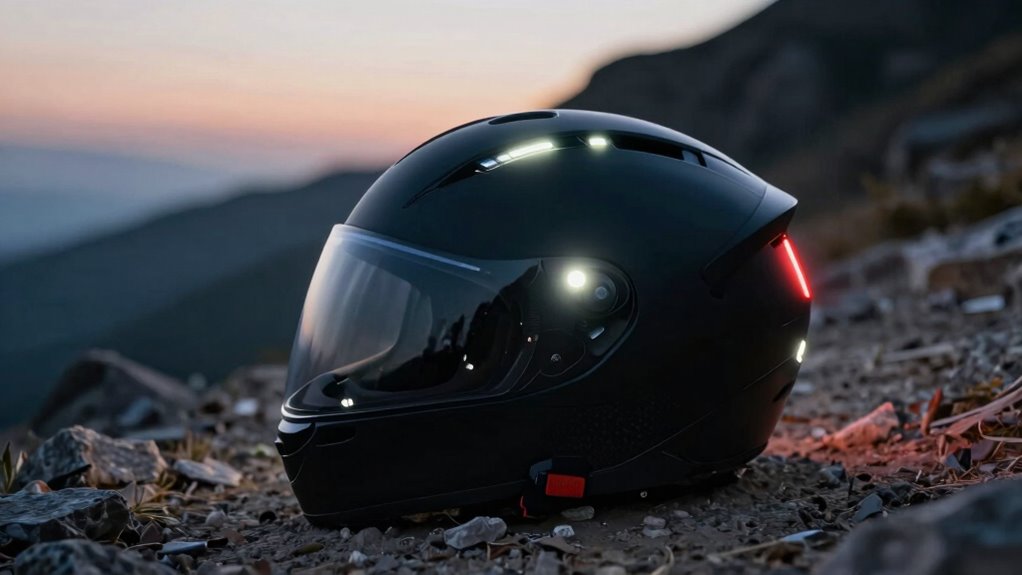
The real benefit of these helmets lies in how seamlessly they enhance helmet safety. When you wear a smart helmet with built-in lights, you’re not just protecting your head—you’re actively increasing your visibility. This is especially important in busy urban environments where distractions and limited sight distances can lead to dangerous situations. The lighting technology integrated into the helmet helps you stand out from the crowd by providing bright, consistent signals that alert others to your presence. Whether you’re braking, turning, or just riding through low-light conditions, the lights can often be programmed to respond to your movements or synchronized with your smartphone, offering tailored safety features.
The advanced lighting technology also offers adaptive features that traditional external lights can’t match. Some smart helmets detect ambient lighting conditions and automatically adjust the brightness of the lights, ensuring you’re always visible without blinding others or draining the battery prematurely. Others incorporate turn signals or brake lights that activate with simple gestures or voice commands, making communication with other road users clear and intuitive. This level of interactivity enhances helmet safety by providing clear, visible cues that improve overall road awareness. Incorporating sustainable design practices in the development of these helmets can further reduce their environmental impact and promote eco-friendly transportation choices. Additionally, designing these helmets with environmental sustainability in mind encourages eco-conscious riding habits and supports broader climate goals. Including eco-friendly materials in manufacturing can also help reduce the ecological footprint of these safety devices.
Furthermore, these helmets often come equipped with rechargeable batteries and durable designs, making them practical for everyday use. The integration of lighting technology doesn’t compromise comfort or style; many models are lightweight and aerodynamically designed, so you don’t feel weighed down or bulky. In addition, the recyclability of materials used in some helmets can contribute to a circular approach to product lifecycle management. By combining helmet safety with innovative lighting features, smart helmets empower you to ride confidently, knowing you’re better protected and more visible to everyone around you. This combination of safety and technology isn’t just a convenience; it’s an essential step toward safer roads for all riders and drivers alike. Recognizing the importance of biodiversity and sustainable living practices can also inspire more eco-friendly choices in the development of such innovative safety gear.
Popular right now

Samsung 48-Inch S90H OLED 4K Smart TV (2026)

Samsung 42-Inch Class OLED S90F 4K Smart TV (2025)

LG C2 Series 65-Inch OLED evo 4K Smart TV (OLED65C2PUA, 2022)
As an affiliate, we earn on qualifying purchases.
Frequently Asked Questions
How Long Does the Battery Last on a Full Charge?
On a full charge, your smart helmet’s battery typically lasts between 8 to 12 hours, depending on usage. Battery longevity can vary based on how often you use features like built-in lights or Bluetooth connectivity. You’ll need to monitor charging frequency to keep it ready for daily rides. To maximize battery life, consider turning off features you don’t need, and recharge the helmet regularly to guarantee peak performance.
Are Smart Helmets Compatible With All Bike Models?
Smart helmets aren’t compatible with all bike models due to variations in helmet aesthetics and brand compatibility. You’ll want to check if the helmet’s design suits your bike’s style and if it’s compatible with your bike brand’s tech system. Some brands offer universal models, but others are specific, so it’s best to verify before purchasing. This guarantees seamless integration and maximum performance for your riding experience.
Can the Lights Be Customized or Replaced?
Yes, you can customize or replace the lights on a smart helmet with built-in lights. Many models feature lighting customization options, allowing you to choose different colors or modes to suit your preferences. Additionally, the lights often have replaceable components, making maintenance easy. This flexibility guarantees your helmet stays functional and personalized, enhancing safety and visibility during your rides without the need to replace the entire helmet.
How Weather-Resistant Are These Helmets?
These smart helmets are designed with weather resistance in mind, so you can confidently ride in rain or snow. They feature durable materials that enhance helmet durability, protecting you from the elements and minor impacts. While no helmet is entirely waterproof, these models typically offer good resistance to moisture and dirt, making them suitable for various weather conditions. Just make certain you check specific product details for the best fit and protection level.
Do Smart Helmets Meet Safety Certification Standards?
Smart helmets do meet safety certification standards, ensuring your protection. Design innovation focuses on integrating advanced features without compromising safety, and user comfort remains a priority during certification. Notably, over 90% of certified helmets pass rigorous safety tests, giving you peace of mind. When choosing a smart helmet, verify it has relevant certifications like CPSC or EN1078, so you know it adheres to safety standards while offering the latest tech.
Conclusion
Smart helmets with built-in lights aren’t just tech upgrades—they’re your personal safety companions, illuminating your path and keeping you visible in the dark. Think of them as your trusty lighthouse on a foggy night, guiding you safely through every ride. By investing in one, you’re not only embracing innovation but also taking a proactive step to protect yourself. So gear up, light the way, and ride with confidence—because your safety deserves nothing less.