
When riding, you should carry a compact first-aid kit with essentials like adhesive bandages, antiseptic wipes, antibiotic ointments, and pain relievers to quickly address minor injuries. Include items like gloves, a flashlight, a whistle, and a basic manual to prepare for emergencies or weather issues. Staying organized and regularly checking your supplies guarantees you’re ready for unexpected incidents. Want to learn how to customize your kit for maximum safety? Keep exploring to find out more.
Key Takeaways
- Carry essential items like adhesive bandages, antiseptic wipes, and antibiotic ointments to treat minor injuries promptly.
- Include personal medications and allergy pills to address specific health needs during rides.
- Equip the kit with a flashlight, whistle, and space blanket for emergency preparedness and weather emergencies.
- Regularly check and restock supplies, monitor expiry dates, and ensure all items are in good condition for quick access.
- A well-organized first-aid kit enhances confidence, reduces infection risk, and allows swift response to accidents.
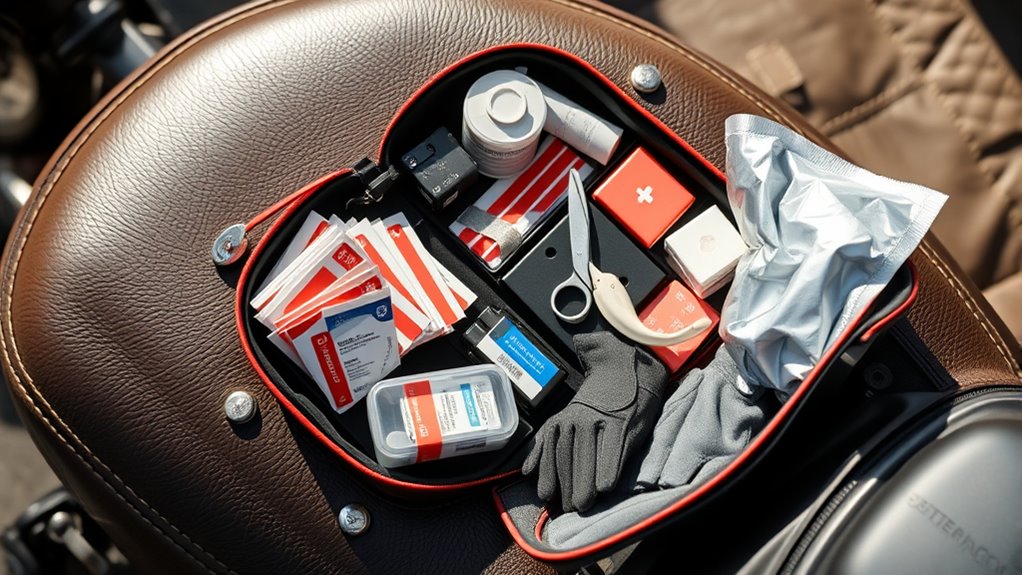
Have you ever considered what you’d do if you get injured while riding? It’s a question that highlights the importance of being prepared for any situation. When you’re out on your bike, your focus should include not just enjoying the ride but also guaranteeing your safety and knowing how to respond if something goes wrong. That’s where having a well-stocked first-aid kit becomes essential. It’s a crucial part of bike safety and emergency readiness that can make a real difference in how you handle minor injuries or even more serious incidents.
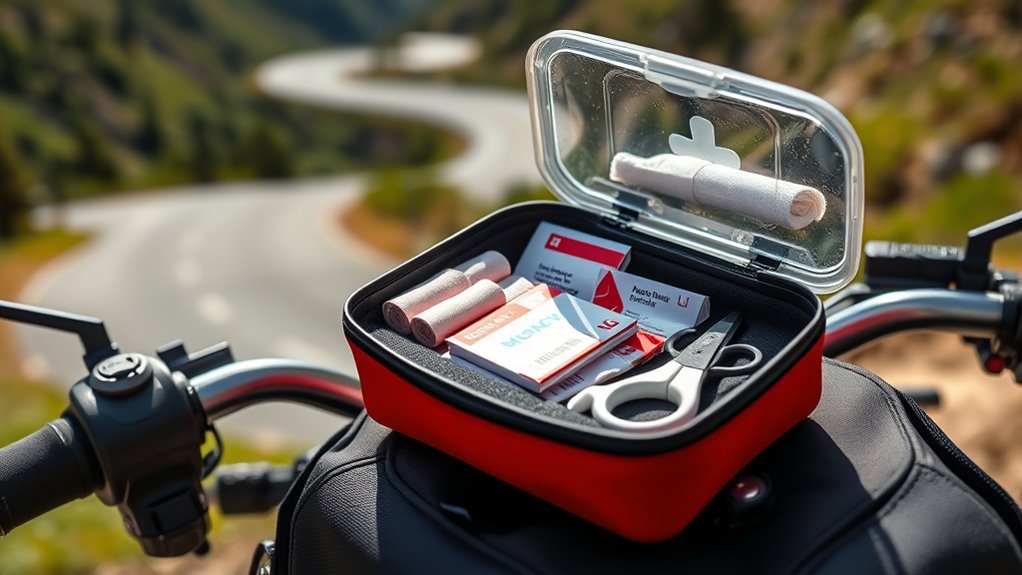
Carrying a first-aid kit tailored for riders isn’t just about having bandages and antiseptic; it’s about being ready for the unexpected. You want to include essentials like adhesive bandages of various sizes, antiseptic wipes, and antibiotic ointments to treat cuts and scrapes quickly. Also, consider packing some pain relievers, allergy medication if needed, and gloves to protect yourself while providing care. These items help you manage minor injuries on the spot, reducing the risk of infection and preventing small issues from escalating.
A rider’s first-aid kit should include bandages, antiseptic wipes, ointments, pain relievers, allergy meds, and gloves for quick injury care.
Beyond treating cuts and scrapes, your kit should include items that support emergency preparedness. Think about carrying a space blanket or emergency thermal blanket — they’re lightweight but can be lifesavers if you’re stuck in cold conditions or waiting for help. A small flashlight or headlamp is useful during early mornings or late evenings, ensuring you can see and signal for assistance if needed. If you ride in areas where access to help might be delayed, including a whistle can attract attention, and a basic first-aid manual can guide you through unfamiliar situations.
It’s also wise to have some personal medications, like an inhaler or allergy pills, especially if you have known health issues. Remember, your first-aid kit should be compact and organized so you can access items quickly during an emergency. Regularly check and restock supplies, ensuring everything is in good condition and within expiry dates. Having a kit prepared shows you’re serious about bike safety and emergency readiness, which can boost your confidence on every ride. Being equipped with the right tools not only helps you deal with injuries but also keeps you calm and in control when things go awry.
Ultimately, a well-thought-out first-aid kit is a small investment that offers big peace of mind. It empowers you to respond swiftly and effectively, turning a potentially stressful situation into one where you’re in control. No matter how experienced a rider you are, accidents can happen, but being prepared ensures you’re ready to handle them safely and confidently.

JUNLING RD2 Electric Scooter for Adults, 5000W Dual Motor, 50 Mph Top Speed, 55 Miles Max Range, 60V/25AH Battery, Dual Suspension Hydraulic Braking System, 10.5" Off-Road e-Scooter with LED Light
🛴【New Upgraded Powerful Motor】5000W high-speed dual motors provide strong power for Ruitoo electric scooter. Under certain conditions, the...
As an affiliate, we earn on qualifying purchases.
Frequently Asked Questions
How Often Should I Update My First-Aid Kit?
You should update your first-aid kit at least every six months and after any use. Regularly check your kit to make certain all items are stocked, unexpired, and in good condition—this is essential for proper kit maintenance. Incorporate stocking tips like replacing expired medications and replenishing consumables. Staying diligent with these updates guarantees you’re prepared for emergencies, giving you peace of mind on your rides.
Are There Specific First-Aid Supplies for Different Riding Disciplines?
Yes, your first-aid kit should include discipline-specific supplies tailored to your riding style. For example, if you’re into trail riding, include blister treatment and insect repellent. For competitive disciplines, add items like cold packs for injuries and specialized bandages. Customizing your gear guarantees you’re prepared for common risks associated with your discipline, making your kit more effective and practical. Regularly review and update these supplies to match your evolving riding needs.
Can I Include Over-The-Counter Medications in My Kit?
Think of your first-aid kit as a reliable toolbox for riding emergencies. You can include over-the-counter medications, but prioritize medication safety and dosage considerations. Always choose familiar, non-expiring drugs, and label them clearly. Keep in mind that some medications might not be suitable for everyone, so consult your healthcare provider. Properly stored and chosen OTC meds can be a valuable addition, providing quick relief when you need it most.
What Training Is Recommended to Use a First-Aid Kit Effectively?
You should get CPR certification and training in wound management to use your first-aid kit effectively. These skills help you respond quickly to emergencies like choking or severe bleeding, giving you confidence in critical moments. Proper training guarantees you know how to use bandages, apply pressure, and perform CPR correctly, which can make a lifesaving difference. Investing in these courses prepares you to handle injuries confidently and responsibly.
How Do I Personalize My First-Aid Kit for Individual Needs?
You can personalize your first-aid kit by customizing supplies to match your personal medical needs. Think about any allergies, medications, or specific conditions you have, and include items like allergy medications or inhalers. Regularly review and update your kit to guarantee it contains relevant supplies. This way, you’ll be prepared for your unique needs, making your first-aid kit more effective and tailored to keep you safe during rides.

AONIU M4 Electric Scooter for Adults with seat 25-30 mph Fast Speed Heavy Duty 300+ lbs 10 inch Off Road Foldable e Scooter Mobility e Scooters for Girls Men Teens 31-37 Miles Long Range Bike
👍WHY CHOOSE US ?👍800W Peak Powerful Motor👍31 Miles Max Range👍330+ Lbs Load👍ALL Terrain Riding👍Safer Bright Light👍7 Shock Absorption...
As an affiliate, we earn on qualifying purchases.
Conclusion
Having a well-stocked first-aid kit is essential for every rider. It prepares you to handle minor injuries and can even save lives in emergencies. Are you really willing to risk being unprepared when every second counts? Make sure your kit is complete, accessible, and ready to use. Remember, a small investment in safety can make a big difference on the road—so are you ready to ride with confidence and peace of mind?

Electric Scooter Adults, 1600W Motor, E-Scooters Up to 31Miles Range,11" Off-Road/All Terrain Tire Scooter with Dual Suspension & Side Light
【Powerful & Smooth Riding Experience】Conquer city streets and steep inclines (20°-30° grades) effortlessly with our 1200W brushless rear...
As an affiliate, we earn on qualifying purchases.

Funhang Electric Bike for Adults, 26" City Cruiser Ebike with 1000W Peak Motor, 21.7MPH 50 Miles Commuter Adult Electric Bicycles with 48V Battery, Adjustable Stem, 7-Speed, UL 2849 Certified
1000W Peak Powerful Motor: Funhang electric bike features a powerful 500W (1000W peak power) high-speed motor, delivering an...
As an affiliate, we earn on qualifying purchases.