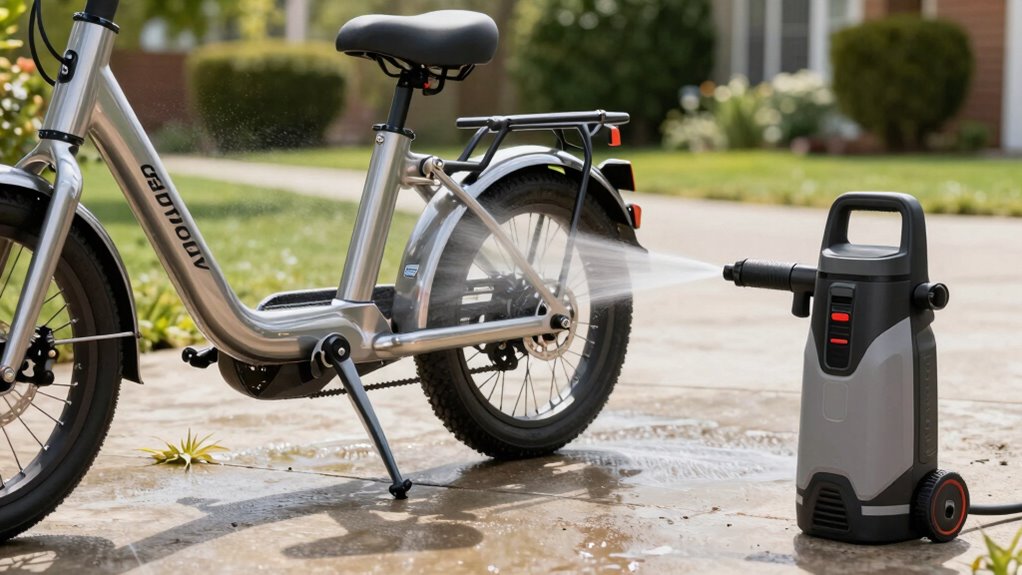
Cleaning an e-bike is a balancing act: you want enough pressure to blast chain grime and dried mud off the frame, but not so much that you force water past bearing seals, into the motor housing, or under the battery contacts. That tension is exactly why not just any pressure washer belongs near a bike with electronics on board. After comparing the options side by side, two picks rise to the top: the Westinghouse ePX3100v earns my Best Overall slot because its nozzle selection and foam cannon let you dial pressure down to bike-safe levels while still handling driveway duty, and the portable 3.2-gallon tank model wins as the safest choice for direct frame cleaning, since its modest 290 PSI output and included brush head are gentler than anything else here. The core tradeoff in this category is power versus safety — plug-in units clean faster and tackle other chores, while cordless low-pressure washers trade raw force for portability and peace of mind. Cord length, weight, and whether you even need a faucet all shape the decision too.

Get bike and ride gear delivered free with Prime
- Fast, free delivery on millions of items
- Prime Video, Amazon Music and more included
- Member-only deals all year
Complete the kit


Key Takeaways
- The Westinghouse ePX3100v is the best all-rounder because its 40-degree nozzle and foam cannon allow bike-safe cleaning plus real power for patios and driveways.
- Cordless models like the SUNSOUL and the 1100 PSI 6-in-1 washer win on portability but demand caution — concentrated jets at close range can still push water into e-bike electronics.
- The 3.2-gallon tank model is the only pick here that needs no faucet at all, but its 290 PSI output means it is a bike-washing tool, not a driveway tool.
- Both Westinghouse units share the same rated output of 1800 PSI and 1.2 GPM; the ePX3100s is the lighter, longer-reach version of the ePX3100v.
- Whichever model you choose, the fan spray pattern and a two-foot standoff distance matter more for protecting your e-bike than the PSI number on the box.
| Westinghouse ePX3100v Electric Pressure Washer, 2100 Max PSI, 1.76 Max GPM |  | Best Overall | Max Pressure: 2100 PSI (1800 rated) | Max Flow Rate: 1.76 GPM (1.2 rated) | Weight: 17.6 lbs | VIEW ON AMAZON | See Our Full Breakdown |
| Westinghouse ePX3100s Electric Pressure Washer with Foam Cannon and Turbo Nozzle |  | Best Value Plug-In | Max PSI: 2100 (1800 rated) | Max GPM: 1.76 (1.2 rated) | Weight: 10 lbs | VIEW ON AMAZON | See Our Full Breakdown |
| Cordless Portable Pressure Washer, 1100 PSI, 6-in-1 Nozzle |  | Best for Trailhead and Campsite Washes | Maximum Pressure: 1100 PSI | Battery: 21V, 4.0Ah rechargeable | Motor: Brushless | VIEW ON AMAZON | See Our Full Breakdown |
| SUNSOUL Cordless Portable Washer with Two Batteries |  | Best Cordless for Longer Sessions | Motor: Brushless | Water Flow: 2.2 GPM | Batteries: Two 21V rechargeable packs | VIEW ON AMAZON | See Our Full Breakdown |
| Portable Cordless Electric Pressure Washer with 3.2-Gallon Tank |  | Best for Delicate E-Bike Cleaning (Beginner-Friendly) | Maximum Pressure: 290 PSI | Flow Rate: 2 L/min | Tank Capacity: 3.2 gallons (12 L), foldable | VIEW ON AMAZON | See Our Full Breakdown |
| pressure washer for cleaning e bike | Hose Length | Weight | Power Source | Included Accessories |
|---|---|---|---|---|
| Westinghouse ePX3100v Electric | 20 ft braided nylon | 17.6 lbs | Electric (plug-in) | — |
| Westinghouse ePX3100s Electric | 20 ft | 10 lbs | Electric (plug-in) | Foam cannon, turbo nozzle, spray gun, lance, spray nozzles |
| Cordless Portable Pressure Was | 17.18 ft (5 m) suction hose with filter | — | Cordless battery | Battery, charger, spray lance, foam bottle, water filter, connectors, carrying case |
| SUNSOUL Cordless Portable Wash | 23 ft | 3 lbs | — | Foam cannon, charger, water filter, adapters, connectors, tool case |
| Portable Cordless Electric Pre | 80 inches | 4.4 lbs | — | — |
More Details on Our Top Picks
Westinghouse ePX3100v Electric Pressure Washer, 2100 Max PSI, 1.76 Max GPM
This Westinghouse earns the top spot because it solves the e-bike dilemma better than anything else in the lineup: you get three quick-connect nozzles, which means you can drop from an aggressive narrow jet for the driveway down to a wide, gentle fan for the frame, wheels, and cockpit. The included detachable foam cannon is the real e-bike asset here — a pre-soak of foam loosens chain grime and road film so you barely need direct pressure on sensitive areas at all. Compared with the ePX3100s below, this model is heavier at 17.6 pounds, but the extra weight buys a more substantial pro-style steel wand and a 3-year limited warranty covering service, labor, and parts, which no other pick here matches.
The tradeoffs are real. The rated output of 1800 PSI and 1.2 GPM is lower than the advertised maximums, and 2100 PSI is far more pressure than any e-bike needs — this is a machine you must deliberately detune by standing back, using the widest nozzle, and never pointing it at the motor, battery bay, or display. The 20-foot hose can also feel short if your outlet and spigot are far apart, though the braided nylon design coils without kinking. This pick makes the most sense for the rider who wants one machine that washes the bike on Saturday and the patio on Sunday, and who is willing to use restraint around the drivetrain electronics.
Pros:- Three quick-connect nozzles let you drop to a wide, bike-safe fan spray
- Detachable foam cannon loosens grime so you need less direct pressure
- Total Stop System shuts the pump off when idle, extending motor life
- 3-year limited warranty covering service, labor, and parts
Cons:- Rated output of 1800 PSI and 1.2 GPM falls short of advertised maximums
- Full power is overkill for e-bikes and requires deliberate caution around electronics
- 20-foot hose may force you to move the unit mid-wash
Best for: Riders who want one washer for the e-bike plus household jobs like decks, fences, and driveways
Not ideal for: Anyone who wants a set-and-forget tool with no risk of over-pressurizing bike electronics
- Max Pressure:2100 PSI (1800 rated)
- Max Flow Rate:1.76 GPM (1.2 rated)
- Weight:17.6 lbs
- Hose Length:20 ft braided nylon
- Nozzles:3 quick-connect spray tips
- Power Source:Electric (plug-in)
- Warranty:3-year limited service, labor, and parts
Our verdict“The most versatile and best-backed option here, provided you use the widest nozzle and keep the jet away from the motor and battery.”
Westinghouse ePX3100s Electric Pressure Washer with Foam Cannon and Turbo Nozzle
Think of the ePX3100s as the featherweight sibling of my top pick. It shares the same 2100 max PSI / 1800 rated PSI output, but shaves the weight down to just 10 pounds and stretches the power cord to 35 feet — which in practice means you can park the unit by the spigot and walk the gun all the way around a bike in the driveway without unplugging anything. The included turbo nozzle is where this model differs in character: it concentrates the flow into a rotating high-impact jet that is genuinely useful on the driveway or a muddy mountain bike frame, but it is absolutely not something to point at a battery compartment or hub motor. The adjustable foam cannon, by contrast, is the nozzle you will actually use on the e-bike itself.
Compared with the ePX3100v, you give up the pro-style steel wand, some heft that signals sturdier internals, and the longer warranty in exchange for easier carrying and longer reach. Compared with the cordless picks, it delivers far more cleaning muscle but anchors you to an outlet and faucet. This option stands out for the rider whose washing spot is a walk from the power source, and who wants full-size cleaning power without full-size weight. Its weakness is the same as its sibling’s: it is a real pressure washer, and around e-bike electronics that demands discipline.
Pros:- Just 10 pounds with built-in holders that keep accessories organized
- 35-foot GFCI cord plus 20-foot hose covers a large washing radius
- Adjustable foam cannon plus turbo nozzle covers both gentle and aggressive cleaning
- Same 2100 max PSI output as the larger Westinghouse at a lighter weight
Cons:- Rated output of 1800 PSI and 1.2 GPM is below advertised maximums
- Turbo nozzle is too aggressive for direct use on e-bike electronics
- Not built for heavy-duty, frequent industrial-scale cleaning
Best for: Riders with a far-flung outlet who want plug-in power in an easy-to-carry package
Not ideal for: Campers, trailhead washers, or anyone without access to power and a spigot
- Max PSI:2100 (1800 rated)
- Max GPM:1.76 (1.2 rated)
- Weight:10 lbs
- Power Cord:35 ft GFCI
- Hose Length:20 ft
- Included Accessories:Foam cannon, turbo nozzle, spray gun, lance, spray nozzles
- Power Source:Electric (plug-in)
Our verdict“The smarter pick over the ePX3100v if portability and reach matter more to you than the steel wand and longer warranty.”
Cordless Portable Pressure Washer, 1100 PSI, 6-in-1 Nozzle
Where both Westinghouse units require a wall outlet, this cordless washer goes wherever the bike goes. Its 21V battery and brushless motor produce up to 1100 PSI — enough to strip dried mud off tires, rims, and a frame — and the 17.18-foot suction hose with filter lets you pull water from a bucket, a jerrycan, or even a stream. For e-bike riders who finish a muddy ride at the trailhead and want to rinse the worst off before it bakes on, that combination is hard to beat. The 6-in-1 spray lance is the feature that makes it e-bike-viable: you can rotate from a narrow jet for the cassette to a wide shower pattern for the frame and display area.
The honest tradeoff: 1100 PSI from a tight nozzle is still plenty of pressure to damage paint or force water past seals if you spray an e-bike’s electronics point-blank. This is a tool that rewards a light touch, and it cannot match the Westinghouse models for flow rate, so soap dwell time and a sponge do more of the actual cleaning. Runtime on a single 4.0Ah battery also limits you to one or two bike washes per charge. Compared with the SUNSOUL below, it is the higher-pressure, shorter-runtime option — better at blasting, worse for long sessions. This model is better suited to mobile riders than to homeowners with a driveway and a spigot.
Pros:- Fully cordless operation with a brushless motor for reliable power
- 6-in-1 spray lance rotates from jet to gentle shower patterns
- Draws water from buckets, pools, rivers, or any standing source
- Ships with battery, charger, foam bottle, filter, and a carrying case
Cons:- 1100 PSI can still damage paint or push water into electronics at close range
- Single battery means limited runtime for multi-bike or big jobs
- Lower flow rate makes it slower than plug-in models for heavy grime
Best for: Riders who wash bikes away from home — at trailheads, campsites, or races
Not ideal for: Anyone with easy access to power and water who wants faster, higher-flow cleaning
- Maximum Pressure:1100 PSI
- Battery:21V, 4.0Ah rechargeable
- Motor:Brushless
- Spray Modes:6-in-1 spray lance
- Hose Length:17.18 ft (5 m) suction hose with filter
- Power Source:Cordless battery
- Included Accessories:Battery, charger, spray lance, foam bottle, water filter, connectors, carrying case
Our verdict“The pick for washing your e-bike where no outlet exists, as long as you respect the pressure and keep the jet off the electronics.”
SUNSOUL Cordless Portable Washer with Two Batteries
The SUNSOUL addresses the single biggest weakness of the other cordless pick: runtime. With two 21V battery packs delivering up to 50 minutes of use, you can wash a muddy e-bike, a second bike, and still have charge left over. Its 2.2 GPM flow rate is the standout spec in the cordless group — that is more water moving per minute than the rated flow of either Westinghouse, which in practice means faster rinsing and better soap activation even at lower pressure. At roughly 3 pounds with a 23-foot hose, it is the lightest serious washer in this lineup, and the 6-in-1 rotating nozzle (0°, 15°, 25°, 40°, jet, shower) gives you a genuinely gentle wide pattern for the frame and cockpit.
Its compromises mirror the category: 50 minutes is still a ceiling, not a guarantee, and heavy foam use drains batteries faster. Like the other portable, it needs a separate water source — the 23-foot hose and filter make bucket-drawing easy, but you must bring the water. Compared with the 1100 PSI model, the SUNSOUL leans toward volume over force, which I would argue is the better philosophy for e-bikes: flow lifts dirt, pressure risks seals. This pick makes the most sense for a multi-bike household or anyone whose wash sessions outlast a single battery.
Pros:- Two batteries deliver up to 50 minutes of runtime
- 2.2 GPM flow rate beats even the plug-in models’ rated flow for fast rinsing
- 6-in-1 nozzle plus foam cannon covers gentle and aggressive tasks
- Draws from buckets, faucets, pools, lakes, or garden hoses at just 3 lbs
Cons:- 50-minute runtime cap on extended cleaning days
- Requires you to supply a water source
- Lower peak pressure than plug-in models for stubborn driveway grime
Best for: Multi-bike households or longer washing sessions where one battery is not enough
Not ideal for: Riders who want maximum blasting power for tough, baked-on grime
- Motor:Brushless
- Water Flow:2.2 GPM
- Batteries:Two 21V rechargeable packs
- Runtime:Up to 50 minutes
- Nozzle:6-in-1 rotating: 0°, 15°, 25°, 40°, jet, shower
- Hose Length:23 ft
- Weight:3 lbs
- Included Accessories:Foam cannon, charger, water filter, adapters, connectors, tool case
Our verdict“The best cordless choice for extended washing, trading raw pressure for flow and runtime — a trade that suits e-bikes well.”
Portable Cordless Electric Pressure Washer with 3.2-Gallon Tank
If the Westinghouse models are power tools you must discipline around your e-bike, this little washer is the opposite: a tool whose 290 PSI ceiling is inherently bike-safe. That is roughly the pressure of a strong garden hose nozzle, which means you can rinse around the motor, display, and battery compartment without the anxiety that a 2100 PSI machine demands. It is also the only pick here with its own water supply — a foldable 3.2-gallon tank means no faucet, no bucket, no hose at all. The included 25° fiber brush head is a genuinely thoughtful touch for e-bikes, letting you agitate chain grime and frame film with soft bristles while water flows through. For a nervous first-time e-bike owner, this is the easiest safe entry into pressure washing.
The flip side is capability. At 290 PSI and 2 L/min, this washer will not strip driveway stains or clean a fence — it is a bike, pet, and gear washer, full stop. The 80-inch hose keeps you tethered close to the tank, and the 3.2-gallon capacity will need refilling if you are washing multiple bikes or a very muddy one. Compared with the SUNSOUL, it is far gentler but far less powerful; compared with the Westinghouse units, it is not in the same performance class at all. Those limitations are precisely the point, though: this option stands out for what it won’t do to your electronics. Runtime runs 25–55 minutes continuous depending on the spray setting, with three rechargeable batteries and convenient Type-C charging.
Pros:- 290 PSI output is inherently gentle on e-bike electronics and bearings
- Built-in foldable 3.2-gallon tank needs no faucet or external water source
- 4-in-1 nozzle plus fiber brush head agitates grime without harsh pressure
- Lightweight 4.4 lbs with Type-C charging and IPX4 water resistance
Cons:- 290 PSI is too weak for driveways, patios, or baked-on outdoor grime
- 3.2-gallon tank requires refills for multi-bike or very muddy washes
- Short 80-inch hose keeps you close to the unit
Best for: Beginners and cautious owners who prioritize protecting the motor, battery, and display over raw cleaning power
Not ideal for: Anyone who also wants to clean driveways, patios, or heavily soiled gear
- Maximum Pressure:290 PSI
- Flow Rate:2 L/min
- Tank Capacity:3.2 gallons (12 L), foldable
- Weight:4.4 lbs
- Hose Length:80 inches
- Batteries:Three 2000 mAh rechargeable packs
- Charging:Type-C, about 3 hours
- Runtime:25–55 min continuous; up to 90 min intermittent
- Nozzle:4-in-1 with 25° fiber brush head
Our verdict“The safest washer in this lineup for direct e-bike use — buy it as a dedicated bike tool, not an all-purpose cleaner.”

How We Picked
Because this roundup is judged through one specific lens — washing a bike that contains a motor, a battery, and sealed bearings — I weighted the criteria differently than a general pressure washer guide would. Pressure control came first. Models with multiple nozzles, adjustable spray patterns, or naturally low operating pressure scored higher, because a single high-pressure jet with no way to soften it is a liability around electronics. Second, I looked at gentle-washing accessories: foam cannons matter here, since letting soap dwell on grime does the work that pressure otherwise would. Third, I considered portability and water source flexibility, since many e-bike owners wash their bikes in backyards, garages, or campsites without a convenient spigot — which is why two battery-powered picks made the cut. Finally, I factored in reach, hose length, and warranty coverage to separate models that feel built for years of use from ones that feel like single-season tools. No option is perfect for every rider, so I made the tradeoffs explicit rather than pretending one washer dominates every scenario.
| pressure washer for cleaning e bike | Power Source | Included Accessories |
|---|---|---|
| Westinghouse ePX3100v Electric | Electric (plug-in) | — |
| Westinghouse ePX3100s Electric | Electric (plug-in) | Foam cannon, turbo nozzle, spray gun, lance, spray nozzles |
| Cordless Portable Pressure Was | Cordless battery | Battery, charger, spray lance, foam bottle, water filter, connectors, carrying case |
| SUNSOUL Cordless Portable Wash | — | Foam cannon, charger, water filter, adapters, connectors, tool case |
| Portable Cordless Electric Pre | — | — |
Factors to Consider When Choosing Pressure Washer For Cleaning E Bikes
Before choosing from the picks above, it helps to understand what actually matters when a pressure washer meets an e-bike. These are the factors I weighed, roughly in order of importance.Pressure Level and Spray Control
An e-bike does not need much pressure to get clean — most manufacturers advise against direct high-pressure spraying near the motor, battery contacts, display, and bearings altogether. Anything from roughly 300 to 800 PSI with a wide fan pattern is comfortable for frames and wheels; anything above that demands distance and the gentlest nozzle available. That is why nozzle selection matters more than the headline PSI number: a 2100 PSI machine with a 40-degree fan at three feet of distance can be gentler than a 1100 PSI machine with a zero-degree jet at six inches. Look for multiple nozzles or an adjustable multi-pattern lance before you look at peak pressure.
Corded Versus Cordless
Plug-in electric washers deliver consistent pressure and unlimited runtime, but they chain you to an outlet and a spigot — fine for a driveway, useless at a trailhead. Cordless battery models trade peak power for freedom, and most can draw water from a bucket or standing source. If you ride muddy trails and wash the bike the same day, cordless is probably the right call. If your e-bike lives in a garage next to a faucet, a corded model gives you more capability per dollar.
Foam Cannons and Soap Dwell Time
The single best way to protect an e-bike while washing it is to let cleaning agents do the work pressure would otherwise do. A foam cannon applies a thick layer of bike-safe soap that softens chain grime, brake dust, and road film, so the rinse afterward can be low-pressure and brief. Four of the five picks here include some form of foam attachment, which is no coincidence — it is the feature I would refuse to compromise on.
Water Source and Portability
Consider where you will actually wash the bike. If it is a garage bay with a spigot, any plug-in model works. If it is an apartment balcony, a campsite, or a parking area, you need either a suction-hose cordless model (which still requires you to bring water in a bucket) or a unit with a self-contained tank like the 3.2-gallon pick. Weight matters too: everything from 3 to 18 pounds is carryable, but the difference shows up if you haul the washer to events or store it on a high shelf.
Runtime and Refill Logistics
Battery-powered washers live and die by runtime math. A single 4.0Ah battery might cover one bike; two batteries stretch that to a small fleet. Tank-fed models add a second constraint, since 3.2 gallons drains quickly at 2 L/min. Match the runtime and capacity to how many bikes you wash per session, not to the advertised best-case figures.
Frequently Asked Questions
Is it safe to pressure wash an e-bike at all?
It can be safe, but only with the right technique and equipment. The danger points on an e-bike are the hub or mid-drive motor, the battery compartment and its contacts, the display unit, cable entry points, and every bearing — bottom bracket, hubs, and headset. High-pressure water can force past seals and cause corrosion that shows up weeks later. The safe approach is to remove or cover the battery if possible, use the widest fan nozzle available, keep at least two feet of distance, never linger on seals or electronics, and let a foam pre-soak do the actual cleaning. A genuinely low-pressure unit like the 290 PSI tank model minimizes the risk further, which is why I recommend it for cautious owners.
How much PSI do I actually need to clean an e-bike?
Far less than most people assume. A garden hose at around 60–100 PSI combined with a brush and bike-specific detergent will clean most e-bikes perfectly well. If you want powered assistance, roughly 300 to 800 PSI with a wide spray pattern is the sweet spot — enough to lift dried mud and chain grime, gentle enough to be forgiving near electronics. The 2100 PSI-class machines in this lineup are useful for e-bikes mainly because you can detune them with a 40-degree nozzle and distance; their real value is handling your driveway and patio afterward.
Should I choose a cordless or plug-in pressure washer for bike cleaning?
It comes down to where you wash. If your e-bike lives near a garage outlet and spigot, a plug-in unit like either Westinghouse offers more power, unlimited runtime, and better value as a multi-purpose tool. If you wash at trailheads, campsites, balconies, or anywhere without utilities, cordless is the only practical choice — and models with suction hoses or a built-in tank free you from needing a faucet at all. Many riders who own both a home and a travel scenario end up happiest with a small cordless unit dedicated to the bike, leaving big cleaning jobs to whatever they already own.
Can I use regular car wash soap in a pressure washer foam cannon?
Generally yes, as long as the soap is pressure-washer-safe — meaning it is formulated to run through the cannon without damaging the pump or leaving residue. What matters more for e-bikes is avoiding harsh degreasers on painted frames and never spraying strong solvents near the drivetrain seals or battery contacts. A pH-neutral car wash soap is a good default for frames and wheels; use a dedicated chain degreaser applied by hand to the drivetrain instead of blasting it with pressure. If you use the foam cannon that came with your washer, start with the manufacturer’s recommended dilution and adjust from there, since overly thick foam can waste soap without cleaning better.
Do I still need to dry and lube my e-bike after pressure washing?
Yes, every time. Washing — even gentle washing — rinses away lubricant and can leave water sitting in cable housings, frame joints, and around the chain. After a wash, wipe the frame dry, bounce the bike a few times to shed water from the underside, let it air-dry fully before reconnecting or charging the battery, and then re-lube the chain and check the derailleur pivots. This post-wash routine does more for your e-bike’s longevity than the choice of washer itself, and skipping it is the most common way riders turn a good cleaning session into a maintenance headache.
Conclusion
The right pick depends entirely on the rider. If you want one machine for the e-bike and everything else around the house, the Westinghouse ePX3100v is the strongest all-around choice — just discipline yourself to the widest nozzle around the motor and battery. If your outlet is far from the spigot or you want plug-in power in a carry-friendly package, the ePX3100s gets you the same output with a longer cord and less weight. Trailhead and camping riders should go cordless: the 1100 PSI portable for more blasting force, or the SUNSOUL with its two batteries and higher flow for longer, multi-bike sessions. And if protecting the electronics is your top priority — or you are new to e-bike ownership and nervous about it — the 3.2-gallon tank model is the easiest safe choice in this lineup, provided you accept that it is a bike washer, not a driveway washer. Whichever direction you take, remember that foam, a wide spray pattern, and distance protect your e-bike more than any spec sheet ever will.