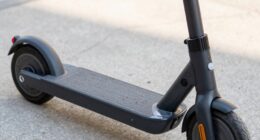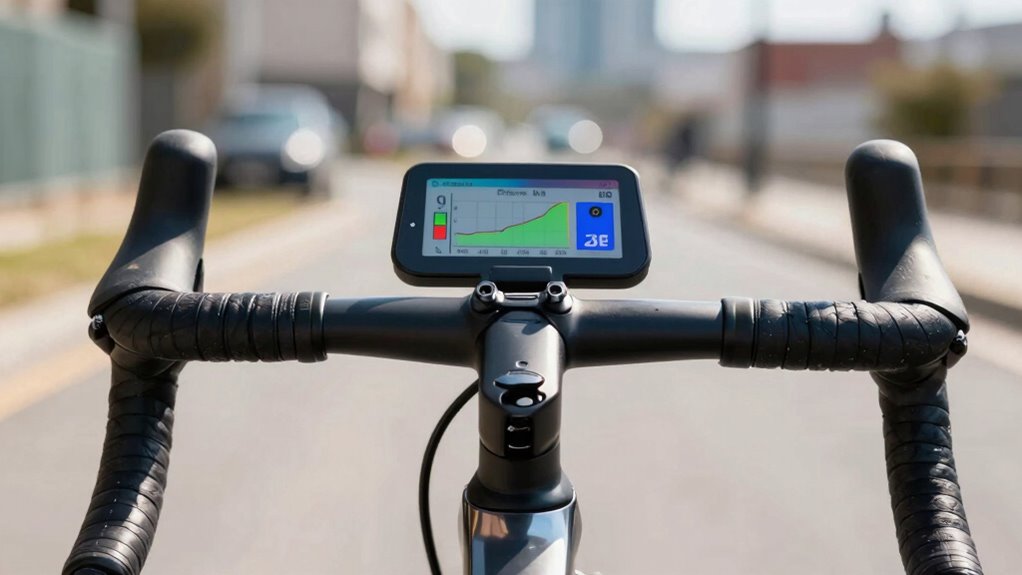

To estimate your real miles before riding, start by knowing your EV’s battery capacity and energy efficiency, usually given in miles per kilowatt-hour (mi/kWh). Consider how your driving style, weather, and terrain affect efficiency—aggressive driving or cold days reduce range. Use actual trip data to monitor your energy use and adjust your expectations accordingly. If you want to fine-tune your estimates for more accurate planning, keep exploring these factors in detail.
Key Takeaways
- Calculate your EV’s theoretical range by multiplying its battery capacity (kWh) by its efficiency (mi/kWh).
- Adjust expected range based on real-world factors like weather, terrain, and driving habits.
- Track your actual energy consumption to refine your personal range estimate over time.
- Use vehicle preconditioning and efficient driving techniques to maximize real-world range before your trip.
- Consider environmental conditions and traffic when planning, as these can significantly reduce your available miles.

Have you ever wondered how far your electric vehicle can really go on a single charge? The answer depends on more than just the battery’s total capacity. It’s influenced heavily by your vehicle’s energy efficiency—how well it uses the stored energy to propel itself forward. Battery capacity measures the total amount of energy your EV can store, usually expressed in kilowatt-hours (kWh). But a larger battery doesn’t automatically mean you’ll get longer trips; if your vehicle isn’t energy-efficient, it could still fall short of your expectations. To accurately estimate your real-world range, you need to contemplate both factors together.
Your EV’s range depends on battery size and energy efficiency, not just capacity.
Your vehicle’s energy efficiency is shaped by several elements, including weight, aerodynamics, driving habits, and even weather conditions. For example, aggressive acceleration and high speeds drain the battery faster, reducing your overall range. Conversely, smooth driving and maintaining moderate speeds can maximize energy efficiency. When you understand how your vehicle consumes power, you can better predict the actual miles you’ll get from a full charge. It’s not just about the number of miles listed on the manufacturer’s spec sheet; it’s about how you drive and the environment in which you operate.
To estimate your real mileage, start by reviewing your EV’s rated energy efficiency, often given in miles per kilowatt-hour (mi/kWh). This figure reflects how effectively your vehicle converts stored energy into distance traveled. If your EV has a battery capacity of 75 kWh and an efficiency of 4 mi/kWh, then your theoretical maximum range is around 300 miles. But remember, real-world factors like traffic, terrain, and temperature will usually lower that estimate. If you frequently drive uphill or in cold weather, your energy efficiency drops, meaning you’ll get fewer miles per charge.
The key is to track your actual driving habits and energy consumption over time. Many EVs provide detailed data on energy use, helping you identify patterns and optimize your driving style. Small adjustments, like avoiding rapid acceleration or preconditioning your vehicle while still plugged in, can improve your energy efficiency and extend your range. Additionally, paying attention to tire pressure and minimizing extra weight can also make a difference. Understanding energy efficiency is essential for maximizing the potential of your EV’s range and making informed driving choices.

Battery Monitor12v 24v 36v 48v 60v 72v,SUPNOVA Car,Golf cart Battery Tester,Digital Display Capacity 7-100V Voltage Monitor Remaining Capacity Percentage Tester with Buzzer Alarm and Temperature
APPLICABLE BATTERY — The digital battery monitor is suitable for 7-100V (12v 24v 36v 48v 60v 72v 84v)…
As an affiliate, we earn on qualifying purchases.
As an affiliate, we earn on qualifying purchases.
Frequently Asked Questions
How Accurate Is Commuter Range Estimation in Different Weather Conditions?
Your commuter range estimate can vary considerably with weather conditions. Cold weather, for example, increases battery degradation and reduces power consumption efficiency, making your range less accurate. Hot weather can also impact the battery’s performance. Always consider these factors, and remember that real-world conditions often differ from calculations, so it’s wise to leave some buffer to avoid running out of charge unexpectedly.
Does Terrain Significantly Affect My Electric Bike’s Range?
Terrain impact greatly influences your e-bike’s range, with studies showing uphill rides can reduce mileage by up to 30%. Elevation effects come into play when climbing steep hills, requiring more energy and draining the battery faster. Flat terrain allows for more efficient riding, extending your miles. So, when planning your route, consider terrain variations to accurately estimate how far you’ll get before needing a recharge.
How Often Should I Recalibrate My Range Calculations?
You should recalibrate your range calculations whenever you notice changes in your battery’s performance or your riding style shifts. Regularly doing so helps account for battery degradation over time, ensuring your estimates stay accurate. Recalibration is especially important after long rides, battery replacements, or significant changes in terrain. Staying proactive keeps your range predictions reliable, so you can plan your trips confidently without surprises.
Can Accessories or Cargo Impact My Estimated Mileage?
You might notice your projected miles take a hit when you add extra cargo or accessories. Heavier cargo weight can subtly drain your battery, while accessory drag creates unwelcome resistance. Keep in mind, these factors can nudge your range downward. To stay on top of your estimates, consider how cargo and accessories influence your ride, and adjust your planning accordingly for a smooth, worry-free journey.
What Are the Best Tips to Maximize My E-Bike’s Range?
To maximize your e-bike’s range, focus on maintaining good battery health by keeping it charged between 20-80% and avoiding extreme temperatures. Adjust your riding habits by riding at steady speeds, avoiding sudden accelerations, and using eco mode when possible. Reducing unnecessary accessories or cargo also helps conserve energy. Regularly inspecting your bike and keeping tires properly inflated further extends your ride. These tips guarantee you get the most miles out of each charge.

Eve Energy (Matter) 2 Pack – Smart Plug, App and Voice Control, 100% Privacy, Matter Over Thread, Works with Apple Home, Alexa, Google Home, SmartThings, Requires Thread Border Router
Eve Energy requires iOS/iPadOS 16.4 (or later) or Android 8.1 (or later) plus a hub of your chosen…
As an affiliate, we earn on qualifying purchases.
As an affiliate, we earn on qualifying purchases.
Conclusion
Now that you know how to estimate your real miles before you ride, you’re armed with power that could outlast even the most legendary journeys. Don’t just trust the display—do the math, plan wisely, and make every charge count. With these calculations, you could potentially conquer a marathon of rides, leaving others in the dust. So go ahead, hit the road confidently, knowing your range is as unstoppable as a freight train barreling through the night.

The Unofficial Honda Prologue Driver’s Companion: Navigating All-Electric Range, Charging Networks, Smart Connectivity and Cabin Tech
As an affiliate, we earn on qualifying purchases.
As an affiliate, we earn on qualifying purchases.
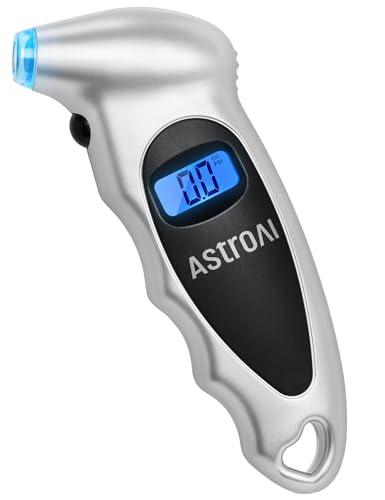
AstroAI Digital Tire Pressure Gauge 0-150PSI Calibrated to ANSI B40.7 +/-1PSI, Accurate in 0.1 Increments, Tire Repair Tools 4 Pressure Measurements for Car Truck with Backlight LCD, Silver
Accurate, Dependable Readings: Factory‑calibrated to ±1 PSI, so you can confidently match your vehicle’s recommended PSI (check the…
As an affiliate, we earn on qualifying purchases.
As an affiliate, we earn on qualifying purchases.