The material you choose for your brake pads greatly influences your vehicle’s stopping power, durability, and noise levels. Organic pads offer quiet, gentle braking for light use, while semi-metallic pads provide high performance and heat resistance for demanding conditions. Ceramic pads deliver smooth, consistent stopping with minimal dust and noise. Picking the right material depends on your driving style and needs. Keep exploring to discover how selecting the ideal brake pad material can improve your safety and performance.
Key Takeaways
- Different brake pad materials have varying friction coefficients, directly impacting stopping power and braking efficiency.
- Semi-metallic pads provide higher heat resistance and stronger friction, enhancing stopping performance under demanding conditions.
- Ceramic pads offer consistent braking across temperature ranges, ensuring reliable stopping power with minimal fade.
- Organic pads deliver gentle braking with lower noise but may produce less friction, affecting maximum stopping capacity.
- Proper material selection based on driving habits optimizes braking performance and reduces wear-related performance loss.
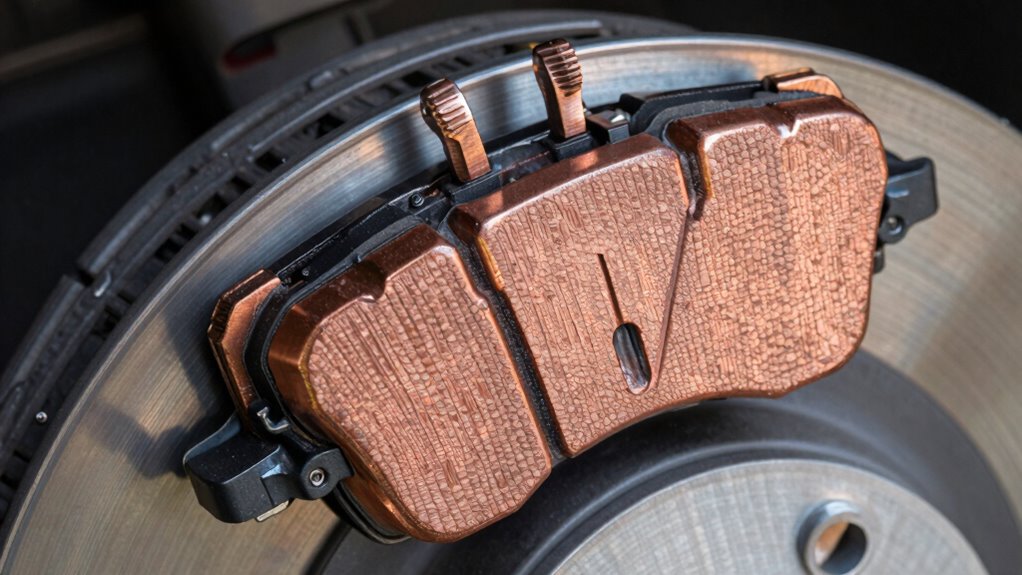
Brake pads are essential components of your vehicle’s braking system, responsible for creating the friction needed to slow down or stop your car. The choice of brake pad materials directly influences how effectively your brakes perform, how long they last, and how much noise they generate. Different materials offer distinct pad wear characteristics, which determine how frequently you’ll need to replace your brake pads and how well they maintain consistent braking power over time.
Choosing the right brake pads ensures optimal performance, longevity, and minimal noise for your vehicle.
When you contemplate brake pad materials, you’re looking at a variety of options, each with its own set of benefits and trade-offs. Organic brake pads, often made from non-metallic fibers, are known for being quieter and producing less dust. They tend to have softer pad wear characteristics, meaning they wear out faster than other types but are gentle on your rotors. If you prioritize smooth, quiet braking and don’t mind more frequent replacements, organic pads might suit your needs.
Semi-metallic brake pads incorporate metal fibers like steel or copper into their composition. These materials deliver excellent heat dissipation and durability, making them suitable for high-performance driving or heavy-duty applications. Their pad wear characteristics are generally more resistant to fading under intense braking, but they tend to be noisier and produce more brake dust. If you need a balance between performance and longevity, semi-metallic pads could be the right choice.
Ceramic brake pads are crafted from ceramic fibers combined with bonding agents and small amounts of metal. They’re celebrated for their quiet operation, minimal dust, and stable performance across a range of temperatures. Their pad wear characteristics are highly favorable—they tend to last longer and maintain consistent braking efficiency. Although they often come with a higher price tag, many drivers find the investment worthwhile for the smooth, clean braking experience they offer.
As you evaluate your options, it’s important to regard how each brake pad material aligns with your driving style and vehicle usage. If you’re frequently steering through steep hills or towing heavy loads, opting for a material with superior heat resistance and durability can prevent brake fade and ensure safety. Conversely, if you mostly commute in urban settings, quieter, less dust-emitting pads might be more suitable.
In addition, choosing the right brake pad material can impact the overall cost of repairs and the frequency of replacements needed over your vehicle’s lifespan. Understanding the differences in brake pad materials and their wear characteristics helps you make an informed decision, ensuring your brakes deliver reliable stopping power when you need it most. Recognizing how these factors influence performance and longevity keeps you safer and can save you money over the life of your vehicle.
Frequently Asked Questions
How Do Brake Pad Materials Affect Noise Levels During Braking?
You’ll notice that brake pad materials substantially impact noise levels during braking. Some materials, like organic pads, tend to produce more noise, while ceramic composites offer better noise reduction. Additionally, durable materials maintain their shape and consistency, reducing vibrations that cause noise. Choosing the right material not only enhances noise reduction but also guarantees long-term material durability, giving you a smoother, quieter braking experience.
What Is the Environmental Impact of Different Brake Pad Materials?
Like a ripple in a pond, brake pad materials affect the environment. You should consider recycling options for worn pads, as some, like asbestos or heavy metals, pose toxicity concerns. Organic pads tend to be greener, but ceramic or semi-metallic ones may contain harmful substances. Your choice impacts pollution levels, resource use, and disposal challenges, so picking eco-friendly materials helps reduce your carbon footprint and promotes sustainable driving.
How Often Should Brake Pads Be Replaced Based on Material Type?
You should replace your brake pads every 30,000 to 70,000 miles, depending on their material and your driving habits. Organic pads tend to wear out faster, with a shorter brake pad lifespan, usually around 30,000 miles. Metallic and ceramic pads have greater material durability, lasting closer to 70,000 miles or more. Regular inspections help you monitor wear and guarantee ideal braking performance.
Can Certain Brake Pad Materials Cause Brake Fade?
Brake pad composition can definitely cause brake fade, especially if the material isn’t durable under high heat. When you use brake pads with softer or less heat-resistant materials, they tend to overheat quickly, reducing stopping power dramatically—almost like hitting a brick wall. High-performance materials like ceramic or semi-metallic pads resist heat better, preventing fade and maintaining consistent braking even during intense stops. Choose wisely to keep your brakes reliable and your safety intact.
Are Ceramic Brake Pads Suitable for High-Performance Vehicles?
Yes, ceramic brake pads are suitable for high-performance vehicles because of their durability and excellent heat resistance. They offer high performance compatibility, ensuring consistent braking even during intense driving conditions. You’ll appreciate how ceramic pads reduce brake fade, provide quieter operation, and produce less dust. Their durability helps maintain braking efficiency over time, making them a smart choice if you want reliable, high-quality stopping power in demanding driving environments.
Conclusion
Just like Icarus once flew too close to the sun, choosing the right brake pad material keeps you grounded. Your safety depends on that vital decision, affecting stopping power and durability. Remember, the material you select isn’t just a detail—it’s your shield on the road. So, before you hit the pedal, think of it as your secret weapon, ensuring you stay in control and avoid falling into trouble. Stay wise, stay safe.