TL;DR

Get bike and ride gear delivered free with Prime
- Fast, free delivery on millions of items
- Prime Video, Amazon Music and more included
- Member-only deals all year
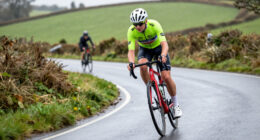
British hill-climb bikes have evolved from highly stripped-down, lightweight builds toward disc-brake and aerodynamic options, with course demands shaping the choices. The 2026 championships’ 6.6km Porlock Toll Road climb prompted riders to rethink setups, while winner Ed Laverack rode a Scott Addict RC Ultimate. The source report does not provide a complete equipment breakdown for every rider.
The 6.6km Porlock Toll Road course at the 2026 British Hill Climb Championships prompted a different bike strategy from the short, steep climbs of recent years, according to Cycling Weekly’s report on the discipline’s equipment. The course’s 5.5% average gradient encouraged riders to consider aerodynamic setups alongside lightweight builds, illustrating how route length and gradient can shape the bikes used in this UK racing niche.
Ed Laverack won the 2026 men’s title on a Scott Addict RC Ultimate, recording 14:32.1 on Porlock Toll Road in Somerset, according to the championship results listed in the report. The 6.6km climb was substantially longer than the previous two championship routes: Dipton Mill Road in 2024 was 1.2km, while Bank Road in 2025 was 835m. Cycling Weekly describes the 2026 venue as a change that pushed riders to reconsider whether a very light bike was the best fit.
British hill climbs are timed races on steep roads, with courses in the report ranging from one to 25 minutes. The fastest time wins. Bikes are not subject to the UCI’s 6.8kg minimum weight limit, and the report says machines below 5kg are common. Yet the winning bike in 2026 was reported as a Scott Addict RC Ultimate, while 2025 champion Harry MacFarlane used a modified Trek Émonda SLR and 2024 winner MacFarlane rode a Cervélo R3 SL.
The equipment trend is not simply a move from light bikes to aero machines. Cycling Weekly reports that disc-brake bikes are increasingly used, offering stiffness and more secure braking on the descent after a climb. Many remain around 5kg depending on configuration, while stock or sponsor-provided bikes may weigh 6.8–7.3kg and still be competitive. The report says the 2026 winner, Laverack, rode a stock 6.9kg Van Rysel RCR-R Pro in the event; its results table lists his bike as a Scott Addict RC Ultimate, and does not explain the difference.
How the Course Shapes Bike Choice
The report highlights a defining feature of hill-climb equipment: the course can matter as much as the bike. A short, steep effort rewards a different balance of weight and power than a longer climb where riders spend more time exposed to air resistance. Porlock Toll Road’s length and moderate average gradient made aerodynamic considerations more relevant than they would be on a brief ramp, according to Cycling Weekly.
That variation helps explain why there is no single winning formula. Riders may spend months adjusting parts and setups around the championship route, while competitors on standard or team-issued equipment can remain in contention. For readers following the sport, the equipment story is also a record of changing priorities: ultralight components remain part of the scene, but disc brakes, everyday usability and course-specific aerodynamics have broadened the choices.
Popular right now

Philips 2200 Series Fully Automatic Espresso Machine with Classic Milk Frother, 2 Coffee Varieties, Intuitive Touch Display, Ceramic Grinder

iRobot Roomba 105 Robot Vacuum with LiDAR Navigation

TCL 65-Inch T7 Series 4K QLED Smart Google TV, 144Hz (65T7)
As an affiliate, we earn on qualifying purchases.
From Stripped Builds to Disc Brakes
Older hill-climb bikes often used rim brakes and unusually pared-back components, including shortened handlebars, very light saddles, lightweight calipers and tubular tyres. Cycling Weekly describes such builds as distinctive and notes that they still appear at events. One example in its archive is Kieran Wynne-Cattanach’s rim-brake Giant TCR Advanced SL, reported at 5.4kg in hill-climb configuration and 6.8kg in everyday form.
The results table in the report shows repeated success for the Cannondale SuperSix EVO: Dan Evans won in 2017 and Andrew Feather took titles in 2018, 2020 and 2022 on versions of the bike. The table records other winners and equipment across the period, including Adam Kenway on a Kuota Khan in 2016 and Tom Bell on a Rose X-Lite in 2021. Cycling Weekly says the SuperSix EVO appeared in five championship wins between Evans and Feather, often built below 5.5kg.
Safety rules have also changed. Since 2021, helmets and working front and rear lights have been compulsory for all hill climbs, the report says. Previously, helmets were required only for riders under 18, while adults could race in a cap or without headgear. The newer requirements mark a shift in event practice alongside changes in bicycle technology.
“The fastest time wins.”
— Cycling Weekly
Details Behind the 2026 Setups
The report does not provide a full technical breakdown of every competitor’s 2026 bike or quantify the aerodynamic gains riders may have sought on Porlock Toll Road. Its description that riders moved toward “all-out aero setups” is a characterization of the equipment trend, not a measured comparison of speed or performance. It is also unclear from the supplied material why the report’s text identifies Laverack’s bike as a stock 6.9kg Van Rysel RCR-R Pro while its results table lists a Scott Addict RC Ultimate.
Championship results and equipment choices do not establish that one bike type is generally faster. A bike’s suitability can vary with gradient, distance, rider, components and race conditions. The report gives no detailed comparison of those factors across the listed winners.
What Future Courses May Favor
The next championship course will give riders another route-specific equipment problem to solve, but the supplied report does not state where or when that event will take place. Course details will be needed before it is possible to judge whether competitors are likely to favor minimal weight, aerodynamics, or a compromise between them.
For now, the 2026 result offers a clear example of the discipline’s adaptability: a longer course changed the setup conversation, while lightweight bikes remained part of a field that also included stock and disc-brake machines. Future equipment comparisons will depend on published course details and confirmed bike specifications.
Key Questions
What changed in the 2026 British Hill Climb Championships?
The championship moved to Porlock Toll Road, a 6.6km climb with a reported average gradient of 5.5%. Cycling Weekly says its length encouraged riders to consider more aerodynamic setups than on the shorter courses used in 2024 and 2025.
Who won the 2026 men’s championship?
Ed Laverack won in 14:32.1, according to the results table in the report. The table names a Scott Addict RC Ultimate as his bike.
Are hill-climb bikes required to meet the UCI weight limit?
No. Cycling Weekly says the discipline is not governed by the UCI’s 6.8kg minimum weight limit, and bikes below 5kg are common. That does not mean all competitors use such light builds.
Why are disc brakes becoming more common?
The report says disc-brake bikes are increasingly used and can provide stiffness and more secure braking on the descent after the climb. Their use does not make them automatically faster for every course.
What safety rules apply to British hill climbs?
Since 2021, riders have been required to wear helmets and use functioning front and rear lights, according to the report.
Source: cyclingweekly.com