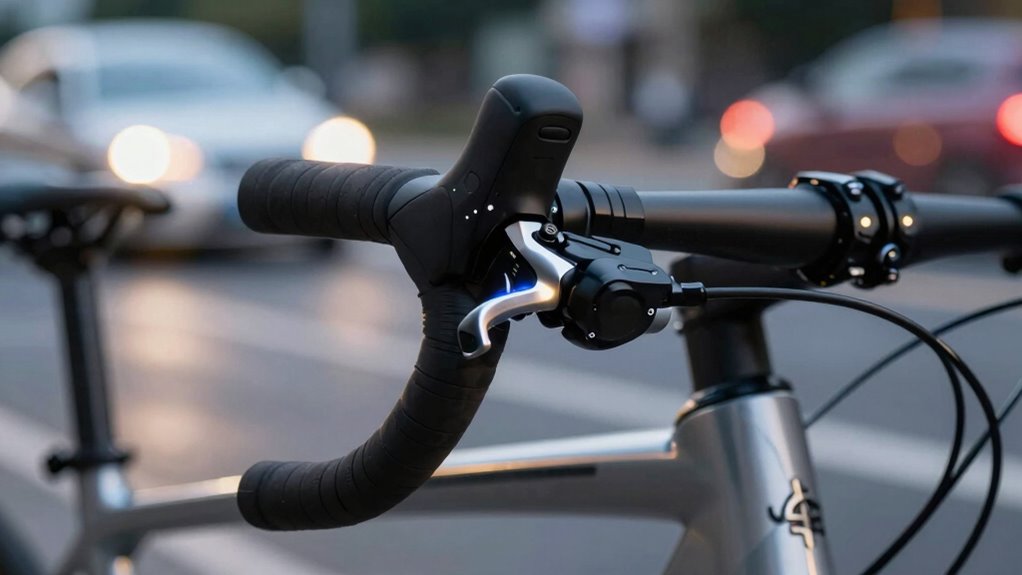

Acceleration sensors in bike brake lights detect when you brake by measuring quick changes in motion or deceleration. As you apply the brakes, the sensor recognizes these shifts, converting physical movement into electrical signals that activate the lights. Proper calibration guarantees it responds only during intentional braking, preventing false triggers. Effective wiring and maintenance ensure reliable operation. Want to discover the details behind how these sensors precisely detect your braking actions? Keep going to learn more.
Key Takeaways
- Acceleration sensors detect deceleration by measuring changes in movement, triggering brake lights when a specific threshold is surpassed.
- These sensors convert physical deceleration into electrical signals that activate the brake light system.
- Proper calibration ensures sensors only respond to intentional braking, avoiding false triggers from vibrations or bumps.
- Electrical wiring transmits signals from the sensor to brake lights; high-quality, well-maintained wiring ensures reliable activation.
- Regular system checks and secure connections prevent wiring faults, ensuring consistent brake light activation during braking.

Bike brake lights are an essential safety feature that can considerably reduce the risk of accidents. When you hit the brakes, these lights automatically activate, alerting drivers behind you and giving them extra time to react. But have you ever wondered how acceleration sensors inside these systems detect your braking action so quickly and accurately? It all comes down to the way they are calibrated and connected through electrical wiring. Sensor calibration is a critical step in ensuring your bike brake lights function reliably. These sensors detect changes in acceleration or deceleration, translating physical movement into electrical signals. If calibration isn’t precise, the sensor might misinterpret normal riding vibrations as brake signals or fail to detect actual braking. During calibration, the sensor is set to recognize specific thresholds for acceleration that correspond to braking behavior. Proper calibration ensures your brake lights activate only when you intend them to, avoiding false triggers that could confuse other road users. Calibration may involve a series of tests where you gently apply brakes and observe the sensor’s response, adjusting sensitivity settings accordingly. Many modern systems incorporate self-calibration features that automatically fine-tune the sensor over time, maintaining accuracy without manual intervention. Additionally, calibration accuracy is vital for the system’s overall reliability and safety. Electrical wiring plays an equally important role in the system’s effectiveness. After the sensor detects a deceleration, it sends a signal through the wiring harness to activate the brake lights. If the wiring is faulty—such as loose connections, damaged cables, or poor insulation—the signal may not reach the lights promptly or at all. This can result in delayed activation or complete failure of the brake lights, defeating their safety purpose. Proper wiring installation involves secure connections, shielding against environmental elements like moisture and dirt, and ensuring that the wiring is neatly routed to prevent damage from movement or abrasion. When installing or maintaining your bike brake light system, double-check all electrical connections to confirm they’re tight and free of corrosion. Using high-quality wiring and connectors can extend the lifespan of the entire system and ensure consistent performance.
Frequently Asked Questions
How Long Do Bike Brake Lights Typically Last on a Single Charge?
On a single charge, your bike brake lights usually last between 8 to 12 hours, depending on battery longevity and energy consumption. If you use high-sensitivity sensors or bright LED lights, expect slightly shorter runtimes. To maximize battery life, turn off the lights when not riding or during long stops. Regularly recharge your lights to make sure they’re ready whenever you need them, keeping your safety a priority.
Are Bike Brake Lights Compatible With All Bike Types?
Think of bike brake lights as chameleons—they adapt to your ride. Most models are compatible with various bike types, but you need to verify bike frame compatibility first. Installation procedures for sensors are straightforward but vary depending on your bike’s design. Confirm the lights fit your bike’s frame and follow the manufacturer’s instructions to guarantee proper function. With the right setup, you’ll have safer rides no matter your bike type.
What Maintenance Is Required for Acceleration Sensors in Brake Lights?
You should regularly calibrate your acceleration sensors to verify they detect braking accurately. Check the wiring connections for signs of wear, corrosion, or loose fittings, and tighten or replace as needed. Keeping the sensors clean and free of dirt or debris also helps maintain performance. By performing these simple maintenance steps, you’ll ensure your bike brake lights function reliably, enhancing your safety on every ride.
How Do Environmental Conditions Affect Brake Light Sensor Performance?
Environmental conditions impact brake light sensor performance by affecting weather impact, sensor calibration, and overall reliability. You might notice false signals during rain, snow, or extreme cold, which can disrupt accurate detection. Temperature fluctuations can cause calibration drift, leading to delayed or unintended brake light activation. To guarantee ideal performance, you should regularly check sensor calibration, protect sensors from harsh weather, and keep the system clean and dry for consistent operation.
Can Bike Brake Lights Be Connected to a Smartphone App?
Yes, you can connect bike brake lights to a smartphone app. With wireless connectivity like Bluetooth or Wi-Fi, you can control and customize your brake lights through the app. This lets you adjust brightness, set blinking patterns, or even receive alerts. Just make sure your bike’s brake lights are compatible with the app and keep your device within range for seamless app customization and real-time control.
Conclusion
Understanding how acceleration sensors power bike brake lights shows you the technology behind safer riding. These sensors detect deceleration and activate your lights instantly, giving others clear signals. Remember, a stitch in time saves nine—being proactive with safety keeps you protected. By trusting this technology, you’re taking smart steps to prevent accidents. Stay aware, stay safe, and let your bike’s brake lights do the talking when it matters most.