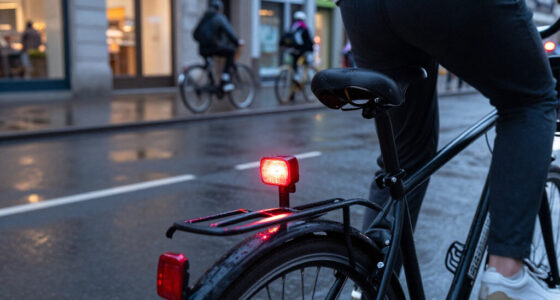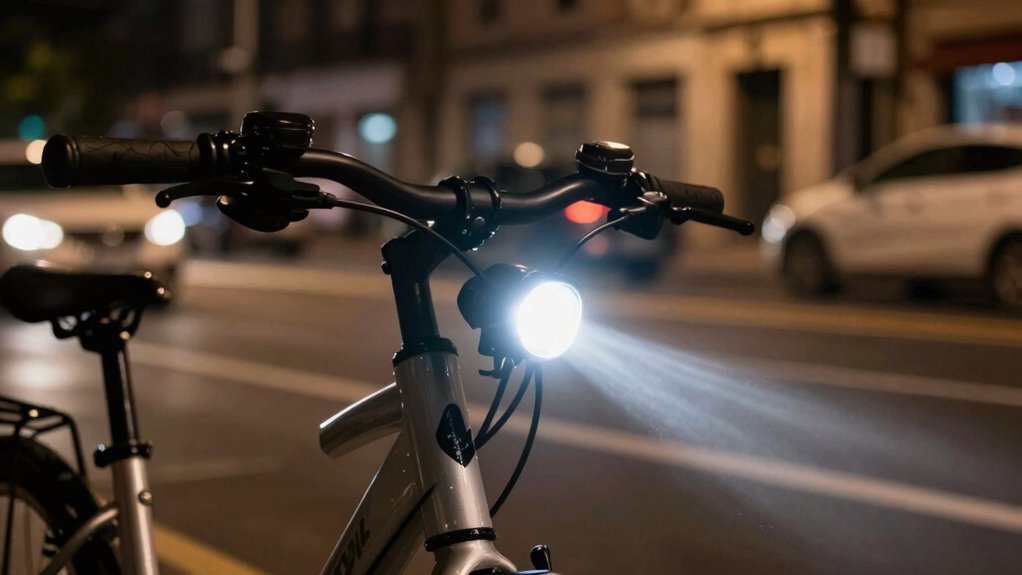
For your daily commute, a bike light with at least 200 lumens is generally enough for well-lit urban areas, helping you stay visible and see the road clearly. In darker or poorly lit spots like alleyways or intersections, 400 to 600 lumens provide better safety and obstacle detection. If you ride on unlit trails or in dense woods, consider a powerful light of 1000 lumens or more. Keep exploring to discover how to optimize your bike lighting for every situation.

Get bike and ride gear delivered free with Prime
- Fast, free delivery on millions of items
- Prime Video, Amazon Music and more included
- Member-only deals all year
Key Takeaways
- Aim for 200-600 lumens depending on riding environment, with higher brightness for poorly lit or darker areas.
- Use at least 200 lumens for urban streets with good lighting; increase brightness for low-light or unlit zones.
- For early morning or late-night commutes, 400-600 lumens improve visibility and safety.
- Consider brighter lights (1000+ lumens) for trail or off-road riding; less necessary for well-lit urban areas.
- Choose adjustable modes to switch between steady and flashing beams based on safety needs and environment.

When choosing a commuter bike light, brightness is a critical factor that directly impacts your safety on the road. Whether you’re steering through busy city streets or venturing onto mountain biking trails, you need a light bright enough to make you visible and illuminate your path clearly. For urban cycling, the focus is on being seen by others—drivers, pedestrians, and fellow cyclists—so a light with at least 200 lumens usually suffices in well-lit areas. However, if your route includes darker alleyways, poorly lit intersections, or you commute early in the morning or late at night, a brighter light around 400 to 600 lumens offers better visibility and peace of mind.
Mountain biking requires even higher levels of brightness due to rugged terrain and unpredictable obstacles. When you’re riding on unlit trails or through dense woods, a light with 1000 lumens or more becomes essential. It helps you spot roots, rocks, and wildlife in time to react safely. Additionally, mountain biking lights often come with multiple modes—strobe, high, low—to adapt to different trail conditions and conserve battery life. In urban settings, a steady beam is usually more appropriate, but having a flashing mode can increase your visibility during daytime or low-light city commutes. Proper lumens measurement is crucial to ensure your light provides enough brightness for your specific riding environment. Moreover, selecting a light with adjustable modes allows you to customize brightness levels based on your immediate needs and conserve battery power. Being aware of battery life and its impact on your ride can help you plan longer trips without worry.
Popular right now

Shark Rocket Ultra-Light Corded Stick Vacuum, HV301, Gray/Orange

De'Longhi Magnifica Evo Fully Automatic Espresso Machine with Manual Milk Frother, Silver

Samsung 85-Inch QN70H Neo QLED 4K Smart TV (2026)
As an affiliate, we earn on qualifying purchases.
Frequently Asked Questions
Can Bike Light Brightness Affect Battery Life?
Yes, bike light brightness can affect battery life because higher brightness levels increase power consumption. When you choose a brighter light, it demands more battery energy, which can reduce battery efficiency and cause the light to drain faster. To extend your battery life, consider using lower brightness settings when possible or investing in a bike light with efficient power management features. This way, you get good visibility without sacrificing too much battery life.
Are Brighter Lights Safer for Night Riding?
Brighter lights tend to boost your safety, especially for tail light visibility and helmet light brightness, making you more noticeable to drivers. While intense illumination can seem advantageous, it’s essential to balance brightness with beam focus to avoid blinding others or creating glare. Properly calibrated, a bright bike light enhances safety during night rides, ensuring you’re seen without compromising the comfort of your fellow road users.
Do Different Countries Have Lighting Regulations?
Yes, different countries have lighting regulations for bikes, often shaped by urban regulations and international standards. You need to verify local laws before riding at night, as some places require specific light brightness levels, color, and positioning. Adhering to these regulations ensures your safety and helps you avoid fines. International standards, like those from the ISO, provide general guidelines, but local laws take precedence and vary widely.
How Does Weather Impact Bike Light Performance?
Like a sailor steering stormy seas, weather conditions can challenge your bike light’s performance. Rain, fog, and snow reduce visibility, so your light must be bright enough to cut through the gloom. Harsh weather also tests its light durability—ensure it’s waterproof or water-resistant to withstand the elements. By choosing weather-resistant lights, you can ride safely and confidently, no matter how the sky turns against you.
Is a Brighter Light Better for Daytime Visibility?
A brighter light is definitely better for daytime visibility, especially when urban commuting or mountain biking. It helps you stand out in busy traffic and low-light conditions, reducing the risk of accidents. For city rides, a light with at least 200 lumens is recommended, but for mountain biking, you might want something even brighter to cut through shadows and dust. Always choose a light that enhances your safety without blinding others.
Conclusion
Ultimately, the right brightness for your commuter bike light depends on your riding conditions. While brighter lights improve visibility, they shouldn’t blind others or drain your battery quickly. Aim for a balance—around 200 to 400 lumens often works well for city commuting, ensuring you see and are seen without overdoing it. Trust your judgment, test different settings, and prioritize safety and comfort. After all, a well-chosen light makes every ride safer and more enjoyable.