For urban commutes, choosing between flood and spot front beams depends on your needs. Flood beams light up a wide area, helping you see pedestrians, ride features, and obstacles nearby clearly. Spot beams focus light into a narrow, intense beam, great for long-distance visibility and spotting distant hazards. Combining both modes offers flexibility for different situations. Keep exploring to find out how to optimize your bike’s lighting for safe, confident city riding.
Key Takeaways
- Flood beams provide wide, even illumination ideal for urban environments with pedestrians and vehicles.
- Spot beams focus light ahead for long-distance visibility, helping detect distant obstacles in city streets.
- Combining flood and spot modes offers adaptable lighting for varying urban conditions and riding speeds.
- Flood beams enhance immediate surroundings, increasing safety around intersections and tight spaces.
- Spot beams improve reaction time by clearly illuminating objects further down the road during urban commutes.
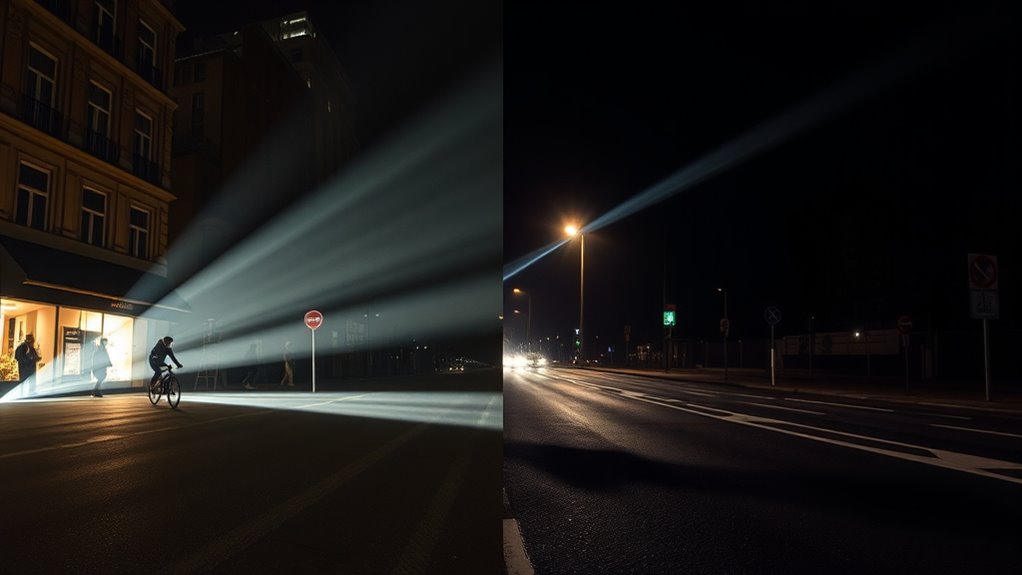
Have you ever wondered how front light beam patterns improve visibility while driving or cycling at night? Whether you’re commuting through city streets or tackling mountain biking trails after dark, understanding how flood and spot beams work can make a big difference in your safety and riding experience. When it comes to night riding, especially on rugged terrain, the choice between a flood or spot beam pattern isn’t just about brightness—it’s about how you see and are seen.
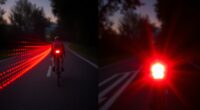
Flood beams spread light over a wide area, illuminating your surroundings in a broad, even pattern. If you’re riding through urban environments, flood beams help you see pedestrians, parked cars, and street signs without needing to constantly adjust your light. They also make it easier for others to spot you, which is vital in busy city traffic. On mountain biking trails at night, flood beams help you identify roots, rocks, and trail features that might otherwise hide in shadows. They give you a clear view of the terrain immediately around you, reducing surprises and increasing your confidence on technical sections.
Flood beams illuminate wide areas, enhancing urban visibility and trail confidence at night.
Spot beams, on the other hand, focus light into a narrow, intense beam. This pattern is ideal for long-distance visibility, allowing you to see far ahead on dark, open roads or trails. When you’re mountain biking at night, a spot beam helps you identify obstacles or trail bends well in advance, giving you more time to react. It’s also useful for quick inspections of distant features—like spotting a trail marker or checking out a distant landscape. In urban settings, spot beams can sometimes be less practical because they don’t illuminate the sides of the road or trail as well, but they’re invaluable when you need to see far ahead without distraction. Additionally, beam pattern understanding plays a crucial role in optimizing your visibility and safety.
Combining flood and spot beam patterns in one front light is often the best approach. Many bike lights offer adjustable modes, letting you switch between wide flood for close-up detail and narrow spot for distance viewing. This versatility is especially beneficial for night riding on varied terrain, where different visibility needs arise suddenly. In mountain biking, switching between flood and spot modes allows you to adapt quickly to the trail conditions, whether you’re climbing steep sections or descending technical descents at night.
Ultimately, understanding how these beam patterns work helps you choose the right lighting setup for your rides. Whether you’re steering through city streets or exploring mountain trails after dark, using the appropriate beam pattern ensures you see clearly and stay safe. The right front light enhances your awareness, helping you react faster and enjoy your night rides more confidently.
Frequently Asked Questions
How Do Weather Conditions Affect Front Light Beam Performance?
Weather conditions like rain impact your front light’s performance by scattering the beam, reducing visibility. Fog influence makes beams appear diffused, limiting how far you see ahead. You should use a wider flood pattern in foggy or rainy conditions to maximize your visibility, while a focused spot beam works better in clear weather for distance. Adjust your bike light based on the weather to stay safe during urban commutes.
Can I Switch Between Flood and Spot Modes During a Ride?
Switching between flood and spot modes during a ride is like changing gears on your bike—possible and useful. Most bike lights offer beam pattern customization with easy light mode switching, allowing you to adapt to different conditions. Simply press a button or toggle a switch to change modes, giving you the flexibility to widen your view in urban streets or narrow it down for better focus. This quick adjustment keeps you safe and ready for any situation.
Are There Legal Restrictions on Bike Light Brightness in Cities?
Yes, there are legal restrictions on bike light brightness in cities. You should check local laws because most places have brightness regulations, often limiting bike lights to around 500 lumens to avoid blinding drivers and pedestrians. Exceeding these legal limits can lead to fines or warnings. Always verify your bike lights meet brightness regulations to stay compliant and keep yourself and others safe during urban rides.
What Maintenance Is Needed for Optimal Beam Pattern Performance?
To keep your bike’s beam bright and brilliant, you should regularly clean the lens to prevent dirt and grime from dulling the display. Check battery longevity by ensuring your lights are fully charged and replace batteries when needed. Additionally, tighten loose parts and inspect wiring for wear. Proper maintenance maximizes beam pattern performance, ensuring safe visibility during your ride and prolongs your bike light’s lifespan.
How Do Different Bike Types Influence Front Light Choices?
Your bike type influences your front light choice considerably. For mountain biking, focus on rugged, high-powered lighting that handles rough terrain and low visibility, like mountain bike lighting with wide flood beams for better peripheral awareness. If you ride a commuting bike, opt for illumination that enhances safety in urban settings, such as focused spot beams for distance and flood beams for broad visibility. Match your light’s features to your riding environment for ideal safety.
Conclusion
So, select your shine wisely. Whether you prefer the broad, bright blast of floodlights to flood your path or the focused flicker of a spot for precise pinpointing, your choice shapes your safety and sight. By balancing brightness and beam, you build a better, brighter bike commute. Be mindful, brave, and bold—blazing through urban streets with a beam that best suits your journey. Your ride’s radiance depends on the right light, so choose your beam wisely and brighten your way.