
Shopping for electric bike battery packs usually comes down to three competing factors: capacity, compatibility, and price — and you rarely get all three at once. The Unit Pack Power 48V 20Ah stands out as my best overall pick because it pairs a large capacity with proven compatibility across Bafang mid-drive motors and high-wattage conversion kits, all at a mid-tier price. If budget is the constraint, the Viset 48V 10Ah delivers dependable range for commuting without the premium price tag, while riders running 1000W+ motors should look at the 52V 25Ah pack for serious long-range power. The main tradeoffs you’ll face are weight versus range, generic versus brand-specific fitment, and cheap cells versus genuine lithium-ion quality. Read on for the full breakdown of all 15 packs.

Get bike and ride gear delivered free with Prime
- Fast, free delivery on millions of items
- Prime Video, Amazon Music and more included
- Member-only deals all year
Key Takeaways
- 48V packs dominated this comparison (11 of 15 products) because they’ve become the de facto standard for conversion kits and mid-drive motors, while 36V options only make sense for low-power commuter bikes like the Jetson Bolt Pro.
- Capacity claims varied wildly in value: the Unit Pack Power 48V 20Ah offered the best price-per-amp-hour among big-capacity packs, while some 10Ah options cost nearly as much as 15Ah alternatives with no extra features.
- BMS amperage was the hidden differentiator — packs with 30A BMS boards (like the 13Ah/20Ah pack with safe lock) handle 1000W+ motors safely, while lower-rated BMS units throttle performance on high-wattage builds.
- Brand-specific fitment packs (Lectric XP, RadExpand) are plug-and-play but lock you into one ecosystem and often cost more per amp-hour than universal packs with XT60 or Anderson connectors.
- The 52V 25Ah pack is the only option here for 1500W–2000W motor builds, but its weight makes it impractical for riders who carry their bike upstairs or lift it onto car racks.




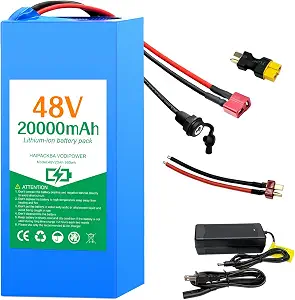
| electric bike battery pack | Voltage | Capacity | Compatibility |
|---|---|---|---|
| 48V 13Ah Ebike Battery for Ele | 48V | 13Ah | 0-700W motors |
| Joyisi 48V 15AH Ebike Battery | — | — | — |
| 48V 13Ah Lithium Battery Pack | 48V | 13Ah | — |
| 36V 7.8Ah Lithium Battery Pack | 36V | 7.8Ah | — |
| Ebike Battery 48V 10.4Ah for L | 48V | 10.4Ah | — |
| Ebike Battery 52V 25Ah 2000W | 52V | 25Ah | 48V/52V 500W-1800W motors |
| Unit Pack Power 48V 20Ah Elect | 48V | 20Ah | 1500W/1200W/1000W/750W/500W motors |
| 48V 20AH Lithium Ion Ebike Bat | 48V | 20AH | Bafang, Rad Power, Runner City, 500W-1500W motors |
| Viset 48V 10Ah Electric Bike B | 48V | 10Ah | E-bikes, scooters, motorcycles, 250W-1000W motors |
| 22.4AH Electric Bike Lithium B | 48V | 22.4AH | E-bikes with 0-2000W motors |
| 48V Lithium Ebike Battery 13Ah | 48V | 13Ah / 20Ah / 25Ah | 100-1500W systems |
| Ebike Battery 48V 14Ah for Rad | 48V | 14Ah (672Wh) | RadExpand 5, RadWagon, RadRunner 2, other 48V Rad models |
| 36V 12Ah Lithium-ion E-bike Ba | 36V | 12Ah | — |
| 48V 15Ah Lithium Battery for E | 48V | 15Ah | — |
| 48V 20Ah Lithium-ion E-bike Ba | 48V | 20Ah | — |
More Details on Our Top Picks
48V 13Ah Ebike Battery for Electric Bicycle – SilverFish
The SilverFish-style case design is what sets this pack apart — it’s built around the mounting standard used by many fat tire folding bikes, so installation is closer to plug-and-play than the DIY-oriented 48V 13Ah pack with XT60 connectors elsewhere in this roundup. A 40–150 km claimed range is generous on paper, but realistic expectations land in the lower half of that band unless you’re pedaling lightly on flat ground. Compared with the Lectric XP battery, capacity is higher (13Ah vs 10.4Ah), though the tradeoff is a longer 8-hour charge. The included lock and safety protections are standard but welcome at this price.
Pros:- Fits common SilverFish mounts on fat tire folders
- 13Ah capacity gives solid real-world range
- Built-in lock deters casual theft
- Supports motors up to 700W
Cons:- Around 8 hours to fully charge
- Real-world range falls well short of the 150 km ceiling
- Narrow compatibility outside supported bike models
Best for: Owners of fat tire folding e-bikes who need a like-for-like SilverFish replacement with extra range
Not ideal for: Riders with non-standard or DIY frames — compatibility is limited to specific mounting patterns
- Voltage:48V
- Capacity:13Ah
- Dimensions:14 x 3 x 4.3 inches
- Discharge Current:10A standard, 20A max
- Charger:54.6V 2A
- Compatibility:0-700W motors
Our verdict“If you ride a fat tire folder with a SilverFish mount, this is the easiest capacity upgrade you can make.”
Joyisi 48V 15AH Ebike Battery with BMS Protection Board
Joyisi’s 15AH pack earns its slot on raw output and motor flexibility: a 30A max discharge means it can legitimately feed a 1000W motor, where the SilverFish 13Ah battery tops out at 700W. The included mounting rack is a genuine convenience that most competitors here — including the USB-equipped 13Ah pack — leave you to source yourself. An aluminum shell and BMS round out a durability story that justifies the price. The catch is fussiness: you must remember to flip the switch on before charging, and it’s limited to 24”–28” wheels, which excludes smaller folding bikes entirely.
Pros:- 15AH capacity for long rides between charges
- 30A discharge supports up to 1000W motors
- Rack included for straightforward mounting
- Aluminum shell with 1-year warranty and tech support
Cons:- 8+ hour charge time
- Must manually switch on before charging
- Wheel size restrictions exclude some bikes
Best for: Commuters and 1000W conversion riders who need maximum capacity and a 30A discharge for demanding motors
Not ideal for: Small-wheel folding bike owners — the 24”-28” compatibility rules out 20-inch folders
Our verdict“The strongest pick here for high-wattage builds, provided your wheels are 24 inches or larger.”
48V 13Ah Lithium Battery Pack with BMS, USB Port, and Waterproof Housing
This pack doubles as an e-bike and electric motorcycle battery, which is why the waterproof housing matters more here than on fair-weather alternatives like the Lectric XP replacement. The USB port is a practical differentiator — phone charging on long rides is something neither the Joyisi nor the SilverFish offers — and the LED indicator removes the guesswork from charge monitoring. With the same 13Ah and 30A specs as the Joyisi at a similar tier, the choice comes down to mounting style: this one uses a generic XT60 connection for flexible placement rather than a dedicated rack. Verify your compartment dimensions first, since the 7.7 lb case is unforgiving on tight frames.
Pros:- Waterproof housing for wet-weather reliability
- USB port charges phones and accessories
- 30A BMS handles motors up to 1000W
- LED indicator shows charge status at a glance
Cons:- Large case may not fit all frames
- 1000W motor ceiling limits extreme builds
- Generic mounting requires more setup than rack-based options
Best for: All-weather commuters and e-motorcycle owners who want device charging and rugged protection in one pack
Not ideal for: Riders with cramped battery compartments — the 14.2-inch case won’t squeeze in
- Voltage:48V
- Capacity:13Ah
- Max Current:30A
- Charger Voltage:54.6V 2A
- Connector:XT60 Female
- Weight:7.7 lbs
- Features:Waterproof housing, LED indicator, USB port, security lock
Our verdict“The most flexible pack in this batch for riders who face rain, dirt, and mixed terrains.”
36V 7.8Ah Lithium Battery Pack with Built-in 30A BMS for Jetson Bolt Pro
Not every rider needs 48 volts, and this pack proves the point. Sized for the Jetson Bolt Pro and small DIY builds, its 7.8Ah capacity is modest next to the 36V 12Ah battery featured later in this roundup — but the compact 7.5-inch footprint fits compartments that full-size packs simply can’t. The 30A BMS is generous overkill for a pack this size, which translates to headroom and safety on custom projects. Compared with the 48V options here, the obvious tradeoff is range: expect shorter rides and less torque support. The bundled charger and XT60/SM connectors mean you’re not hunting for parts, though connector handling does demand basic care.
Pros:- Compact size fits small frames and compartments
- 30A BMS provides ample protection headroom
- Charger and both XT60 and SM connectors included
- Straightforward installation for replacement jobs
Cons:- 36V only — incompatible with 48V systems
- Limited 7.8Ah range
- Requires careful connector handling during installs
Best for: Jetson Bolt Pro owners replacing a worn pack and tinkerers building compact 36V projects
Not ideal for: Long-distance commuters — 7.8Ah won’t carry you past short urban hops
- Voltage:36V
- Capacity:7.8Ah
- Size:7.48 x 2.75 x 2.75 inches
- BMS:30A
- Includes:2A charger, XT60 connector, SM connector
Our verdict“A niche but well-executed choice for small 36V machines where bigger packs physically won’t fit.”
Ebike Battery 48V 10.4Ah for Lectric XP 1.0 2.0 3.0 Step-Over
Model-specific batteries live or die by fit, and this one nails the Lectric XP 1.0 through 3.0 step-over lineup — no adapters, no frame hacking, unlike the generic XT60 packs here. The 10.4Ah capacity is the smallest among the 48V options in this batch, so the 40–60 km range trails the SilverFish’s 13Ah and the Joyisi’s 15Ah. Where it wins is recharge speed: 5–6 hours versus the 8+ hours typical of larger packs, which matters if you commute daily. The BMS, waterproofing, and anti-theft lock cover the essentials without padding the price. It’s a targeted fix, not a capacity upgrade — treat it accordingly.
Pros:- Exact fit for Lectric XP 1.0-3.0 step-over models
- Fastest recharge in this batch at 5-6 hours
- Waterproof and anti-theft protected
- Lightweight and simple to install
Cons:- Lowest 48V capacity here at 10.4Ah
- Only compatible with specific Lectric models
- Heavier than expected for its size class
Best for: Lectric XP step-over riders who need a drop-in replacement with fast turnaround between rides
Not ideal for: Riders seeking more range — the 10.4Ah capacity is the lowest of any 48V pack in this guide
- Voltage:48V
- Capacity:10.4Ah
- Dimensions:430 x 100 x 43 mm
- Max Discharge Current:30A
- Charger:54.6V 2A
- Range:40-60 km
- Charging Time:5-6 hours
Our verdict“Skip the adapter headaches — if you own a Lectric XP step-over, this is the direct replacement with the quickest recharge.”
Ebike Battery 52V 25Ah 2000W – 52 Volt Battery for 1500W 1000W Motor
Among high-capacity options in this lineup, this 52V 25Ah pack stands out for sheer endurance — the 55-75 km range beats both the Unit Pack Power 48V 20Ah and the 22.4AH competitor simply because it stores more energy and runs at a higher voltage. That extra voltage also means more power delivery for riders running 1500W+ motors, which most 48V packs here can’t feed as comfortably. The built-in BMS, safe lock, and LED indicator cover the protection basics you’d expect at this capacity. The tradeoffs are real, though: a 7-8 hour charge time means you’re planning overnight top-ups, and the physical bulk demands a frame with genuine space. Compared with the Viset 48V 10Ah, this is a different class of battery entirely — range-first, weight-second.
Pros:- Class-leading 25Ah capacity delivers up to 75 km of range
- 52V output suits powerful 1500W+ motor setups
- Built-in BMS with over 1000 rated charge cycles
- Works with both 48V and 52V motors from 500W to 1800W
Cons:- 7-8 hour charging time is the slowest in this batch
- Range drops sharply with heavy riders or hilly terrain
- Large physical footprint won’t fit compact frames
Best for: Commuters and touring riders running 1000W-1800W motors who need 60+ km between charges
Not ideal for: Casual riders with limited frame space or those who want quick turnarounds — the 7-8 hour charge is a chore
- Voltage:52V
- Capacity:25Ah
- Power:2000W
- Charging Time:7-8 hours
- Range:55-75 km
- Compatibility:48V/52V 500W-1800W motors
- Protection:Built-in BMS, safe lock, power switch, LED indicator
- Cycle Life:1000+ cycles, ~5 years lifespan
Our verdict“If maximum distance is the priority and you have the frame space and patience for long charges, this is the capacity king of the lineup.”
Unit Pack Power 48V 20Ah Electric Bike Battery – Lithium-Ion Ebike Battery for BBSHD BBS02 1000W 750W 500W 1500W 1200W
This is the pick I’d point most buyers toward, and the reason is brand-name LG cells — something no other battery in this batch can claim, and the single biggest predictor of whether a pack actually delivers its rated capacity after a year of use. At 20Ah with a 40A discharge current, it sits comfortably between the smaller Viset 10Ah and the bulkier 25Ah flagship, making it the balanced choice for mid-drive conversions, especially BBSHD and BBS02 builds. The one-year support and lifetime technical assistance also matter more than they sound: budget packs like the 48V 20AH Bafang-compatible option list no warranty at all. The tradeoff is fit — the 365mm length rules out smaller frames, and you’re locked into its charger and connector ecosystem.
Pros:- Genuine LG cells for dependable capacity retention
- 800+ tested cycles with documented capacity durability
- One-year support plus lifetime technical assistance
- Broad 500W-1500W motor compatibility including BBSHD/BBS02
Cons:- Fixed 365x90x110mm size doesn’t suit all frame geometries
- Requires matching charger and connectors
- No 52V option for higher-voltage builds
Best for: Bafang mid-drive conversion builders who want verified cell quality and real warranty backing
Not ideal for: Riders with short or compact frames — the 365mm case length simply won’t fit
- Voltage:48V
- Capacity:20Ah
- Cell Type:LG
- Discharge Current:40A
- Size:365 x 90 x 110 mm
- Charger:54.6V 2A
- Cycle Life:800+ cycles
- Compatibility:1500W/1200W/1000W/750W/500W motors
Our verdict“The safest all-around bet here: proven cells, honest capacity, and support that outlasts the generic alternatives.”
48V 20AH Lithium Ion Ebike Battery for Bafang and Conversion Kits
Where the Unit Pack Power pack earns its premium through LG cells and warranty support, this 48V 20AH battery competes on price and compatibility breadth — it’s pitched directly at popular platforms like Bafang kits, Rad Power, and Runner City bikes, which means replacement shoppers can buy with reasonable confidence it’ll mount and connect correctly. The short circuit, overcharge, crush, and extrusion testing is more thorough than the vague safety claims on the Viset 10Ah, and the 500W-1500W motor range covers the most common conversion builds. What you give up is transparency: no stated warranty, no published weight or dimensions, and no cell brand. That’s the classic value tradeoff — you pay less, but you’re trusting the seller more.
Pros:- Direct compatibility with popular Bafang and Rad Power platforms
- 20AH capacity matches pricier rivals at a lower price point
- Passes short circuit, overcharge, crush, and extrusion safety tests
- Secure lock and LED indicator included
Cons:- No warranty or customer support terms published
- Weight and dimensions undisclosed, complicating fit planning
- Cell brand and cycle-life rating not specified
Best for: Budget-conscious riders replacing a battery on a Rad Power, Runner City, or Bafang conversion
Not ideal for: Buyers who want documented specs and warranty coverage — the missing details here are genuine risk
- Voltage:48V
- Capacity:20AH
- Compatibility:Bafang, Rad Power, Runner City, 500W-1500W motors
- Safety Tests:Short circuit, overcharge, crush, extrusion
- Features:Secure lock, LED power indicator
- Use Case:Conversions and replacement packs
Our verdict“A sensible budget play for common bike platforms, as long as you accept thinner documentation than the Unit Pack Power alternative.”
Viset 48V 10Ah Electric Bike Battery with BMS and Power Indicator
Not everyone needs 20+ amp-hours, and the Viset makes that case convincingly. At 10Ah and roughly 10 inches long, it’s the cheapest and most compact option in this batch, aimed at 250W-1000W riders doing shorter trips — the crowd that would be overspending on the 22.4AH pack’s weight and capacity. The 30A BMS is generous protection for this size class, and the included T-Plug/XT60 adapter covers the two most common connector standards, which spares you the adapter hunt that generic packs impose. The water-resistant PVC shell handles damp commutes, though it scuffs if you’re careless. The obvious ceiling is range: half the capacity of the Unit Pack Power means half the distance, so it’s a short-haul tool, not a touring battery.
Pros:- Lowest-cost entry point in this lineup
- Compact 10 x 3.7 x 2.8 inch size fits small frames
- 30A BMS provides robust protection for the capacity class
- Includes both T-Plug and XT60 adapters for broad compatibility
Cons:- 10Ah capacity limits range for anything beyond local riding
- PVC outer layer needs careful handling to avoid punctures
- Water resistance is partial, not submersion-proof
Best for: Budget riders and DIY builders running 250W-1000W motors on short urban commutes
Not ideal for: Long-distance commuters — 10Ah caps realistic range well below what 20Ah packs deliver
- Voltage:48V
- Capacity:10Ah
- Size:10.04 x 3.74 x 2.76 inches
- Discharging Plug:T-Plug / XT60 adapter
- BMS:30A
- Water Resistance:Water-resistant outer layer
- Compatibility:E-bikes, scooters, motorcycles, 250W-1000W motors
Our verdict“The right-sized choice for short rides and tight budgets — just don’t expect touring range from it.”
22.4AH Electric Bike Lithium Battery with Removable Design and Waterproof Holder
For riders pushing 2000W motors, most packs in this roundup tap out — but this one’s 50A BMS is built to feed high-draw setups that would strain the Viset’s 30A board or even the Unit Pack Power’s 40A output. The removable, waterproof design is the other differentiator: unlike fixed-mount rivals, you can unlatch it from the holder and carry it inside to charge, which matters if your bike lives in a shared garage or you want to swap packs for double range. The 22.4AH capacity sits just under the 52V 25Ah flagship, but at 48V it’s lighter on the wallet and still delivers serious distance. The catch is 8.95 pounds of carry weight — noticeable on any lift — and the 3-5 year service life estimate is more conservative than some competitors’ claims.
Pros:- 50A BMS supports demanding 2000W motor builds
- Removable design with waterproof holder enables indoor charging and theft deterrence
- 22.4AH capacity delivers long riding range at 48V
- Includes charger and mounting accessories out of the box
Cons:- 8.95 lb weight is among the heaviest in this batch
- 3-5 year service life is shorter than the 52V pack’s 5-year claim
- Limited to motors up to 2000W with specific mounting requirements
Best for: High-power e-bike builders running 1000W-2000W motors who want a removable, charge-indoors battery
Not ideal for: Riders who frequently lift or carry their bike — nearly 9 pounds of battery is a real penalty
- Voltage:48V
- Capacity:22.4AH
- BMS:50A
- Dimensions:14.47 x 3.7 x 4.17 inches
- Weight:8.95 pounds
- Service Life:3-5 years
- Compatibility:E-bikes with 0-2000W motors
- Included:Charger, mounting accessories, safety lock, LED indicator
Our verdict“The strongest choice for powerful builds that need high discharge and the convenience of a removable, waterproof pack.”
48V Lithium Ebike Battery 13Ah/20Ah/25Ah with 30A BMS, XT60 Connector, Base and Safe Lock
Most battery packs in this roundup force you into a single capacity, but this one lets buyers choose between 13Ah, 20Ah, or 25Ah within the same housing design, which makes it the most flexible option here for matching range to a specific commute or trail ride. The 30A BMS handles motors up to 1500W, putting it ahead of the 36V 12Ah pack (B0GS3GZWV1) in raw power delivery, while the IP65 sealed case and safe-lock base add security the Viset 48V 10Ah lacks. The tradeoffs are real, though: a and a stingy 3-month warranty mean more risk than the Unit Pack Power 48V 20Ah carries. Buyers must also verify connector and voltage compatibility before ordering.
Pros:- Three capacity options (13/20/25Ah) in one product line
- 30A BMS supports motors up to 1500W
- IP65 sealed case with anti-theft safe lock
- Plug-and-play universal XT60 connectors
Cons:- Only 3 months of warranty coverage
- Requires careful voltage and connector verification
Best for: Riders converting high-power 48V builds (500W-1500W) who want to scale capacity to their exact range needs without changing mounts or connectors
Not ideal for: Risk-averse buyers who want a long warranty and proven reliability — the 3-month coverage and mixed reviews make this a gamble
- Voltage:48V
- Capacity:13Ah / 20Ah / 25Ah
- Max Current:30A BMS
- Connector:XT60
- Charger:2A included
- Water Resistance:IP65
- Compatibility:100-1500W systems
Our verdict“Pick this only if you need capacity flexibility for a powerful 48V build and accept the shorter warranty.”
Ebike Battery 48V 14Ah for RadExpand Bikes – Upgrade APP v1.4.0
Where most packs in this guide are generic, this one is purpose-built for the Rad Power ecosystem, fitting the RadExpand 5, RadWagon, and RadRunner 2 with true plug-and-play simplicity — no adapter hunting like the Lectric XP battery requires for its own niche. The 672Wh capacity delivers a genuine range upgrade over stock Rad batteries, and automotive-grade A cells with a smart BMS should hold up over seasons of commuting. The catch is a serious one: it does not work with controller firmware v1.4.0 and above, so newer Rad bikes may reject it outright. Compared with the Joyisi 48V 15Ah, you trade a bit of raw capacity for bike-specific fit and waterproofing. Plan around the 7-hour charge time for overnight top-ups.
Pros:- Exact fit for RadExpand 5, RadWagon, and RadRunner 2
- 672Wh capacity for extended commuting range
- Automotive-grade A cells with smart BMS protection
- Supports motors up to 1200W
Cons:- Incompatible with Rad controller firmware v1.4.0 and above
- 7-hour full charge time is slow for the capacity
Best for: Rad Power bike owners on older firmware who want a drop-in range upgrade without cutting wires or guessing at connectors
Not ideal for: Anyone with updated Rad firmware (v1.4.0+) or non-Rad bikes — compatibility is the whole point here, and it fails on both counts
- Voltage:48V
- Capacity:14Ah (672Wh)
- Compatibility:RadExpand 5, RadWagon, RadRunner 2, other 48V Rad models
- Charging Time:7 hours
- Max Motor Power:1200W
- Cell Quality:Automotive-grade A cells
- Dimensions:380 x 89 x 95 mm
Our verdict“A no-brainer upgrade for older-firmware Rad owners, but verify your firmware version before buying.”
36V 12Ah Lithium-ion E-bike Battery with 20A BMS
This is the budget-friendly workhorse of the batch. A 1500+ cycle rating beats the 48V 20Ah pack’s 1000-cycle claim, meaning more total charge cycles per dollar even at lower capacity. Its 36V platform with a 20A BMS suits lighter city bikes and scooters rather than the high-wattage builds the 52V 25Ah pack targets — that lower power demand is exactly why it can be affordable. The -20°C to +40°C operating range also makes it more weather-tolerant than many pricier alternatives. The compromises: 12Ah limits range on longer rides, DIY installation means wiring knowledge, and at 2.05 kg it is not ultralight despite the small size. Compared with the Jetson Bolt Pro 7.8Ah pack, you get substantially more range for modestly more money.
Pros:- 1500+ charge cycles for long service life
- 20A BMS with safety and stability protection
- Operates from -20°C to +40°C
- Wide compatibility across e-bikes and scooters
Cons:- 12Ah capacity limits range on longer rides
- DIY installation requires technical skill
- 2.05 kg is heavy relative to its capacity
Best for: Budget-minded commuters and DIY builders running 36V city bikes or scooters who prioritize long-term cycle life over maximum range
Not ideal for: Long-distance riders or 48V/52V motor owners — 12Ah at 36V simply won’t deliver the range or voltage those setups need
- Voltage:36V
- Capacity:12Ah
- BMS:20A
- Cycle Life:1500+ cycles
- Weight:2.05 kg
- Dimensions:7.87 x 3.54 x 2.71 inches
- Temperature Range:-20°C to +40°C
Our verdict“The smart money pick for light 36V builds where longevity matters more than big range numbers.”
48V 15Ah Lithium Battery for Electric Bikes with BMS and Waterproof Housing
This pack occupies the practical middle ground: 15Ah at 48V (720Wh) is enough for a full day of riding without the weight penalty of the 48V 20Ah options from Unit Pack Power or the 20Ah lithium pack with T-plug adapter. The LED power indicator is a genuinely useful feature most competitors here skip — the SilverFish 13Ah pack offers no such readout — letting you gauge remaining range at a glance rather than guessing. A 30A BMS paired with IP65 waterproofing and an anti-theft lock rounds out a complete feature set for 1000W-class bikes. Against the Joyisi 48V 15Ah, the decision comes down to mounting style and warranty terms. Drawbacks include the 9.3 lb weight, the same 3-month warranty shared by several budget packs, and a compatibility check requirement before purchase.
Pros:- LED indicator for real-time charge monitoring
- IP65 waterproof housing with anti-theft lock
- 30A BMS supports 1000W motors
- Handle and base mount for easy installation and removal
Cons:- 9.3 lb weight is noticeable on lighter bikes
- Only 3 months of warranty coverage
- Compatibility verification required for some bike models
Best for: Commuters and trail riders with 48V bikes up to 1000W who want balanced range and weight with convenient monitoring
Not ideal for: Weight-conscious riders or cargo-bike owners needing 20Ah+ — the heft and mid capacity won’t suit either extreme
- Voltage:48V
- Capacity:15Ah
- Max Motor Power:1000W
- BMS:30A
- Waterproof Rating:IP65
- Weight:9.3 lbs
- Dimensions:15.35 x 2.95 x 4.37 inches
Our verdict“A well-rounded 720Wh pick that hits the range-to-weight sweet spot for 1000W and under 48V builds.”
48V 20Ah Lithium-ion E-bike Battery with BMS and XT60 Adapter
For builders pushing serious wattage, this pack’s 40A BMS is the standout spec — it out-muscles the 30A boards in the 48V 15Ah waterproof pack and the B0FKTQZ511, making it better matched to 1500W motors that would strain lesser batteries. Grade A lithium-ion cells in a water-resistant PVC wrap keep weight down compared with hard-case rivals, which matters on scooters, ATVs, and frame-mounted DIY conversions. The 54.6V 3A charger also recharges faster than the 2A unit bundled with B0FKTQZ511. Tradeoffs are structural: the soft PVC shell offers less physical protection than an IP65 hard case, and polarity must be verified before connection — reverse polarity can destroy the pack. It is also explicitly not a starter battery, ruling out golf cart and engine-starting duties.
Pros:- 40A BMS supports 1500W motors with headroom
- Grade A cells with high energy density
- 54.6V 3A charger recharges faster than typical 2A units
- Up to 1,000 charge cycles
Cons:- Cannot be used for engine starting or golf carts
- Polarity verification required to avoid damage
- PVC wrap offers less impact protection than a hard case
Best for: DIY builders running 1000W-1500W e-bikes, scooters, or ATVs who need high discharge current and lightweight packaging
Not ideal for: Anyone wanting a starter battery or golf cart power source, or riders who prefer a protected hard case over PVC wrapping
- Voltage:48V
- Capacity:20Ah
- BMS Protection:40A
- Max Motor Power:1500W
- Discharge Plug:T-Plug (XT60 adapter included)
- Charger:54.6V 3A
- Cycle Life:Up to 1,000 cycles
Our verdict“The strongest discharge option in this batch for high-wattage DIY builds, provided you double-check polarity before wiring up.”

How We Picked
I ranked these electric bike battery packs using four buyer-centered criteria: capacity relative to price, motor compatibility range, battery management system (BMS) quality, and real-world practicality including mounting, waterproofing, and weight. Capacity-per-dollar separated the strong value picks from overpriced ones quickly — a 10Ah pack priced near a 20Ah pack with similar features simply can’t rank high. Compatibility mattered just as much, because a pack that only fits one bike model serves a much narrower buyer than one supporting Bafang BBSHD, BBS02, and common conversion kits.
BMS ratings determined which packs could safely feed high-wattage motors, and I penalized options where the stated discharge rating looked marginal for the motors they claim to support. Finally, I weighed practical details buyers feel daily: removable mounting, locks, power indicators, USB ports, and included chargers. Packs missing a charger or using proprietary connectors ranked lower unless their capacity advantage justified the hassle.
Factors to Consider When Choosing Electric Bike Battery Packs
Before picking a specific pack, it helps to understand what actually separates a smart battery purchase from an expensive mistake. These are the factors that mattered most across all 15 products I compared.Voltage Must Match Your Motor — No Exceptions
Voltage is the one spec with zero flexibility: a 36V motor won’t run properly on a 48V pack, and a 48V controller can be damaged by a 52V battery even though the numbers look close. Many buyers assume higher voltage is always better, but your controller and display must be rated for it. The 52V packs in this roundup only make sense for controllers explicitly rated for 52V input, which is common on high-wattage Bafang builds but rare on stock commuter bikes. Check your motor’s label or controller casing before ordering — this is the single most common return reason for e-bike batteries. If you’re unsure, match the voltage printed on your current battery exactly rather than guessing upward.
Capacity (Ah) Determines Range — but Don’t Overbuy
Amp-hours translate roughly to range: a 48V 10Ah pack gives about 480 watt-hours, typically 20–30 miles of pedal assist, while a 20Ah pack doubles that. The mistake I see most often is riders buying maximum capacity for short commutes, then carrying five extra pounds of cells up stairs every day for range they never use. Conversely, underbuying forces riders into mid-ride charging anxiety. A practical rule: estimate your weekly longest ride, add 30% buffer, and buy the smallest capacity that covers it. Also know that capacity claims from lesser-known brands can be optimistic — genuine cells from LG, Samsung, or Panasonic deliver rated capacity more reliably than unbranded cells.
BMS Rating: The Spec That Protects Your Investment
The battery management system controls discharge limits, cell balancing, and cutoff protection — and its amperage rating determines what motor wattage the pack can actually feed. A 1000W motor at 48V pulls roughly 21A under load, so a 20A BMS will strain or shut down, while a 30A BMS handles it comfortably. Cheap packs sometimes advertise compatibility with high-wattage motors while shipping with a BMS that can’t sustain the draw, causing sag and premature cutoffs. Beyond discharge, a quality BMS balances cells during charging, which directly extends lifespan. When comparing two similar packs, the one with the higher BMS rating is usually the safer long-term purchase, even at a modest price premium.
Universal vs. Brand-Specific Fitment
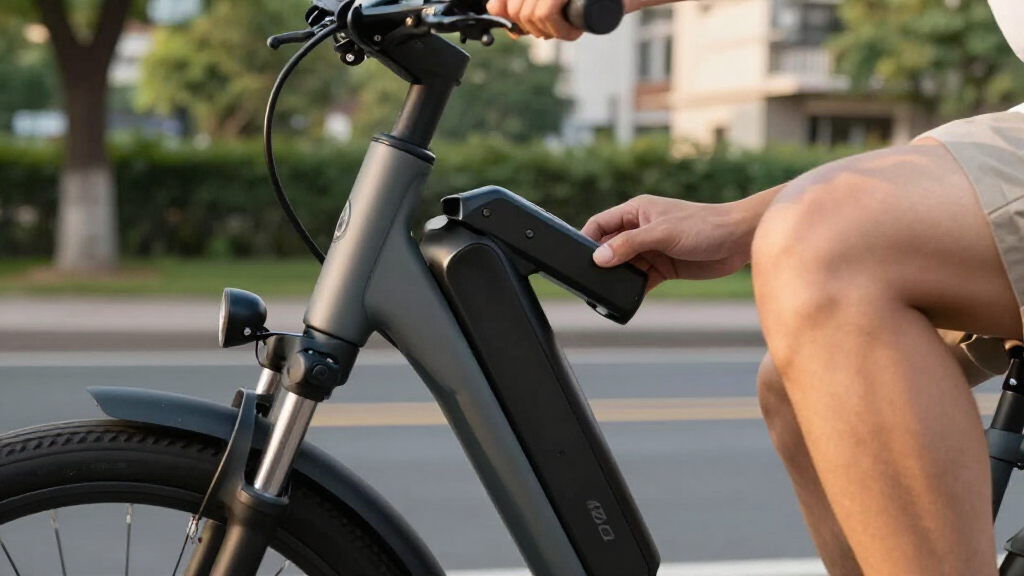
Packs designed for specific bikes like the Lectric XP or RadExpand offer plug-and-play convenience, correct mounting geometry, and often integration with the bike’s display — but they lock you in and typically cost more per amp-hour. Universal packs with XT60, Anderson, or bullet connectors work across conversion kits and multiple bikes, making them better value if you might upgrade or run a DIY build. The tradeoff is wiring work: universal packs may require adapter cables or soldering, and mounting can involve zip ties or third-party racks if the included base doesn’t fit your frame. Riders who move a battery between two bikes should always choose universal; riders who never plan to modify their bike can enjoy the simplicity of brand-specific fitment.
Weight, Mounting, and Theft Considerations
Battery weight scales with capacity — a 48V 20Ah pack weighs roughly 10–12 pounds, which matters if you carry your bike upstairs, lift it onto a car rack, or park in places where you remove the battery anyway. Removable designs with keyed locks protect against theft, which is a real problem for e-bike batteries that can cost several hundred dollars to replace. Look at where the pack mounts: downtube mounts keep weight low and centered for better handling, while rear-rack mounts are easier to swap but raise the center of gravity. Waterproof housing matters less for the pack itself (most are sealed) and more for the connector and charging port, so check gasket quality on the charge point if you ride in rain regularly.
Charger Quality and Long-Term Cell Health
The included charger affects lifespan as much as the battery itself. Most packs ship with 2A chargers that take 6–10 hours for a full charge on larger packs; a faster 5A charger is convenient but generates more heat, which degrades cells faster. Some brands exclude chargers entirely, adding $40–60 to the real cost of ownership — always check what’s in the box before comparing prices. Storage habits matter too: lithium-ion cells last longest when stored at 50–60% charge and degrade fastest when left full for weeks or discharged to empty. If a pack sits unused over winter, charge it to half and check it monthly. Buying from a seller with a real warranty and replacement-cell support is worth a small premium, since shipping lithium batteries for service is restricted and difficult.
Frequently Asked Questions
Can I use a 48V battery on a 36V e-bike to get more power?
No — this is one of the fastest ways to destroy a controller. The voltage rating on your controller and display must match the battery, and feeding 48V into 36V electronics will overheat components, often permanently. The 36V packs in this roundup, like the 7.8Ah Jetson-compatible unit and the 12Ah pack with 20A BMS, exist precisely because low-voltage systems need their exact match. If you want more power, the correct path is replacing the controller and battery together, or buying a bike originally designed for higher voltage. Always check the label on your controller casing before ordering any pack.
Is a 52V battery worth it over 48V for a 1000W motor?
It depends on your controller’s voltage tolerance. Many 48V-rated controllers from brands like Bafang actually accept 52V input safely, and the extra voltage delivers noticeably better hill-climbing torque and slightly higher top speed. However, running 52V on a controller not rated for it risks the same damage as any over-voltage scenario. The 52V 25Ah pack in this comparison makes sense for 1500W–2000W builds where 48V sag becomes a real limitation. For a standard 1000W motor used on flat terrain, a quality 48V 20Ah pack delivers similar satisfaction at lower cost and weight.
How long do electric bike battery packs actually last?
Most quality lithium-ion e-bike batteries deliver 500–800 full charge cycles before capacity drops to about 70–80% of original, which translates to roughly 2–4 years of regular commuting use. Cell brand matters: packs using LG, Samsung, or Panasonic cells tend to hit these numbers, while unbranded cells often fade faster. Your habits shift the outcome considerably — avoiding full discharges, storing at partial charge, and keeping the pack out of extreme heat all extend life. When a pack dies, replacement rather than repair is usually the economical choice, since certified lithium battery service is expensive and shipping restrictions complicate cell swaps.
Are generic replacement batteries safe to use in place of brand-name packs?
Generic packs from reputable sellers are generally safe when they include a properly rated BMS and use certified cells, and the compatibility-focused options in this roundup — like the Lectric XP and RadExpand replacements — exist because factory batteries are expensive. The risks concentrate in the cheapest listings: overstated capacity ratings, thin wiring, and BMS boards that can’t handle the stated motor wattage. Check that the connector matches your bike, the voltage is identical, and the BMS amperage exceeds your motor’s draw at full load. Avoid sellers with no warranty terms, and be skeptical of packs priced dramatically below the competition, because genuine lithium cells have a hard cost floor.
What capacity do I need for my commute?
Estimate range using watt-hours: multiply voltage by amp-hours, then divide by your bike’s average consumption, which runs 15–25 Wh per mile depending on assist level, terrain, and rider weight. A 48V 13Ah pack holds 624 Wh, good for roughly 25–40 miles of moderate assist. Subtract 20% for cold weather, hills, or throttle-heavy riding, and never plan to regularly discharge below 20% since deep discharge shortens cell life. For a 15-mile round-trip commute, a 10–13Ah pack is plenty; the 20Ah options suit all-day rides or riders who charge infrequently. Buying slightly more capacity than you need is fine, but massive overbuying just adds weight you carry every day.
Conclusion
After comparing all 15 packs, the right choice depends almost entirely on your motor and how you ride. For best overall, the Unit Pack Power 48V 20Ah wins with its large capacity, broad Bafang compatibility, and strong price-per-amp-hour. The Viset 48V 10Ah takes best value for commuters who want dependable range without paying for capacity they won’t use. On the premium end, the 52V 25Ah pack is the clear choice for high-wattage 1500W–2000W builds, and the 48V 20Ah with XT60 adapter suits riders who want maximum capacity with flexible connectivity.
For beginners, brand-specific packs like the Lectric XP or RadExpand replacements remove all guesswork — correct voltage, correct connector, correct mount. The 36V 7.8Ah Jetson-compatible pack is the right fit for small folding bikes and lightweight DIY projects, while the 48V 13Ah/20Ah pack with 30A BMS and safe lock earns the best security-minded pick for anyone parking in public. Whatever you choose, verify your voltage and BMS requirements before ordering — that single check prevents most battery returns.